What is a Prescriber Override?
When a pharmacist hands you a generic pill instead of the brand-name drug your doctor prescribed, it's usually because of state laws designed to save money. But sometimes, doctors need to step in and say 'no'-and that's where prescriber override is a legal mechanism allowing physicians to mandate specific brand-name medications over generic alternatives.
This isn't just about stubborn doctors. It's a critical safety tool for certain medications where even tiny differences between brand and generic versions can cause serious harm. For example, a patient taking warfarin (a blood thinner) might experience life-threatening bleeding if a pharmacist substitutes a generic version with slightly different absorption rates. That's why prescriber override exists-to let doctors stop substitutions when it's medically necessary.
How Did This System Start?
The modern framework for prescriber override traces back to the 1984 Hatch-Waxman Act. This law created the pathway for generic drugs to enter the market while also establishing rules for when brand-name drugs must be dispensed. Without this law, we wouldn't have the 90% generic drug usage rate we see today. But it also set up the legal backbone for states to create their own substitution laws.
Today, all 50 U.S. states have generic substitution laws. Thirty-five states require pharmacists to default to generics unless overridden, while 15 states give pharmacists discretion. This patchwork system means doctors must know their state's specific rules to avoid medication errors or unnecessary costs.
State Rules Vary Wildly
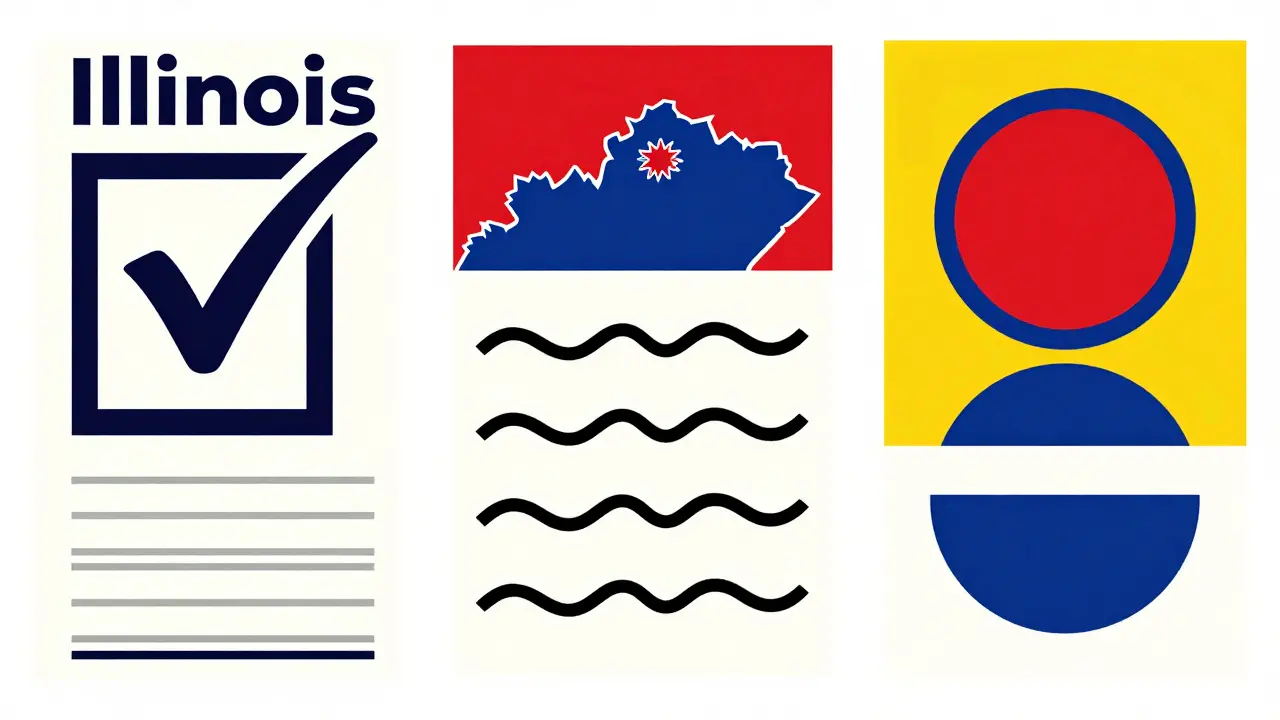
Every state has its own documentation requirements for prescriber override. For instance:
- Illinois requires pharmacists to check a 'May Not Substitute' box per Section 225 ILCS 85/25.
- Kentucky mandates handwritten 'Brand Medically Necessary' on the prescription.
- Massachusetts accepts simple 'No Substitution' notation.
- Michigan requires 'DAW' or 'Dispense as Written' written by hand.
- Oregon allows electronic or telephonic override requests but bans default values.
These differences matter. A doctor in Texas might use a two-line prescription format under Texas Administrative Code 295.201, while a California physician follows Business and Professions Code Section 4050-4070. Miss a detail, and your override request could be rejected.
DAW Codes: The Universal Language
| DAW Code | Meaning |
|---|---|
| DAW-1 | Substitution not allowed by prescriber |
| DAW-2 | Patient requested brand |
| DAW-3 | Pharmacist selected generic |
| DAW-4 | Generic unavailable |
| DAW-5 | Brand dispensed as generic |
| DAW-6 | Override |
| DAW-7 | Brand mandated by law |
| DAW-8 | Generic not available in marketplace |
| DAW-9 | Other |
These codes are part of the NCPDP Telecommunications Standard and standardized system for prescription processing. DAW-1 is the most common override code, meaning 'Substitution Not Allowed by Prescriber.' But using the wrong code can lead to rejected claims or dangerous substitutions.
When Should Doctors Override?
Not all drugs need overrides. The FDA's Orange Book and database of therapeutic equivalence ratings helps doctors decide. Drugs with 'A' ratings are generally substitutable. But 'B' ratings mean they're not-and those are prime candidates for override.
Common clinical reasons include:
- Narrow therapeutic index drugs: Warfarin, phenytoin, and levothyroxine where tiny dosage changes cause major effects.
- Allergies to inactive ingredients: Some generics use different fillers or dyes that trigger reactions.
- Documented therapeutic failure: When a patient's condition worsened after switching to generic.
A 2019 study in PMC found DAW-1 usage rates peak in anticonvulsants (14.8%) and psychiatric medications (12.3%). That's because even small variations in these drugs can cause seizures or relapse.

Costs and Mistakes
Overusing prescriber override has real consequences. Research in the Journal of Managed Care & Specialty Pharmacy showed DAW-1 prescriptions cost 32.7% more than generics on average. The American Pharmacists Association estimates inappropriate overrides cost the system $7.8 billion annually.
Common mistakes include:
- Using unclear language like 'no generic' instead of state-specific terms.
- Forgetting to mark DAW-1 in electronic health records.
- Assuming all generics are interchangeable when they're not.
One 2023 Reddit thread from 'Dr_InternalMed' described a patient hospitalized for thyroid storm after a pharmacy substituted levothyroxine despite a DAW-1 order. Why? The prescription lacked proper state documentation. This isn't rare-68% of override-related claim rejections stem from improper documentation, according to pharmacy technicians on AllNurses.
How to Get It Right
Doctors can avoid these pitfalls with simple steps:
- Know your state's rules: Check the National Association of Boards of Pharmacy's interactive map (updated quarterly).
- Use EHR templates: Customize your electronic health record to match state requirements. A 2021 AMA survey found 52% of physicians struggle with mismatched EHR templates.
- Verify therapeutic equivalence: Consult the FDA's Orange Book before overriding. Version 4.0 (released January 2023) now includes biosimilar interchangeability data.
- Communicate clearly: Use 'DAW-1' or state-specific terms like 'Brand Medically Necessary' instead of vague phrases.
Clinics that use standardized override templates reduce claim rejections by 63.2%, per MedCentral. For multi-state practices, 34% of health systems now implement uniform protocols to handle jurisdictional differences.
Frequently Asked Questions
Can pharmacists ignore a prescriber's DAW-1 code?
No. Pharmacists are legally required to follow DAW-1 instructions. If a prescription has this code, they must dispense the brand-name drug as written. Failure to comply could lead to license suspension or legal action. However, if documentation is unclear (e.g., missing state-specific wording), pharmacists may contact the prescriber for clarification before proceeding.
What happens if a doctor doesn't specify DAW-1?
In mandatory substitution states (35 states), pharmacists will default to generics. This could be dangerous for narrow therapeutic index drugs like warfarin or levothyroxine. For example, a 2021 Institute for Safe Medication Practices report documented 27 adverse events linked to inappropriate substitutions of these drugs between 2018-2022. Always specify DAW-1 when brand-name is clinically necessary.
Do insurance companies influence override decisions?
Yes. Most health plans require prior authorization for DAW-1 prescriptions. Kaiser Family Foundation data shows 87% of Medicare Part D plans and 92% of commercial plans use DAW-1 as a trigger for prior authorization. This means doctors often need to submit extra paperwork to justify the override, adding administrative burden. However, insurance companies don't override clinical decisions-they just enforce coverage rules.
Can patients request brand-name drugs without a doctor's override?
Yes, but only in certain states. DAW-2 codes allow patients to request brand-name drugs even if generics are available. However, patients usually pay the full price difference between brand and generic. For example, in California, a patient choosing brand-name Lipitor over generic atorvastatin would cover the $50+ monthly difference out-of-pocket. This is rare-only 4.1% of DAW-2 claims in 2022 involved patient requests, per Surescripts data.
Is the prescriber override system changing?
Yes. Congress introduced the Standardized Prescriber Override Protocol Act in 2023, which aims to create uniform federal requirements. Meanwhile, NCPDP plans to integrate override rules directly into the SCRIPT 201905 e-prescribing standard by Q3 2024. The FDA's Orange Book version 4.0 also added biosimilar interchangeability data, which will soon impact biologic medications. These changes aim to reduce errors but won't eliminate state-specific rules entirely.


