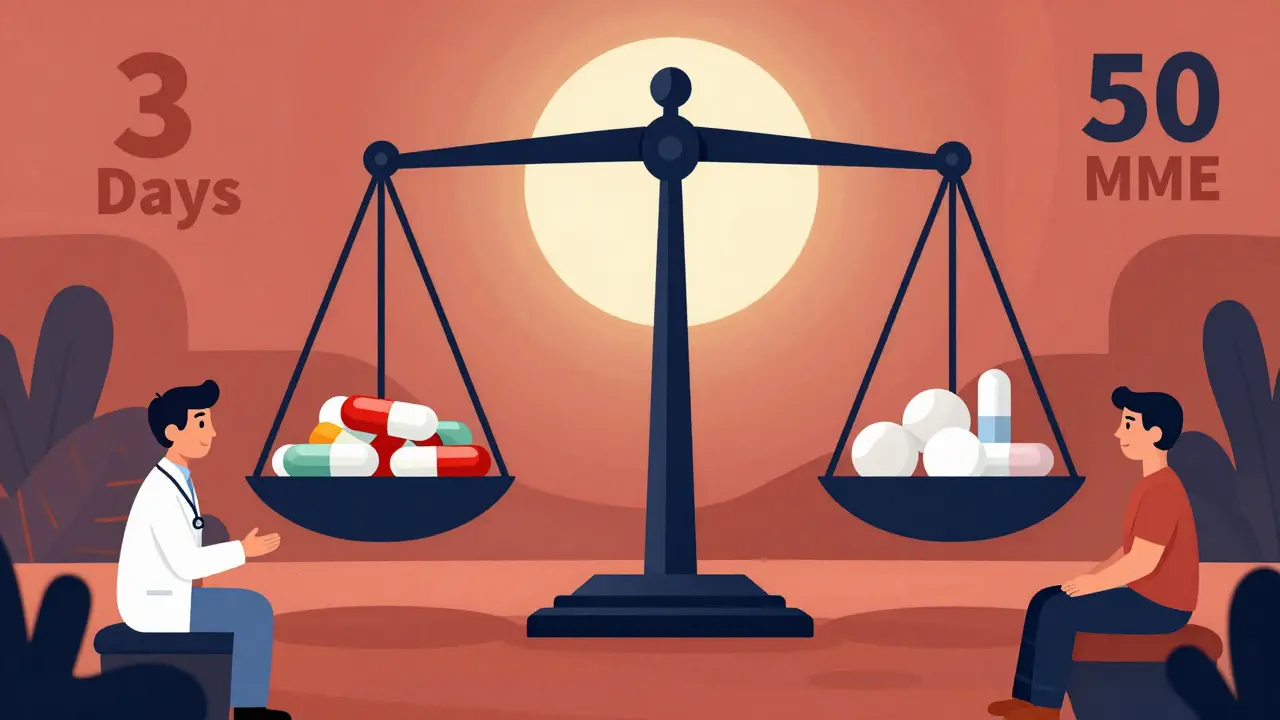
Every year, more than 108,000 Americans die from drug overdoses-and most of those deaths involve opioids. The crisis didn’t happen overnight. It grew from well-intentioned efforts to treat pain, combined with weak oversight and outdated prescribing habits. Today, the focus isn’t just on cutting opioids altogether. It’s on medication safety for pain management: using opioids only when necessary, at the lowest effective dose, and for the shortest time possible-while making sure patients still get real relief.
When Opioids Are Necessary-and When They’re Not
Opioids aren’t evil. They’re powerful tools. After major surgery, a broken bone, or cancer treatment, they can be lifesaving. But for most everyday pain-backaches, arthritis, headaches-they’re overkill. And the risk doesn’t go away after a few days. Studies show that every extra day you take opioids for acute pain increases the chance you’ll still be using them a year later by 20%. That’s why the CDC updated its guidelines in 2025: for most acute pain, start with three days. That’s it. Only extend to seven if your doctor has a clear, documented reason.The 50 MME Threshold: A Turning Point
Morphine milligram equivalents (MME) is how doctors measure opioid strength across different drugs. If you’re taking 50 MME or more per day, your risk of overdose jumps nearly threefold. That’s not a random number. It’s based on data from over 1.2 million patients tracked between 2022 and 2024. At this level, your doctor is supposed to pause and ask: Is this still helping? Are there safer options? It’s not a hard stop-but it’s a red flag. The FDA now requires all opioid labels to state this clearly. And pharmacies? They’re programmed to flag prescriptions over 50 MME before they’re filled.Why 90 MME Is a Hard Line
Doses of 90 MME or higher? Those should be rare. Only for patients with advanced cancer, terminal illness, or those who’ve been stable on that dose for years-with full documentation and specialist oversight. The CDC says it outright: avoid these doses unless absolutely necessary. Why? Because every 20 MME increase above 50 raises overdose risk by 1.7 times. That’s not a small jump. That’s a steep cliff. CMS, which runs Medicare, now blocks prescriptions over 90 MME at the pharmacy counter unless there’s a documented exception. It’s a hard safety edit. No exceptions. No workarounds. That’s changed prescribing behavior fast.What’s Replacing Opioids?
The real shift isn’t just in cutting opioids-it’s in what’s being used instead. NSAIDs like ibuprofen and naproxen are now first-line for most musculoskeletal pain. Acetaminophen combinations work well for mild to moderate pain. Physical therapy, acupuncture, and cognitive behavioral therapy (CBT) are proven to reduce pain without drugs. In practices that offer these options on-site, opioid prescribing drops by 40-50%, and patient satisfaction stays the same-or even improves. CBD-based products, though still under study, are growing fast, with a 22.3% annual increase in use. And for nerve pain? Medications like gabapentin or duloxetine often work better than opioids, with far fewer risks.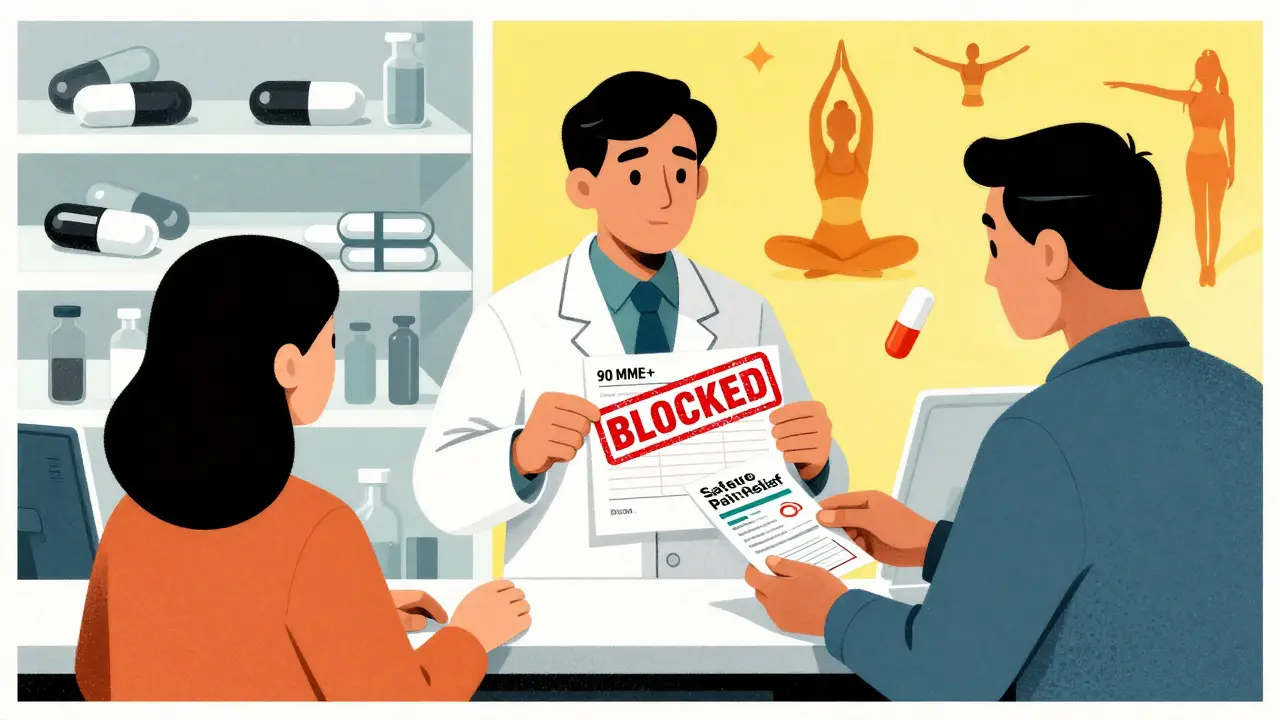
Monitoring and Risk Tools
Doctors aren’t guessing anymore. They’re using tools. The Opioid Risk Tool (ORT) scores patients based on history of substance use, mental health, and family background. A score under 4? Low risk. 4 to 7? Moderate. Above 8? High risk. High-risk patients shouldn’t get opioids unless an addiction specialist is involved. Urine drug screens are now standard for anyone on 50 MME or more-quarterly, not just once a year. And every state has a Prescription Drug Monitoring Program (PDMP). Checking it before prescribing cuts overlapping prescriptions by 37%. It adds 2.5 minutes to each visit-but it saves lives.What Happens When Opioids Are Stopped Too Fast?
Here’s the catch: cutting opioids suddenly can be deadly. In 2024, a major study found that patients whose opioids were abruptly stopped had a 23% spike in suicide attempts. That’s not a coincidence. Chronic pain doesn’t vanish when the pills stop. Withdrawal can be brutal. Uncontrolled pain drives people to desperate places. The FDA’s 2025 labeling update now warns against rapid tapering. Tapering must be slow, personalized, and supported. If you’ve been on opioids for years, don’t expect to quit in a week. A safe taper takes months-and needs mental health support built in.Who’s Following the Rules-and Who’s Not
Primary care doctors? 82% are using the 2025 CDC guidelines. Dentists? 67%. Surgeons? Only 43%. Why the gap? Many surgeons still believe longer prescriptions are needed after procedures like knee replacements or spinal fusions. But data shows most patients don’t need more than three days. A University of Michigan study found that 80% of surgical patients used less than half their prescribed opioids. Still, some patients do need longer. That’s why the guidelines allow exceptions-with clear documentation. The problem isn’t the rules. It’s inconsistent application.
Real-World Impact: Successes and Struggles
In states that fully rolled out the 2025 CMS safety edits, opioid-related hospitalizations dropped by 28%. Dental opioid prescriptions fell by 63%. That’s huge. But it’s not perfect. A survey of 1,200 chronic pain patients found 7-10% had their opioids cut abruptly, leading to emergency visits for uncontrolled pain. One Ohio doctor reported a 35% drop in new long-term opioid use after switching to three-day limits-but also saw 12 patients end up in the ER because their pain came back. The system isn’t broken. It’s unbalanced. We’re better at preventing misuse than we are at managing pain without opioids.What Needs to Change Next
We have the tools. We have the data. What’s missing? People. There’s a shortage of 12,500 pain specialists in the U.S., especially in rural areas. Sixty-eight percent of rural counties don’t have a single pain clinic. Without access to physical therapy, psychologists, or interventional procedures, patients have no alternatives. The NIH just pledged $125 million to develop non-addictive pain treatments. That’s a start. But we also need to train more primary care providers in multimodal pain management. And we need to pay for it. Insurance still underpays for physical therapy and counseling-while covering opioids with little scrutiny.Your Role in Medication Safety
If you’re on opioids for pain:- Ask your doctor: Is this the lowest dose I need?
- Ask: What else can I try?-physical therapy, heat, nerve blocks, mindfulness?
- Never share your pills. Never take someone else’s.
- If you’ve been on them longer than three months, ask about a slow taper plan.
- Keep naloxone (Narcan) at home if you’re on 50 MME or more. It reverses overdoses. It’s free at many pharmacies.
If you’re a caregiver or family member:
- Watch for signs of increased drowsiness, confusion, or slurred speech.
- Store pills locked up. Dispose of unused ones at a take-back site.
- Don’t assume they’re safe just because a doctor prescribed them.
Medication safety isn’t about fear. It’s about responsibility. We can treat pain without risking addiction. We just have to do it differently-and we’re starting to.
What is the safest daily opioid dose for chronic pain?
The CDC recommends keeping opioid doses below 50 morphine milligram equivalents (MME) per day for chronic pain. At 50 MME, overdose risk rises sharply. Doses above 90 MME should be avoided unless for cancer, palliative care, or end-of-life care-with full documentation and specialist oversight. Most patients do better with non-opioid treatments.
How long should I take opioids after surgery?
For most surgical procedures, a three-day supply is enough. The 2025 CDC guidelines recommend this as the standard. Extending to seven days is allowed only if your doctor documents a specific medical need. Studies show most patients use less than half their prescription-and taking opioids longer increases the risk of long-term use by 20% per extra day.
Can I stop opioids suddenly if I feel better?
No. Stopping opioids abruptly can cause severe withdrawal, worsen pain, and increase suicide risk. If you want to stop, work with your doctor on a slow taper plan-usually over weeks or months. The FDA now requires opioid labels to warn against rapid discontinuation. Always have a plan before stopping.
Are there alternatives to opioids for chronic pain?
Yes. NSAIDs (like ibuprofen), acetaminophen, physical therapy, cognitive behavioral therapy (CBT), acupuncture, and nerve blocks are all effective for many types of chronic pain. In clinics that offer these options, opioid use drops by 40-50% without worsening pain control. New non-addictive treatments, including CBD-based products, are also emerging and gaining support.
Why do pharmacies block some opioid prescriptions?
Since January 2025, Medicare Part D and many private insurers require pharmacies to use safety edits. A hard edit blocks initial opioid prescriptions longer than three days for acute pain. Another edit blocks prescriptions over 90 MME per day unless there’s a documented exception. These are automated system checks designed to prevent misuse and overdose.
Should I keep naloxone at home?
Yes-if you or someone you live with is taking 50 MME or more of opioids daily, keep naloxone (Narcan) at home. It reverses opioid overdoses and can save a life. It’s available without a prescription at most pharmacies and is often free through public health programs. Keep it in an easy-to-reach place and teach others how to use it.
What should I do if my doctor wants to taper my opioids?
Ask for a written taper plan with clear steps and timelines. A safe taper usually reduces dose by 10% every 1-4 weeks, depending on your response. If you feel worse, ask for support-like physical therapy or counseling. Don’t feel pressured to rush. The goal is to reduce risk without causing harm. If your doctor won’t provide a plan, seek a second opinion from a pain specialist.


