Lithium Interaction & Toxicity Estimator
Estimated New Level
--
+0%You might take lithium to keep your mood stable. It works. But if you also take a common blood pressure pill or an over-the-counter pain reliever, that stability can vanish quickly. Lithium toxicity is a dangerous condition where lithium levels in the blood rise above safe limits, causing symptoms from tremors to seizures. The danger isn't just the drug itself; it's what happens when other medicines interfere with how your kidneys handle it.
Lithium has a narrow therapeutic window. This means the difference between a helpful dose and a harmful one is tiny. For most adults, the target range is 0.6 to 1.2 mmol/L. Once levels hit 1.5 mmol/L, you are entering mild toxicity. At 2.0 mmol/L, it becomes moderate. Above 2.5 mmol/L, it is severe and life-threatening. Because lithium is not broken down by the liver, your kidneys must filter it out. Any drug that changes how your kidneys work will change your lithium levels.
Why Your Kidneys Are the Bottleneck
To understand why these interactions happen, you need to look at the kidney. Lithium moves through your body freely. It enters the kidney via glomerular filtration. Then, about 60-80% of it gets reabsorbed back into your blood in the proximal tubule. This reabsorption is tied closely to sodium. When your body holds onto sodium, it holds onto lithium too.
This mechanism makes lithium exceptionally sensitive to drugs that alter renal function. Unlike many medications that are metabolized by enzymes in the liver, lithium relies entirely on renal clearance. If you reduce kidney filtration or increase sodium retention, lithium stays in your system longer. Its half-life extends from the normal 18-36 hours to much longer periods, allowing toxic levels to build up even if you haven't changed your lithium dose.
The Diuretic Danger Zone
Diuretics, often called water pills, are prescribed for high blood pressure, heart failure, and edema. They force your kidneys to excrete more fluid. However, they do this by manipulating electrolytes, which directly impacts lithium handling. Not all diuretics are equal in their risk profile.
Thiazide diuretics, such as hydrochlorothiazide or bendroflumethiazide, pose the highest risk. These drugs act on the distal convoluted tubule. By blocking sodium reabsorption there, they cause the body to compensate by increasing sodium (and lithium) reabsorption in the proximal tubule. Studies show thiazides can increase lithium levels by 25-40% within just 3-5 days. In some cases, levels have quadrupled. This interaction is so predictable and dangerous that many clinicians consider it a hard stop for combination therapy unless absolutely necessary.
Loop diuretics, like furosemide, present a different picture. They act earlier in the nephron loop. While they still cause some lithium retention, the effect is less pronounced, typically raising levels by 10-25%. Furosemide is sometimes used cautiously in patients who need diuretic therapy, but it requires strict monitoring. The key difference lies in the site of action: thiazides disrupt the final balance of sodium and lithium, while loop diuretics affect volume status more broadly.
| Diuretic Class | Common Examples | Average Lithium Increase | Risk Level |
|---|---|---|---|
| Thiazides | Hydrochlorothiazide, Bendroflumethiazide | 25-40% | High |
| Loop Diuretics | Furosemide, Bumetanide | 10-25% | Moderate |
| Potassium-Sparing | Spironolactone | Variable (Low-Moderate) | Moderate |
NSAIDs: The Hidden Risk in Pain Relief
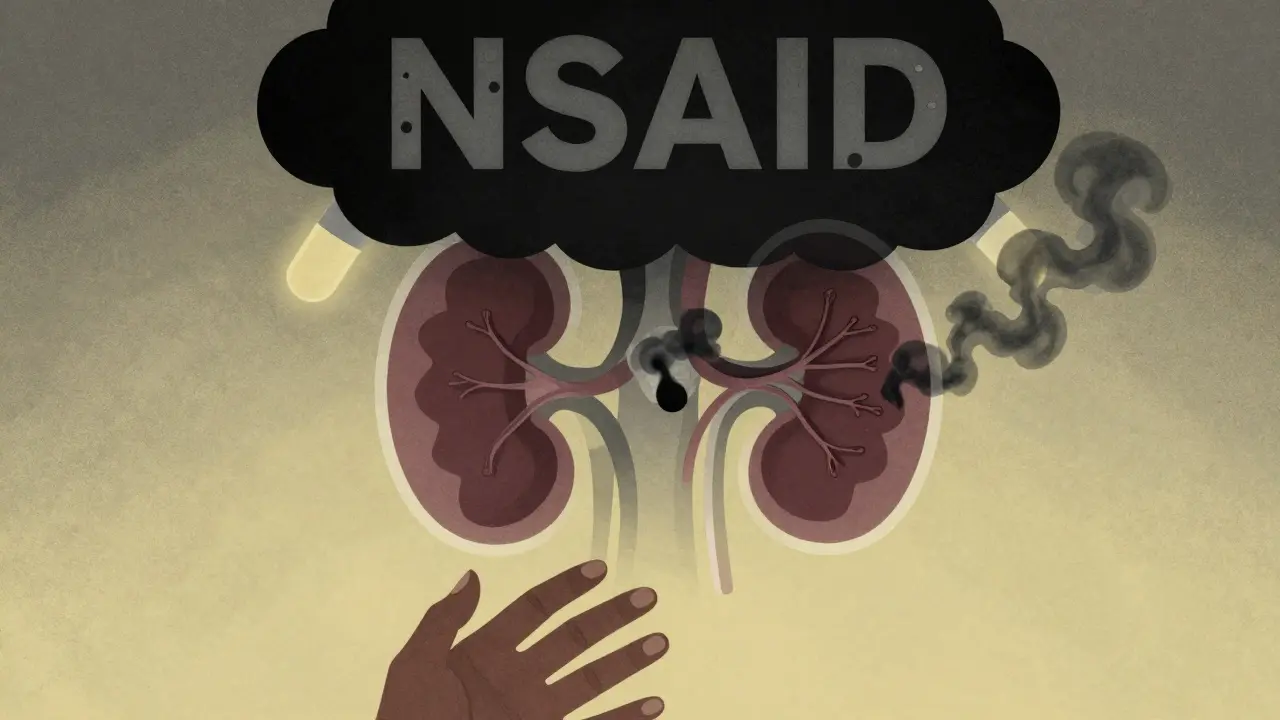
Nonsteroidal anti-inflammatory drugs (NSAIDs) are among the most commonly used medications worldwide. You buy them off the shelf for headaches, back pain, or arthritis. For someone on lithium, this casual use can be fatal. NSAIDs inhibit prostaglandin synthesis in the kidneys. Prostaglandins help keep blood vessels in the kidney open. When you block them, blood flow to the filtering units drops.
This reduction in glomerular filtration rate (GFR) leads to decreased lithium clearance. The effect is dose-dependent and varies by specific NSAID. Indomethacin causes the strongest interaction, potentially raising lithium levels by 20-40%. Ibuprofen and naproxen raise levels by 15-30%. Even over-the-counter doses matter. A patient taking ibuprofen 600 mg three times daily saw their lithium level jump from 0.8 mmol/L to 2.8 mmol/L in one documented case, requiring hemodialysis.
Celecoxib, a COX-2 selective inhibitor, appears to have a weaker effect, raising levels by only 5-10%. Some guidelines suggest it as a safer alternative if NSAID therapy is unavoidable. However, no NSAID is completely safe. The American Psychiatric Association explicitly advises avoiding NSAIDs in patients receiving lithium therapy due to the significant risk of elevated concentrations.
Symptoms of Rising Lithium Levels
Toxicity doesn't always announce itself with dramatic signs immediately. Early symptoms are subtle and easy to mistake for stress or fatigue. You might notice fine hand tremors that become coarse. Nausea and diarrhea are common gastrointestinal warnings. Increased thirst and frequent urination may worsen as kidney function declines.
As levels climb higher, neurological symptoms dominate. Confusion, slurred speech, and drowsiness indicate moderate toxicity. Seizures, irregular heartbeat, and coma signal severe toxicity. Remember that serum levels don't always match clinical severity perfectly. Intracellular lithium stores can remain high even after blood levels normalize, meaning patients can deteriorate despite apparent improvement in lab results.
Monitoring Protocols That Save Lives
If you are on lithium, routine monitoring every 3-6 months is standard for stable patients. But that schedule changes the moment you start a new medication. When initiating a diuretic or NSAID, you must check lithium levels every 4-5 days. Continue weekly monitoring for the first month.
Dose adjustments are often necessary. With thiazide diuretics, a 20-25% reduction in lithium dose is typical. With NSAIDs, a 15-20% cut may be needed. Never adjust your dose without medical supervision. Instead, rely on frequent testing. Document your baseline renal function (eGFR) and electrolyte levels before starting any interacting drug.
New technology is helping here. Devices like LithoLink™ allow home testing with results transmitted directly to clinicians. This reduces the gap between symptom onset and professional intervention. Genetic factors also play a role; poor metabolizers of certain enzymes may experience greater spikes in lithium levels when combined with NSAIDs.
Practical Steps for Patients and Clinicians
Communication is your best defense. Tell every doctor you see that you are on lithium. This includes dentists, dermatologists, and primary care providers. They might prescribe something that interacts without realizing it. Carry a card or list in your wallet stating your lithium use.
For pain relief, acetaminophen (paracetamol) is generally considered safer than NSAIDs regarding lithium interactions. It does not significantly affect renal prostaglandins or GFR. If you must use an NSAID, choose celecoxib if available and approved by your psychiatrist, and monitor closely.
If you need blood pressure control, ask about alternatives to thiazides. ACE inhibitors and ARBs also raise lithium levels (by 10-25%), though less dramatically than thiazides. Calcium channel blockers do not significantly alter lithium levels but may increase neurological side effects like tremors. Each option has trade-offs.
In cases of acute toxicity, time is critical. Multiple prolonged hemodialysis sessions may be required to clear intracellular lithium. Do not wait for symptoms to resolve on their own. Seek emergency care immediately if you suspect overdose or interaction-related toxicity.
Can I take ibuprofen if I am on lithium?
It is strongly discouraged. Ibuprofen can increase lithium levels by 15-30%, potentially leading to toxicity. Acetaminophen is a safer alternative for pain relief. If you must use ibuprofen, do so only under strict medical supervision with frequent lithium level monitoring.
Which diuretic is safest with lithium?
Loop diuretics like furosemide are generally safer than thiazide diuretics. Thiazides can raise lithium levels by 25-40%, while loop diuretics typically cause a 10-25% increase. However, both require careful monitoring and potential lithium dose adjustments.
What are the early signs of lithium toxicity?
Early signs include coarse hand tremors, nausea, vomiting, diarrhea, increased thirst, and frequent urination. As toxicity worsens, confusion, slurred speech, drowsiness, and seizures may occur. Immediate medical attention is required if these symptoms appear.
How often should I check my lithium levels when starting a new medication?
You should check lithium levels every 4-5 days after starting a new interacting medication like an NSAID or diuretic. Weekly monitoring is recommended for the first month to ensure stability and safety.
Does aspirin interact with lithium?
Yes, aspirin is an NSAID and can interact with lithium, though the effect is generally weaker than indomethacin or ibuprofen. High-dose aspirin can still raise lithium levels and should be used with caution and monitoring.