Fentanyl Safety & Risk Assessor
Usage Profile
Symptom Self-Check
Select current symptoms to check for warning signs.
Fentanyl patches are powerful tools for managing severe, chronic pain, but they come with serious risks that demand respect. Unlike oral painkillers you pop once a day, these transdermal systems release medication continuously through your skin over 72 hours. This steady delivery provides stable pain relief without the ups and downs of pills, yet it also means the drug stays in your system longer and works harder. If you or a loved one uses fentanyl patches, understanding how to avoid overdose and handle withdrawal is not just good advice-it’s essential for safety.
The stakes are high because fentanyl is incredibly potent. It is estimated to be 50 to 100 times stronger than morphine. A small error in dosage, exposure to heat, or accidental contact by a child can lead to life-threatening consequences. At the same time, stopping the medication abruptly can trigger a brutal withdrawal syndrome that feels unbearable and can lead to dangerous health complications. This guide breaks down exactly what happens when things go wrong, how to spot the warning signs early, and the safe protocols doctors use to manage these risks.
How Fentanyl Patches Work and Why They Are Risky
To understand the side effects, you first need to understand the mechanism. Fentanyl transdermal patches are adhesive medical devices that deliver a continuous dose of the synthetic opioid fentanyl through the skin into the bloodstream. The patch contains a reservoir of fentanyl citrate that diffuses through a rate-controlling membrane. This design aims to keep blood levels of the drug steady, avoiding the peaks and troughs associated with short-acting opioids.
However, this steady stream creates specific vulnerabilities. Because the patch releases drug slowly, it takes 12 to 24 hours to reach full effect (steady-state plasma concentration). This means if you feel pain breaking through, adding another patch won’t help immediately and could lead to a toxic buildup later. Conversely, removing a patch doesn’t stop the drug flow instantly; residual fentanyl continues to absorb for several hours after removal.
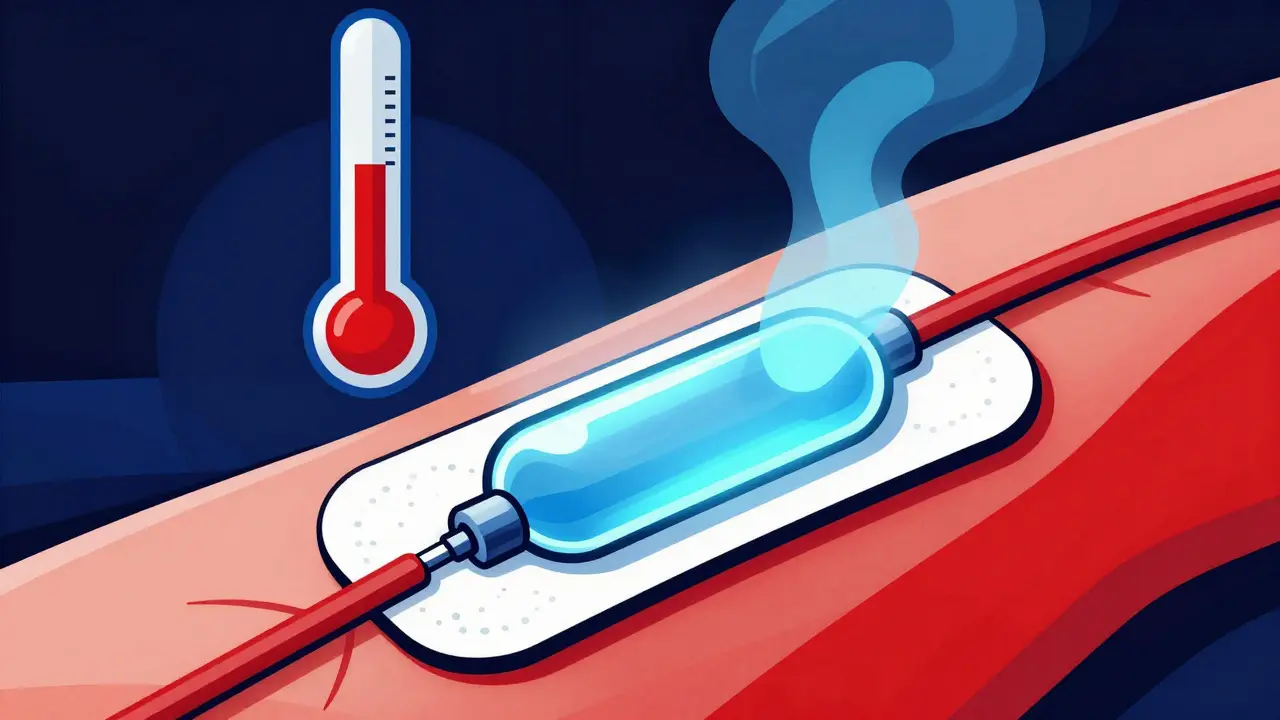
The biggest technical risk involves body temperature. Your skin acts as a barrier, regulating how much drug enters your blood. But if your body temperature rises-due to a fever, exercise, or external heat sources like heating pads, hot tubs, or electric blankets-the blood vessels in your skin dilate. This dramatically increases absorption rates. The FDA has issued strict warnings about this, noting that heat exposure can cause a sudden, massive release of fentanyl, leading to fatal overdose even at prescribed doses.
Recognizing an Opioid Overdose
An overdose occurs when too much fentanyl suppresses the brainstem’s control over breathing. Because fentanyl is so potent, the margin between a therapeutic dose and a lethal one can be narrow, especially for those who are not opioid-tolerant. Accidental exposure is a major concern; between 1997 and 2012, the FDA documented 32 accidental pediatric deaths from exposure to used or unused patches.
You must know the signs of respiratory depression. These symptoms often appear gradually but can escalate quickly:
- Respiratory changes: Slow, shallow, or irregular breathing. You might hear unusual snoring or gurgling sounds.
- Altered consciousness: Extreme sleepiness, inability to wake up, or unresponsiveness to voice or touch.
- Physical signs: Cold, clammy skin; pale or blue lips and fingernails (cyanosis); limp muscles.
- Pupil reaction: Pinpoint pupils (very small black dots in the center of the eye) are a classic sign of opioid overdose.
- Cardiovascular issues: Slowed heartbeat (bradycardia).
If you suspect an overdose, time is critical. Do not wait to see if the person wakes up. Remove the patch immediately to stop further absorption, call emergency services (911 in the US), and administer naloxone (Narcan) if available. Naloxone is an opioid antagonist that rapidly reverses the effects of fentanyl by binding to opioid receptors in the brain. Because fentanyl is so strong, multiple doses of naloxone may be required, and monitoring should continue for hours as the drug wears off and the fentanyl remains in the body.

The Dangers of Abrupt Discontinuation and Withdrawal
While overdose kills quickly, withdrawal can destroy quality of life and lead to long-term harm. The FDA mandated label changes in 2019 specifically warning against the abrupt cessation of opioid pain medicines. Sudden withdrawal is not just uncomfortable; it can be medically dangerous.
When you have been using fentanyl patches for more than a few weeks, your body becomes physically dependent. It adjusts its own chemistry to compensate for the constant presence of the opioid. If you rip the patch off and don’t replace it, your body goes into shock. The American Society of Addiction Medicine notes that detoxing without medical oversight can lead to severe dehydration from vomiting and diarrhea, which can elevate sodium levels and potentially cause heart failure.
The timeline for fentanyl withdrawal is distinct due to the drug’s long half-life. Symptoms typically begin 8 to 24 hours after the last dose, peak in intensity between 36 and 72 hours, and can last for 7 to 10 days, though some psychological symptoms may persist for weeks.
Common physical and psychological symptoms include:
- Gastrointestinal distress: Nausea, vomiting, diarrhea, and abdominal cramps.
- Autonomic hyperactivity: Sweating, chills, runny nose, tearing eyes, yawning, and increased heart rate or blood pressure.
- Musculoskeletal pain: Muscle aches (myalgia), tremors, and weakness.
- Psychological turmoil: Anxiety, agitation, irritability, insomnia, and in severe cases, thoughts of suicide.
Dr. Nora Volkow, Director of the National Institute on Drug Abuse (NIDA), highlights a critical secondary risk: reduced tolerance. If a patient stops fentanyl due to withdrawal discomfort and then resumes use-even at their previous dose-they are at a significantly higher risk of fatal overdose because their body no longer tolerates that amount of drug. This phenomenon was documented in 37% of fatal overdoses among former patients in a 2021 Johns Hopkins University study.
Safe Tapering Protocols
The only safe way to discontinue fentanyl patches is through a gradual taper under medical supervision. The European Medicines Agency (EMA) and other health authorities emphasize that rapid tapering leads to serious withdrawal symptoms and uncontrolled pain. There is no one-size-fits-all schedule, but general guidelines suggest reducing the dose by no more than 10% to 25% every 1 to 3 weeks for patients on higher doses.
Tapering from a high dose may take weeks to months. During this process, doctors often switch patients to shorter-acting opioids to allow for more flexible dose adjustments and to manage breakthrough pain more effectively. This transition requires careful calculation of morphine milligram equivalents (MME) to ensure the new dose provides adequate pain relief without causing sedation.
Patients should never adjust their patch strength or frequency on their own. If you experience side effects like excessive drowsiness or nausea, talk to your doctor. They may lower the dose slightly or add medications to manage side effects, rather than having you stop abruptly.

Practical Safety Measures for Patients and Caregivers
Managing fentanyl patches safely involves daily habits that prevent accidents. Here are concrete steps to protect yourself and others:
- Store securely: Keep unused patches in a locked container, out of sight and reach of children and pets. Remember, even a used patch contains enough fentanyl to kill a child.
- Dispose properly: After removing a patch, fold it in half with the sticky sides together to seal the drug inside. Flush it down the toilet if recommended by local guidelines or dispose of it in a designated drug take-back container. Never throw loose patches in the trash where animals or children might access them.
- Avoid heat: Do not use heating pads, hot water bottles, or electric blankets on the area covered by the patch. Avoid hot baths, saunas, or tanning beds while wearing the patch.
- Monitor skin: Rotate application sites (chest, back, flank) to prevent skin irritation. Do not apply to irritated, damaged, or shaved skin, as this can increase absorption unpredictably.
- Inform all providers: Tell every dentist, surgeon, or doctor that you are using fentanyl patches before any procedure. Interactions with anesthesia, benzodiazepines, or alcohol can be fatal.
| Risk Factor | Fentanyl Patch | Oral Opioids (e.g., Oxycodone) |
|---|---|---|
| Onset of Action | Slow (12-24 hours for steady state) | Fast (30-60 minutes) |
| Heat Sensitivity | High risk of overdose with heat exposure | No significant risk |
| Accidental Exposure | High risk (skin contact/mucous membranes) | Low risk (requires ingestion) |
| Dosing Flexibility | Low (fixed dose per patch) | High (easy to adjust pill count) |
| Withdrawal Onset | Delayed (8-24 hours after removal) | Rapid (few hours after missed dose) |
Regulatory Context and Current Guidelines
The medical community has tightened rules around fentanyl use due to the opioid crisis. In 2012, the FDA implemented a mandatory Risk Evaluation and Mitigation Strategy (REMS) for extended-release opioids, requiring prescriber education and patient counseling. By 2023, the FDA updated requirements to encourage co-prescribing naloxone for patients at increased risk of overdose.
The CDC’s 2022 Opioid Prescribing Guidelines restrict fentanyl patch use to patients who are already tolerant to opioids. Tolerance is defined as taking at least 60 mg of morphine equivalent per day (or equivalent dose of another opioid) for one week or longer. This rule prevents the dangerous practice of starting opioid-naive patients on high-dose fentanyl.
Data reflects this shift. IQVIA market data shows fentanyl patch prescriptions declined by 42% between 2016 and 2022, dropping from 4.8 million to 2.8 million annual prescriptions. This decline isn’t necessarily bad; it suggests doctors are being more selective, reserving patches for severe cases where benefits clearly outweigh risks.
Can I shower while wearing a fentanyl patch?
Yes, you can shower normally. Water does not significantly affect the absorption of fentanyl through the patch. However, avoid soaking in hot baths, hot tubs, or saunas, as prolonged exposure to high temperatures can increase drug absorption and raise the risk of overdose.
What should I do if my pet eats a used fentanyl patch?
This is a medical emergency. Call your veterinarian and the ASPCA Animal Poison Control Center immediately. Even a small piece of a used patch can be fatal to a dog or cat due to their smaller body size and higher sensitivity to opioids. Have the patch packaging ready to provide details on the dose strength.
Is fentanyl withdrawal life-threatening?
Typically, no. Opioid withdrawal is extremely uncomfortable and painful, but it is rarely fatal in itself. However, complications such as severe dehydration, electrolyte imbalances, and heart strain from persistent vomiting and diarrhea can become life-threatening if left untreated. Medical supervision is strongly recommended to manage these risks.
Why can't I just buy a lower dose patch to taper myself?
Self-tapering is dangerous because fentanyl patches come in specific strengths (12, 25, 50, 75, 100 mcg/hour). Jumping from a 50 mcg/hour patch to a 25 mcg/hour patch is a 50% dose reduction, which is far too aggressive and will likely trigger severe withdrawal. Doctors create gradual plans, sometimes using intermediate doses or switching to oral medications to achieve smoother reductions.
How long does fentanyl stay in your system after removing the patch?
Fentanyl has a relatively short half-life (2-4 hours), but because the patch delivers it continuously, it builds up in fatty tissues. After removing the patch, detectable levels can remain in your blood for 24 to 72 hours. This is why withdrawal symptoms are delayed compared to short-acting opioids, and why naloxone may need to be repeated if given during an overdose.


