Medication Dizziness Risk Calculator
Check Your Dizziness Risk
Enter medications you're currently taking to calculate your risk of dizziness side effects.
Feeling dizzy or lightheaded after taking a new medication isn’t just annoying-it’s more common than most people realize. About 1 in 5 adults experiences dizziness each year, and nearly a quarter of those cases are directly tied to medications. It’s not always a sign something’s seriously wrong, but it can be a warning sign that your body isn’t handling a drug the way it should. And for older adults, this isn’t just about discomfort-it’s a major fall risk.
How Medications Make You Feel Dizzy
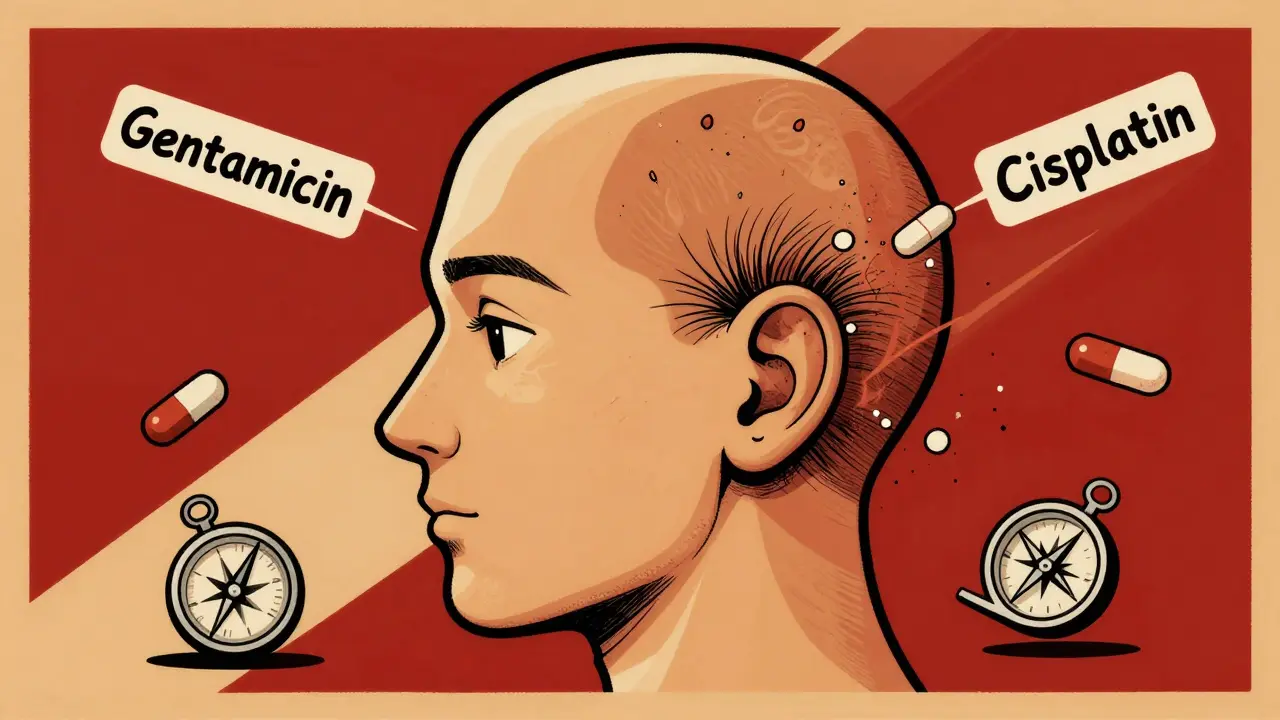
Dizziness from meds doesn’t come from one single cause. It happens because drugs interfere with how your body keeps you balanced. There are three main ways this occurs.First, some drugs damage the inner ear. The vestibular system, located in your inner ear, sends signals to your brain about head position and movement. Medications like gentamicin (an antibiotic) and cisplatin (a chemotherapy drug) can destroy the tiny hair cells in your inner ear that detect motion. Once those cells are gone, they don’t grow back. Up to 65% of patients on cisplatin end up with permanent balance problems.
Second, many medications lower your blood pressure-sometimes too much. When you stand up, your body normally adjusts to keep blood flowing to your brain. But drugs like lisinopril, furosemide, or propranolol can slow that response. The result? A sudden drop in blood pressure when you rise, leading to lightheadedness or even fainting. This is called orthostatic hypotension. The American Heart Association now defines it as a drop of 20 mmHg in systolic pressure or 10 mmHg in diastolic pressure within three minutes of standing.
Third, drugs that affect your brain chemistry can throw off your sense of balance. Antidepressants like fluoxetine and amitriptyline change serotonin and norepinephrine levels, which can confuse signals between your eyes, inner ear, and muscles. In fact, up to 28% of people on certain tricyclic antidepressants report dizziness during the first few weeks of treatment.
Which Medications Are Most Likely to Cause Dizziness?
Not all drugs carry the same risk. Some are far more likely to make you feel off-balance than others.Antiepileptic drugs top the list. Carbamazepine causes dizziness in nearly 30% of users. Pregabalin and phenytoin aren’t far behind. These are often prescribed for nerve pain or seizures, but balance problems can make daily life hard.
Blood pressure meds are next. Diuretics like furosemide cause dizziness in over 22% of users. ACE inhibitors like lisinopril hit around 14%. Beta-blockers like propranolol affect about 20%. If you’re on more than one blood pressure drug, your risk multiplies.
Antidepressants vary widely. Tricyclics like amitriptyline (28.4%) and nortriptyline (26.7%) are far more likely to cause dizziness than SSRIs like sertraline (22.1%) or citalopram (19.8%). Even so, nearly 1 in 4 people starting an SSRI will feel dizzy in the first weeks.
Antibiotics like gentamicin are dangerous for your balance. Between 17% and 40% of patients on long-term treatment develop vestibular toxicity. Even common drugs like omeprazole (a heartburn pill) cause dizziness in over 5% of users-and because millions take it daily, that adds up to thousands of emergency visits each year.
The American Geriatrics Society’s 2023 Beers Criteria lists 17 high-risk medications for older adults, including benzodiazepines (like alprazolam), first-gen antihistamines (like diphenhydramine), and muscle relaxants. These can increase fall risk by up to 50%.
Why Older Adults Are at Higher Risk
As we age, our bodies change. The vestibular system naturally weakens. Blood pressure regulation slows down. Liver and kidney function decline, meaning drugs stick around longer. And most older adults are on multiple medications-sometimes five or more.Polypharmacy (taking five or more drugs) triples your chance of dizziness. A 2022 study of over 12,000 older adults found that those on five or more medications were three times more likely to report dizziness than those on just one. And with 35% of adults 65+ falling at least once a year, medication-induced dizziness is a leading cause of fractures, hospital stays, and loss of independence.
That’s why guidelines now recommend regularly reviewing all medications with a doctor-especially if you’ve started something new in the past few weeks. A drug that seemed fine at first might become problematic as your body adjusts.

What to Do If You Feel Dizzy
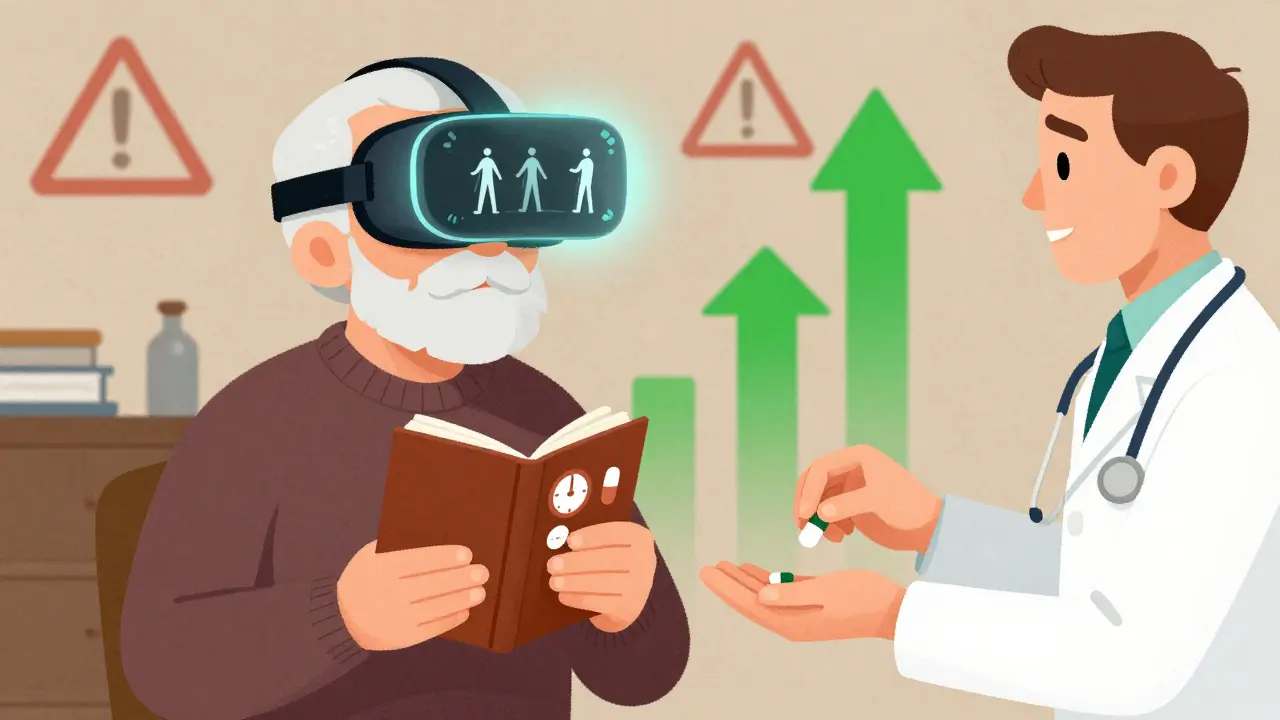
Don’t ignore it. Don’t assume it’s just aging. But also don’t stop your meds cold turkey.Start by keeping a symptom diary. Note when you feel dizzy-right after taking a pill? When you stand up? After eating? Track the time, duration, and intensity. Studies show that 68% of medication-related dizziness cases have a clear pattern tied to dosing times.
Next, talk to your doctor. They’ll likely use the Naranjo Scale, a tool that rates how likely a drug is to cause a side effect. A score of 9 or higher means the medication is almost certainly the cause.
There are four practical steps doctors often take:
- Confirm the link: Try a 4- to 6-week pause under medical supervision (never on your own).
- Assess fall risk: Use tools like the Hendrich II Fall Risk Model to see how dangerous the dizziness is.
- Switch meds: Sometimes, there’s a safer alternative. For example, switching from a diuretic to an ARB (like losartan) can cut dizziness risk.
- Try rehab: Vestibular therapy isn’t just for inner ear disorders-it works wonders for drug-induced dizziness too.
Vestibular rehabilitation therapy (VRT) involves exercises that retrain your brain to rely less on your damaged inner ear and more on your vision and body sense. Studies show 70-80% of patients see major improvement after 6-8 weekly sessions. Newer virtual reality-based VRT programs have even higher success rates-up to 82% in a 2023 Lancet trial.
When to Never Stop a Medication
This is critical: Never stop a medication because of dizziness without talking to your doctor.Stopping antiseizure drugs suddenly can triple your chance of having a seizure. Stopping beta-blockers abruptly can trigger a heart attack or dangerous spike in blood pressure. Even antidepressants can cause withdrawal symptoms that mimic severe dizziness.
The key is timing and tapering. Your doctor might reduce your dose slowly over weeks or switch you to a different drug in the same class. For example, if you’re on a high-dose SSRI causing dizziness, switching to a lower dose or a different SSRI like escitalopram might help.
What You Can Do Right Now
If you’re taking any medication and feeling off-balance, here’s what to do today:- Write down every medication you take-prescription, over-the-counter, supplements.
- Check the side effect list for each one. Look for words like dizziness, lightheadedness, vertigo, unsteadiness.
- Notice if dizziness happens right after taking a pill or when you stand up.
- Use slow movements: Sit on the edge of the bed for 30 seconds before standing. Rise slowly from chairs.
- Wear compression socks-they help blood return to your heart and reduce orthostatic drops by 45%.
- Remove tripping hazards: loose rugs, cluttered floors, poor lighting.
And if you’re 65 or older, ask your doctor for a full medication review at least once a year. Many side effects aren’t obvious until they’ve already caused harm.
The Future: Personalized Medicine
Scientists are now looking at genetics to predict who’s more likely to get dizzy from certain drugs. A 2023 study found 17 gene variants linked to higher risk of dizziness from blood pressure meds. In the future, a simple blood test might tell your doctor: “This patient is sensitive to beta-blockers-try something else.”The NIH’s All of Us Research Program is collecting data from 1 million people to build these predictive models. Meanwhile, new guidelines are being updated. The 2024 Beers Criteria is expected to add newer diabetes drugs like SGLT2 inhibitors, which showed 9.3% dizziness rates in recent surveillance data.
For now, awareness is your best defense. Dizziness from medication isn’t normal. It’s not just ‘getting older.’ It’s a signal-and one you should never ignore.


