What You Can and Can’t Bring Across Borders with Your Medications
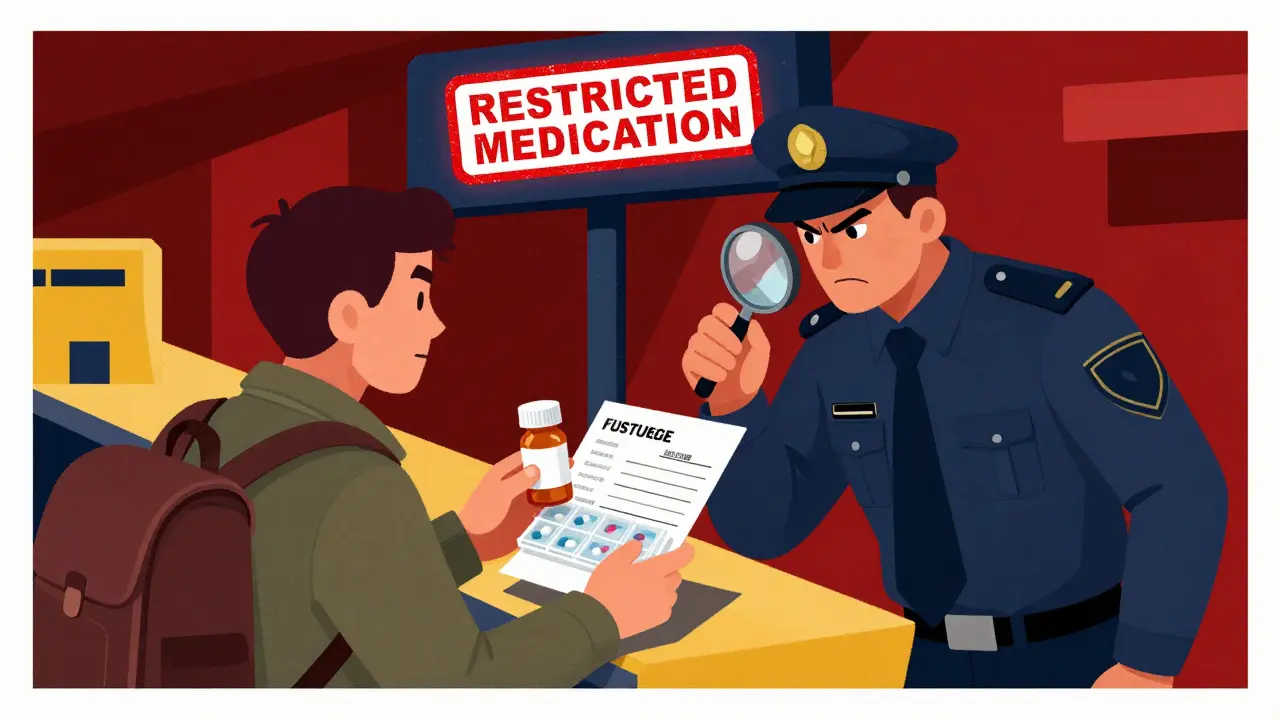
If you’ve ever had your pills taken away at customs, you know how stressful it is. You didn’t mean to break the law. You just needed your insulin, your anxiety meds, or your painkillers to get through the trip. But in 2026, border agents are watching closer than ever. A new rule that took effect in August 2025 means even small packages of your prescription meds can get stuck in customs for days - or worse, confiscated. This isn’t about stopping travelers. It’s about stopping fake drugs, illegal opioids, and black-market prescriptions from slipping through. But that doesn’t make it easier for you.
U.S. Rules: What the FDA and DEA Allow
The U.S. lets you bring in up to a 90-day supply of prescription medication for personal use, as long as it’s for a condition you actually have. That’s the FDA’s rule. But if your meds are controlled - like Adderall, Xanax, oxycodone, or even some sleep aids - you need extra steps. The DEA requires you to get permission before bringing them into the country. In 2024, they approved nearly 8 out of 10 requests. That sounds good, but if you show up without paperwork, you’re risking a fine or worse.
Here’s the catch: the DEA doesn’t just care about what you bring in. They care about what you bring out. If you’re flying to a country where your ADHD meds are illegal, you could be arrested overseas. That’s why you need to check the rules of your destination before you pack.
TSA Rules: What You Can Carry On the Plane
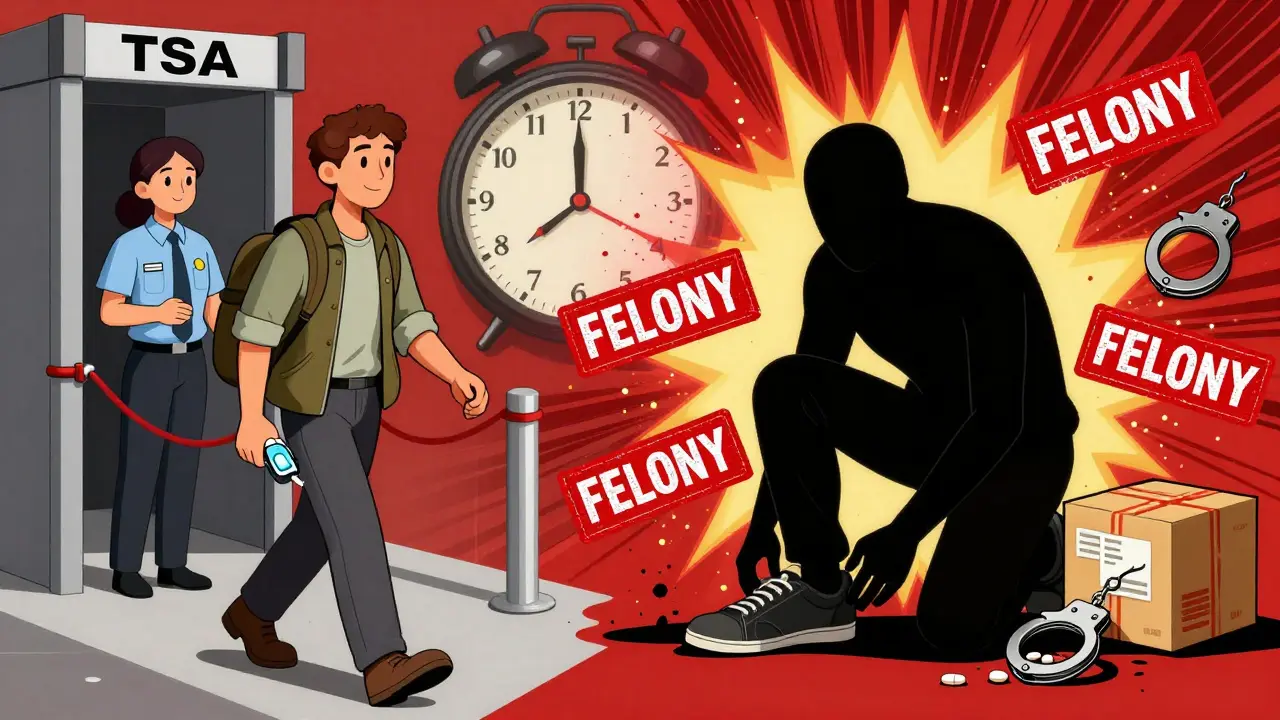
The TSA doesn’t limit how much medication you can bring in your carry-on or checked bag. Pills, liquids, creams - all allowed. Even if your liquid insulin is over 3.4 ounces, you can bring it. But you have to declare it. At security, tell the agent you have medical liquids. You’ll be asked to take them out separately for screening. No need to put them in a ziplock.
Pro tip: If you use an insulin pump or a continuous glucose monitor (CGM), call TSA Cares at 1-855-787-2227 at least 72 hours before your flight. They’ll assign you a specialist to help you through screening. Over 187,000 travelers used this service in 2024. You’re not alone.
International Rules: Every Country Is Different
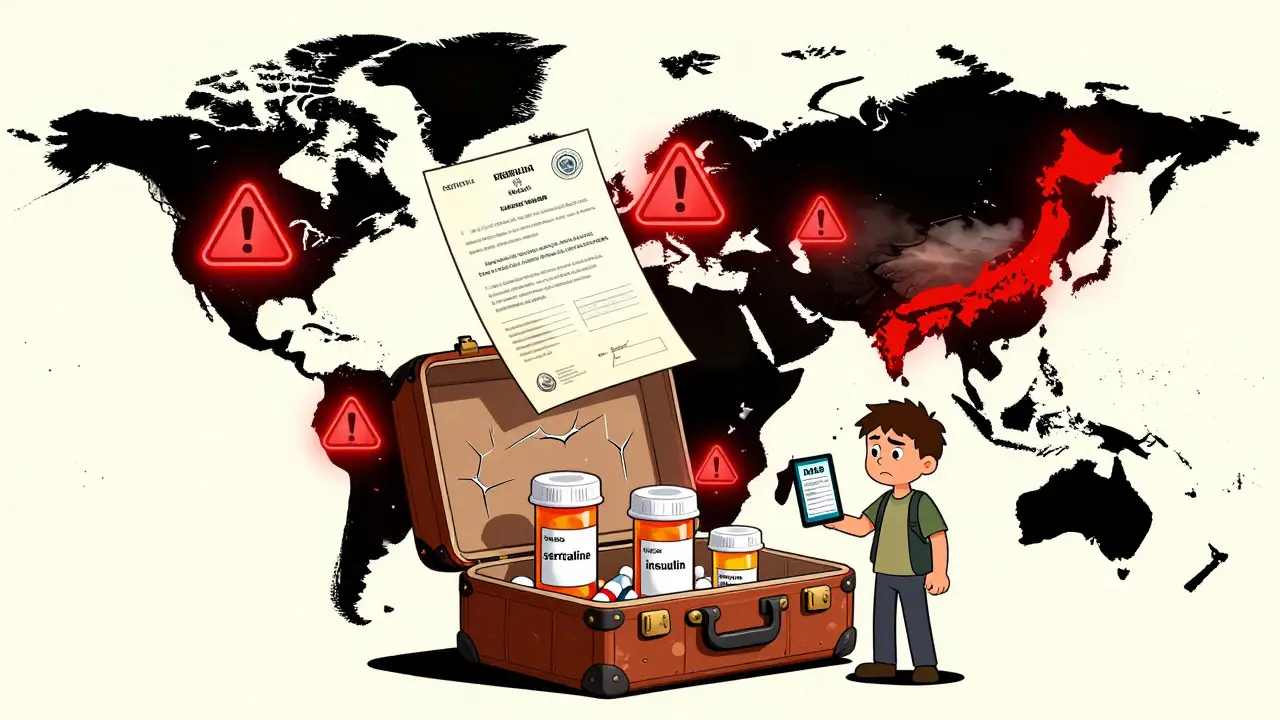
Just because your medication is legal in the U.S. doesn’t mean it’s legal anywhere else. In Japan, even common anxiety meds like diazepam (Valium) are banned unless you have a special permit. In Thailand, Xanax can land you in jail. In Singapore, codeine is a controlled drug - even if it’s in your cough syrup.
According to the International Narcotics Control Board (INCB), 78 out of 193 countries require prescriptions for controlled substances to be translated into English or the local language. And 41 countries demand that translation be official - not just a Google Translate printout. You need it stamped by your embassy or a certified translator.
Check the INCB’s online database. It’s updated every few months. Type in your medication’s generic name - not the brand name - and pick your destination. It’ll tell you if it’s banned, restricted, or needs paperwork. Don’t skip this step. In 2024, 42% of travelers with Adderall ran into problems, mostly in Asia and the Middle East.
What Papers to Bring (And What to Leave at Home)
You need three things: the original bottle, a doctor’s letter, and a translation if needed.
- Original bottle with pharmacy label: This is non-negotiable. The label must show your name, the drug name, dosage, and your doctor’s info. If you transfer pills to a pill organizer, bring the original bottle too. Agents will ask for it.
- Doctor’s letter on letterhead: This should list your condition, the medication’s generic name, dosage, and why you need it. Include your doctor’s phone number. 68 countries require this. It’s your best defense if you’re questioned.
- Official translation: If you’re going to Japan, South Korea, Russia, or most of the Middle East, you need a certified translation of your prescription. Your embassy can help. Don’t rely on apps.
Don’t bring extra pills “just in case.” Even if you plan to use them, carrying more than a 90-day supply can raise red flags. Customs agents assume you’re selling them. And don’t try to hide meds in your shoes or luggage. That’s a felony.
The New $800 Rule That’s Slowing Everything Down
In August 2025, the U.S. got rid of the $800 de minimis threshold for imported medications. That means if you order your pills online from a foreign pharmacy - even if it’s just a 30-day supply - you now pay customs duties and taxes. And your package will be held for inspection.
Before this rule, most packages cleared in 2 days. Now? It takes 5 to 7 days on average. One company tracked 8,452 shipments and found delays jumped from 2.1 to 5.7 business days. If you’re running low on meds, don’t wait until the last minute to reorder.
What to Do If Your Meds Get Confiscated
It happens. You show up at customs with your pills, and they say no. Stay calm. Don’t argue. Ask for a receipt. That receipt proves you had legal medication. You can use it to file a claim later.
If you’re detained, ask to speak to a supervisor. Call your country’s embassy. They can’t get your meds back, but they can help you find a local doctor who can prescribe something similar. Many countries have emergency access programs for travelers with chronic conditions.
Real Stories: What Went Right - and Wrong
A woman from California flew to Japan with her antidepressants. She had the original bottle, a doctor’s letter, and a certified Japanese translation from the U.S. Embassy. She sailed through customs.
A man from Texas brought his Adderall to Dubai in a pill organizer. He didn’t have the original bottle or a letter. He was arrested. His case made headlines.
On Reddit, a nurse shared how she avoided problems in 12 countries by using the International Society of Travel Medicine’s free medication letter template. It’s simple, professional, and accepted worldwide.
Special Cases: Insulin, CBD, and Medical Devices
Insulin and diabetes meds: These are rarely restricted, but you still need your original bottle and doctor’s note. Some countries, like Saudi Arabia, require special permits for insulin. Check ahead.
CBD and medical marijuana: Even if it’s legal in your state, federal law still bans it. And in most countries, it’s completely illegal. Don’t risk it. Not even if it’s labeled “hemp oil.”
Insulin pumps and CGMs: TSA allows these. But if you’re flying internationally, call the airline ahead of time. Some countries have their own rules for medical devices. Australia, for example, requires you to declare them on arrival.
How to Prepare: A Simple 6-Week Checklist
- 6-8 weeks out: Check the INCB database for your destination. Note any restrictions.
- 5 weeks out: Call your doctor. Ask for a letter on letterhead. Ask if they can send a copy to your email.
- 4 weeks out: Get translations certified if needed. Contact your embassy.
- 3 weeks out: Order refills if you’re planning to mail meds. Don’t wait until the last minute.
- 1 week out: Pack your meds in original bottles. Put the doctor’s letter and translation in your carry-on.
- Day before: Call TSA Cares if you use a pump or CGM. Print out the INCB page for your meds as backup.
Final Tip: When in Doubt, Leave It Behind
If you’re unsure whether a medication is allowed, don’t bring it. Buy it at your destination. Many countries have pharmacies that can fill prescriptions from foreign doctors - especially in Europe, Canada, and Japan. You might pay more, but you won’t risk jail, fines, or a canceled trip.
Can I bring my prescription pills in a pill organizer?
Yes, but only if you also carry the original bottle with the pharmacy label. Customs agents will ask to see it. If you don’t have it, they may assume the pills aren’t yours - or worse, that you’re trafficking them.
Are over-the-counter meds like ibuprofen restricted anywhere?
Rarely. But in some countries, high-dose painkillers like codeine (found in some cold medicines) are controlled. Always check the generic name. For example, “codeine” is banned in Dubai, even in small amounts. Stick to plain ibuprofen or acetaminophen - they’re almost always fine.
Do I need a prescription for my insulin?
No, insulin itself isn’t controlled. But you still need your doctor’s letter and original bottle. Some countries, like Saudi Arabia, require a permit. Always check ahead. And never fly without your insulin - even if you’re only gone for a few days.
Can I mail my medications ahead of time?
You can, but it’s risky. Since August 2025, all international medication shipments are subject to customs duties and inspections. Processing times are now 5-7 days. If you’re traveling soon, carry your meds with you. Don’t rely on shipping.
What if my medication has a different name overseas?
Many drugs have different brand names in other countries. Always use the generic name on your paperwork - like “sertraline” instead of “Zoloft.” That’s what doctors and customs agents look for. The INCB database uses generic names, so match yours to that.
Are there countries where all U.S. prescriptions are banned?
No country bans all U.S. prescriptions, but some ban specific types. For example, stimulants like Adderall are illegal in Japan, Singapore, and the UAE. Benzodiazepines like Xanax are banned in Thailand and Indonesia. Always check the INCB database for your specific medication and destination.


