Living with chronic pain often feels like a trap. You want to move to keep your joints loose and muscles strong, but the fear of triggering a flare-up keeps you stuck on the couch. It’s a frustrating cycle that leads to stiffness, weakness, and more pain. But what if the solution wasn’t about pushing harder or taking another pill? What if it was about moving slower?
Yoga is an ancient practice from India that combines physical postures, breathing techniques, and meditation to improve flexibility and reduce stress. Alongside Tai Chi, these gentle movement practices are shifting from niche wellness trends to evidence-based tools in modern healthcare. They don’t just distract you from pain; they actively change how your body moves and how your brain processes discomfort.
This isn’t about doing headstands or complex martial arts forms. It’s about using controlled, low-impact motion to calm the nervous system and restore function. Let’s look at why these two practices work, how they differ, and how you can start safely.
Why Gentle Movement Works for Pain
The old advice "no pain, no gain" is dangerous when you’re already hurting. High-impact exercise can inflame sensitive joints and trigger muscle spasms. Yoga and Tai Chi take a different approach. They are classified as mind-body interventions, meaning they treat the physical symptoms and the psychological stress of pain simultaneously.
Chronic pain rewires your nervous system, making it hypersensitive. A light touch might feel like a burn. These practices help reset that sensitivity. By focusing on slow, deliberate movements and deep breathing, you activate the parasympathetic nervous system-the "rest and digest" mode. This lowers cortisol levels and reduces the inflammation that fuels pain.
Research backs this up. A study published in the New England Journal of Medicine found that patients with fibromyalgia who practiced Tai Chi reported 27% greater pain reduction than those who did standard stretching. The key isn’t intensity; it’s consistency and mindfulness. You’re teaching your body that movement is safe again.
Tai Chi: The Moving Meditation
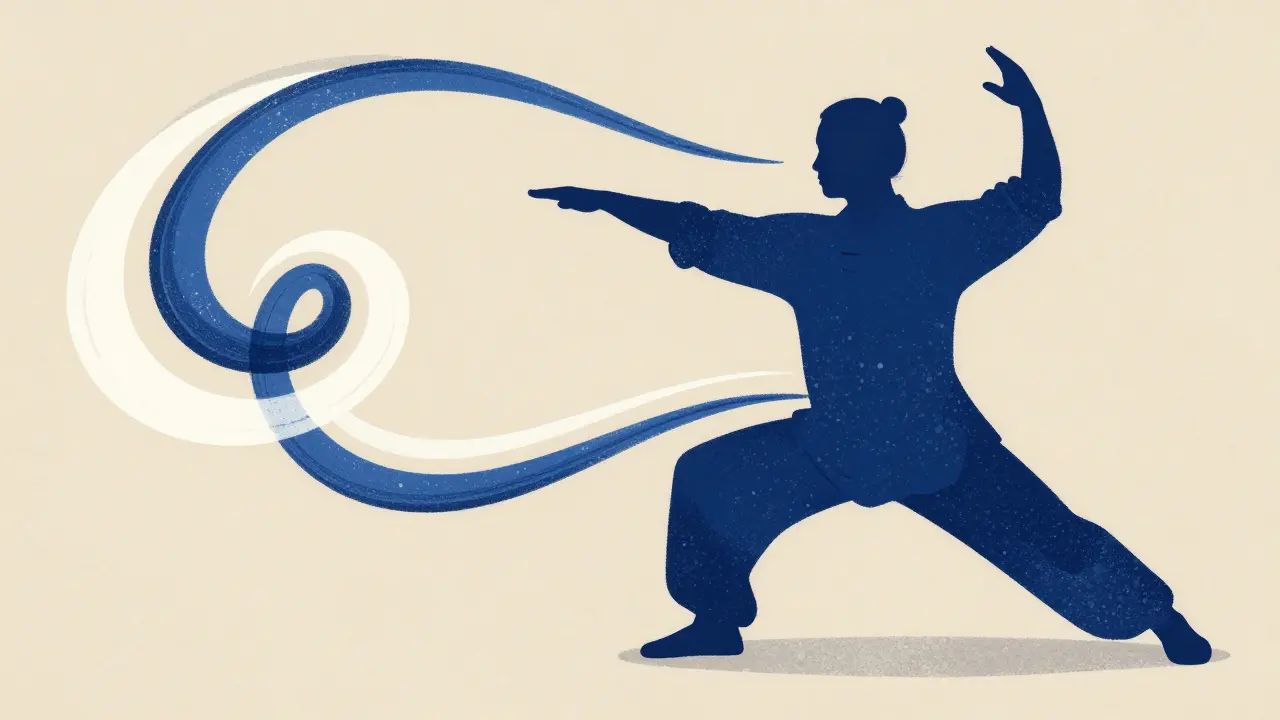
Tai Chi is a Chinese martial art that evolved into a therapeutic practice involving slow, continuous, fluid movements combined with deep breathing. Originally developed as self-defense, it’s now widely used for balance and pain relief.
Think of Tai Chi as "meditation in motion." There are no static holds. You flow from one posture to the next, shifting your weight gently. This constant micro-adjustment strengthens the stabilizer muscles around your knees, hips, and ankles without jarring impact.
For people with knee osteoarthritis, Tai Chi is a standout option. A review by the National Center for Complementary and Integrative Health (NCCIH) analyzed 16 studies and found that Tai Chi significantly improved pain and function. The Yang style, which is the most common form taught in communities, is particularly gentle. It focuses on wide stances and smooth transitions, which build endurance and confidence in your legs.
Beyond pain, Tai Chi is exceptional for balance. If you’ve ever been afraid of falling because of hip or back pain, this practice addresses that fear directly. Studies show an 18-25% improvement in balance metrics compared to control groups. That’s not just about avoiding falls; it’s about reclaiming independence.
Yoga: Strength Through Stillness
While Tai Chi flows, Yoga often involves holding positions. Modern therapeutic yoga uses static postures (asanas) to stretch tight muscles and build core strength. For pain management, you won’t be flipping upside down. Instead, you’ll focus on Hatha or Restorative styles.
Hatha yoga moves slowly through poses, allowing you to hold each one for several breaths. This sustained stretch helps release tension in the lower back and neck-two of the most common pain sites. Restorative yoga takes it further, using props like bolsters and blankets to support your body completely. You’re not working to hold the pose; the props hold you while you relax into the stretch.
A 2024 NCCIH review highlighted a specific protocol for neck pain: yoga combined with hot sand fomentation (applying heat). Participants saw a 37% improvement in cervical mobility. Even without the heat, yoga’s emphasis on alignment helps correct postural imbalances that contribute to chronic strain.
Yoga also builds mental resilience. The practice requires you to observe discomfort without reacting to it. Over time, this translates to better pain coping skills outside the studio. You learn to distinguish between "hurt" (injury) and "discomfort" (stretching), which is crucial for anyone managing chronic conditions.
Comparing Yoga and Tai Chi for Your Needs
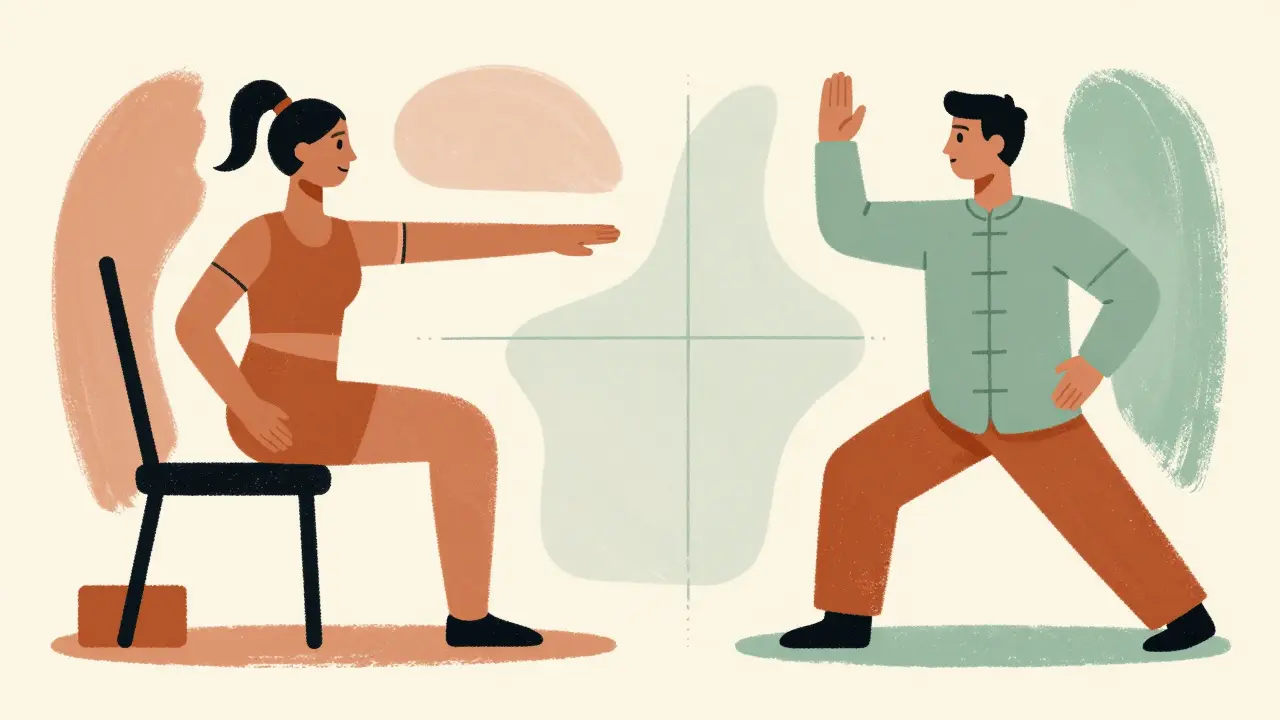
Both practices are effective, but they suit different personalities and physical needs. Here’s a breakdown to help you decide where to start.
| Feature | Tai Chi | Yoga |
|---|---|---|
| Movement Style | Continuous, flowing sequences | Static holds with transitions |
| Best For | Balance issues, knee OA, anxiety | Flexibility, back pain, stiffness |
| Learning Curve | Higher (memorizing forms) | Lower (focus on individual poses) |
| Equipment Needed | None (just comfortable clothes) | Mat, blocks, straps (optional) |
| Social Aspect | High (usually group classes) | Variable (studio or home) |
If you struggle with balance or have knee pain, Tai Chi’s weight-shifting exercises are superior. If you have a stiff lower back or need to decompress your spine, Yoga’s stretches offer more direct relief. Many people find success doing both, alternating days to vary the stimulus.
How to Start Safely
Diving in too fast is the biggest mistake beginners make. If you haven’t moved much due to pain, your body needs time to adapt. Follow these steps to avoid setbacks:
- Consult Your Doctor: Especially if you have severe osteoporosis, recent surgeries, or unstable joints. Ask if there are specific movements to avoid.
- Start Short: Aim for 15-20 minutes daily rather than an hour once a week. Consistency beats intensity.
- Choose the Right Class: Look for labels like "Gentle," "Restorative," "Chair Tai Chi," or "Therapeutic." Avoid "Power Yoga" or "Martial Arts Tai Chi" initially.
- Use Props: Don’t be proud. Use a chair for support in Tai Chi. Use blocks in Yoga to bring the floor closer to you. Proper form prevents injury.
- Listen to Your Body: Sharp pain means stop. Dull ache or stretching sensation is normal. Learn the difference.
Expect some initial soreness. A 2022 study noted that 39% of new users experienced minor pain flares during the first few weeks. This usually subsides as your muscles strengthen. If pain persists or worsens, scale back and check with your instructor.
Finding Quality Instruction
Not all instructors understand pain. A generic fitness teacher might push you into a pose that aggravates your condition. Look for certified professionals who specialize in therapeutic applications.
For Yoga, check if the instructor is registered with Yoga Alliance and has additional training in anatomy or trauma-informed care. For Tai Chi, look for teachers affiliated with organizations like the Arthritis Foundation or those certified by the National Certification Commission for Acupuncture and Oriental Medicine (NCCAOM).
Community centers and hospitals often offer subsidized classes. Insurance coverage is expanding; Blue Cross Blue Shield now covers medically supervised programs in several states. Digital platforms like Glo or Alo Moves are great supplements, but in-person guidance is invaluable for learning proper alignment when you’re in pain.
Integrating Into Your Pain Management Plan
Yoga and Tai Chi aren’t magic cures. They work best as part of a comprehensive plan. The American Chronic Pain Association notes that combining movement therapies with conventional treatments yields 30-40% better outcomes than either alone.
Use these practices to reduce reliance on medication over time. Veterans in VA programs reported reduced opioid use after six months of regular Tai Chi. Pair your movement practice with good sleep hygiene, hydration, and stress management. Think of it as building a toolkit. Some days you’ll need a strong analgesic; other days, a gentle flow will be enough.
The goal isn’t to eliminate pain entirely overnight. It’s to increase your range of motion, decrease your fear of movement, and improve your quality of life. Every small step counts.
Can I do Yoga or Tai Chi if I have severe arthritis?
Yes, but modifications are essential. Chair-based Tai Chi and Restorative Yoga are designed for limited mobility. Always inform your instructor about your joint limitations so they can suggest alternatives, such as keeping knees bent or using supports to reduce weight-bearing stress.
How long does it take to feel pain relief?
Most studies show measurable benefits emerging after 6-8 weeks of consistent practice. Maximum effects are typically seen at 12 weeks. Patience is key, as the nervous system needs time to recalibrate its pain signals.
Is Tai Chi better than Yoga for back pain?
It depends on the type of back pain. Yoga is often preferred for lower back stiffness due to its stretching components. Tai Chi may be better for acute lower back pain in younger adults or for those needing balance improvement. Both are recommended by clinical guidelines, so try both to see which feels more supportive.
Do I need special equipment to start?
No. Comfortable clothing is sufficient for Tai Chi. For Yoga, a non-slip mat is helpful but not strictly necessary to begin. Props like blocks or chairs can enhance safety and comfort but are optional for beginners.
Will my insurance cover these classes?
Coverage varies. Some plans, particularly those covering physical therapy or chronic disease management, may reimburse for medically supervised sessions. Check with your provider about CPT codes for "therapeutic exercise" or "mind-body intervention." Community center classes are often low-cost alternatives.