Most companies offer wellness programs. But if employees don’t understand what’s in it for them, participation stays low. It’s not enough to hand out pedometers or schedule yoga classes. The real issue isn’t the program-it’s the lack of clear, personal education about how these benefits actually affect employees’ lives.
Why Generic Messages Fail
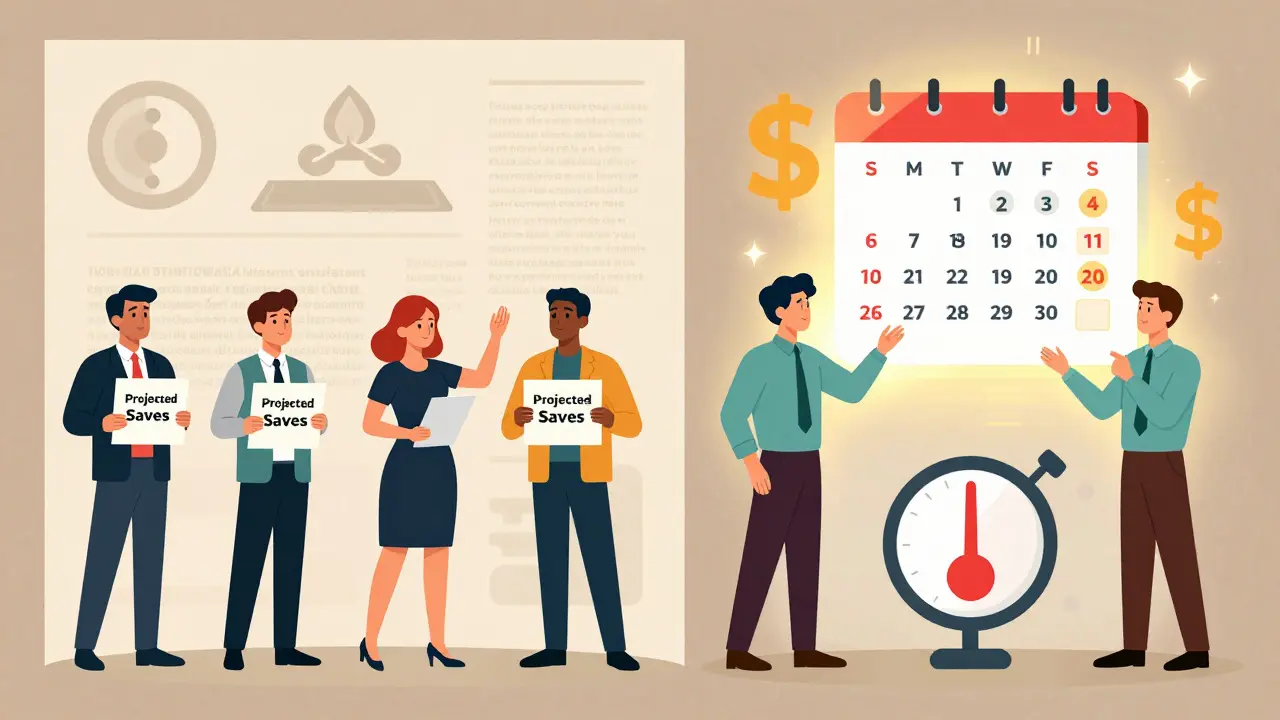
Many employers send out the same email every year: "Join our wellness program! Get healthier! Save money!" It sounds nice. But it doesn’t connect. Employees see it as noise. A 2024 survey by SHRM found that 68% of disengaged employees said they didn’t understand how specific wellness activities translated into real benefits. That’s not because they’re lazy. It’s because the messaging is too vague.Generic wellness communication leads to 19% engagement. Personalized communication? That jumps to 68%. The difference isn’t just in tone-it’s in relevance. One HR professional on Reddit shared that after switching from generic emails to personalized benefit statements showing each employee’s projected savings, participation jumped from 32% to 67% in just six months. That’s not magic. That’s clarity.
What Employees Actually Care About
Employees aren’t signing up because they want to "be healthy." They care about:- Lower health insurance premiums
- Fewer sick days
- Less stress
- More control over their finances
- Knowing their employer isn’t just checking a box
A PwC survey in 2024 found that 68% of workers rank financial stress as their top concern. Yet most wellness programs still focus on steps, weight loss, or smoking cessation. That’s why modern programs now include financial wellness modules-because employees are more likely to engage when they see a direct link between a wellness activity and their paycheck.
Companies that educate employees on how wellness reduces out-of-pocket costs see 22% lower healthcare claims on average, according to Strive Well-Being’s 2023 client reports. That’s not theoretical. That’s money in their pocket.
The Business Case Behind the Benefits
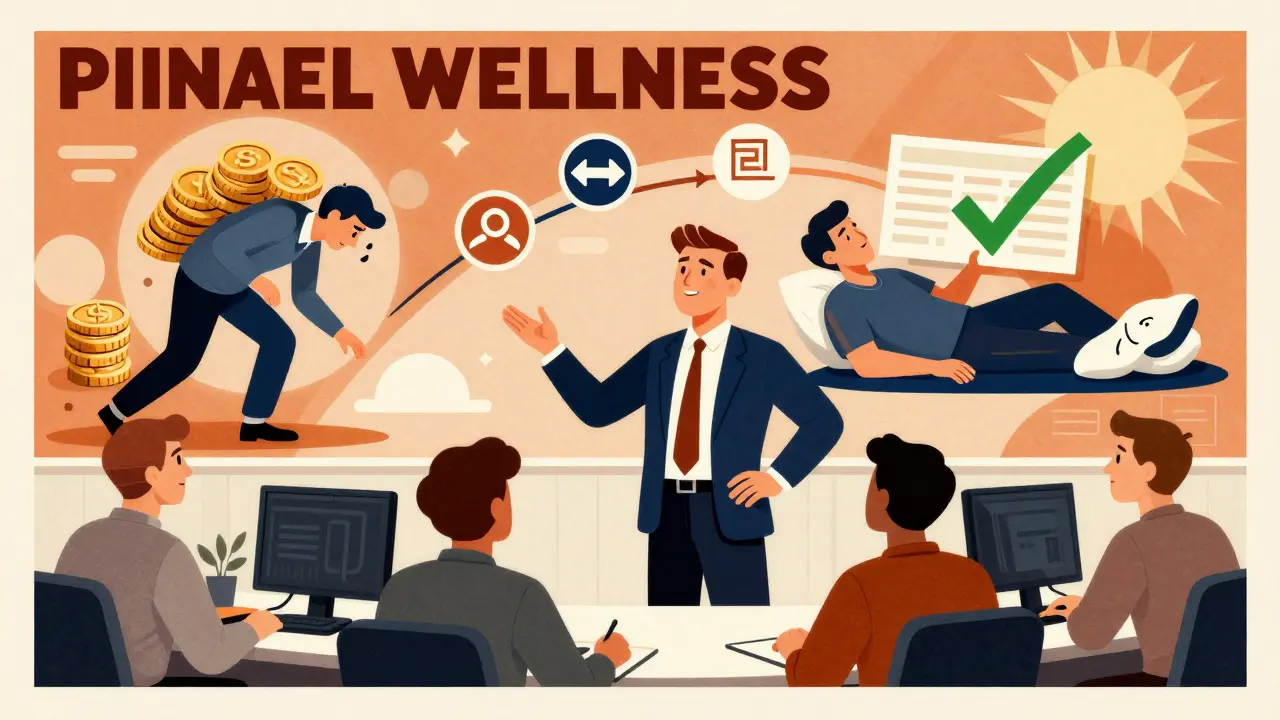
Leaders often think wellness is about health. But it’s really about business. A Harvard Business Review study found that for every $1 invested in a well-structured wellness program, companies see an average return of $3.27. That return comes from:- 28% fewer sick days
- 15% higher productivity
- 11% lower turnover
When employees feel supported, they stay longer. When they’re less stressed, they perform better. When they understand how their participation lowers insurance costs, they’re more likely to stick with it. The CDC’s Work@Health Program calls this the "dual-value proposition"-health benefits for the individual, business benefits for the company. Both matter.
But here’s the catch: if you don’t explain the connection, employees won’t see it. A 2023 Kaiser Family Foundation survey showed that 83% of large employers now include formal wellness education as part of their programs. Why? Because they’ve learned that education drives participation, and participation drives results.
How to Educate Effectively
Forget one-size-fits-all. Effective wellness education is multi-channel, personalized, and ongoing. Here’s what works:- Start with a needs survey-Ask employees what they care about. Financial stress? Mental health? Sleep? Tailor your message.
- Use personalized benefit statements-Show each employee how their participation could reduce their premiums or out-of-pocket costs. One company used data from past claims to project savings for each role. Participation rose 53%.
- Train managers-They’re the most trusted communicators. Give them talking points, not scripts.
- Use multiple channels-Email alone isn’t enough. Combine intranet posts, short videos, team huddles, and QR codes that link to benefit summaries.
- Update regularly-The CDC updated its Work@Health curriculum in March 2024 to include mental health communication modules. Why? Because 47% of employees didn’t understand how mental health services fit into wellness. If you’re not updating, you’re falling behind.
Programs that use this approach see 34% higher participation than those that focus on just physical health. The WELCOA 7 Dimensions model covers physical, emotional, social, financial, community, purposeful, and professional wellbeing. That’s not fluff. That’s realism.
What Goes Wrong
Not all wellness education works. Here’s why some fail:- Overpromising-A Trustpilot review from July 2024 called out a vendor that claimed $1,200 in annual savings per employee. The actual savings? $217. That erodes trust.
- Ignoring compliance-The EEOC received 2,147 wellness-related complaints in 2023, up 37% from the year before. Many were about privacy violations or coercion. Make sure your program follows ADA and GINA rules.
- Only targeting big companies-Only 38% of small businesses (under 50 employees) offer structured wellness education, according to the Bureau of Labor Statistics. That’s not because they don’t care. It’s because they don’t know how.
Smaller companies can still succeed. The key is simplicity. Start with one clear benefit: "Join our walking group and get $25 off your next insurance premium." Track participation. Adjust. Scale.
The Future Is Personalized
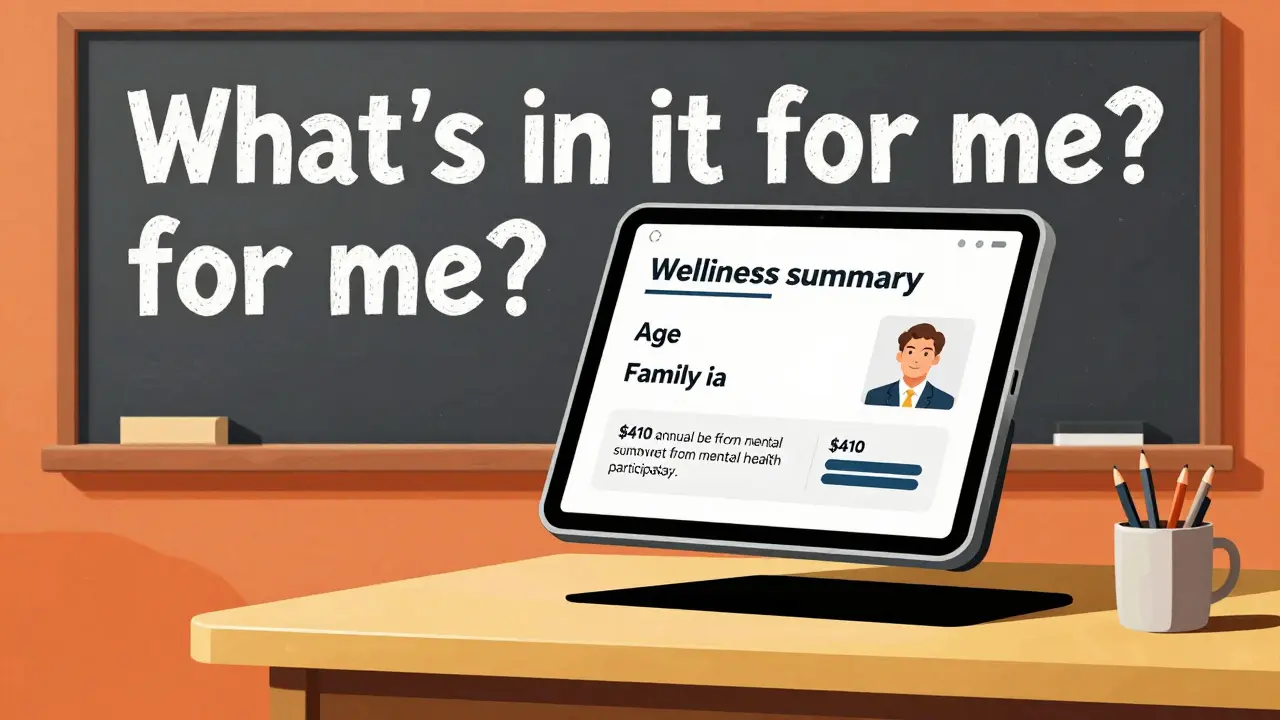
By 2026, Forrester predicts 45% of large employers will use AI-driven personalized wellness statements. That means employees will get messages like: "Based on your age, family size, and claims history, participating in our mental health program could save you $410 this year."This isn’t sci-fi. It’s data. And it works. Programs with dynamic, personalized communication have an 87% five-year survival rate, according to McKinsey. Static programs? Only 53%.
The goal isn’t to sell a program. It’s to answer one question: "What’s in it for me?" When you answer that clearly, consistently, and honestly, participation isn’t just higher-it’s sustainable.
Why do employees disengage from wellness programs?
Most employees disengage because they don’t understand how the program benefits them personally. A 2024 SHRM survey found that 68% of non-participants said they didn’t know how wellness activities connected to lower premiums, fewer sick days, or reduced stress. Generic emails and one-size-fits-all messaging don’t create connection. Personalized, data-driven communication does.
What’s the ROI of workplace wellness education?
Studies show an average return of $3.27 for every $1 invested in a well-designed wellness program, according to Harvard Business Review. This comes from reduced absenteeism (28% fewer sick days), higher productivity (15% increase), and lower turnover (11% reduction). The key is education-without it, ROI drops sharply. Programs that clearly explain benefits see participation rates over 60%, while those that don’t hover around 20%.
Can small businesses afford workplace wellness education?
Yes-but they need to start small. Basic wellness education modules start at $495 per employee annually. For a company with 20 employees, that’s under $10,000 a year. Many use free CDC resources, internal surveys, and manager-led discussions to keep costs low. The goal isn’t perfection-it’s clarity. A simple message like "Join this program and your premium could drop by $30/month" can be more effective than a $50,000 platform.
What legal risks come with wellness education?
The EEOC received over 2,100 wellness-related complaints in 2023, up 37% from the year before. Common issues include asking for health data without proper consent, penalizing non-participants, or offering incentives that exceed 30% of health plan costs. To stay compliant, avoid mandatory health screenings, keep data private, and ensure incentives are voluntary. Consulting a compliance specialist is critical, especially for companies under 100 employees.
How do you measure if wellness education is working?
Track participation rates, healthcare claim reductions, and employee feedback. A 22% drop in claims (as seen in Strive Well-Being’s client data) is a strong indicator. But don’t ignore soft metrics: survey responses about stress levels, manager feedback on attendance, and Glassdoor reviews mentioning wellness. Programs that measure both hard data and employee sentiment outperform those that track only one.


