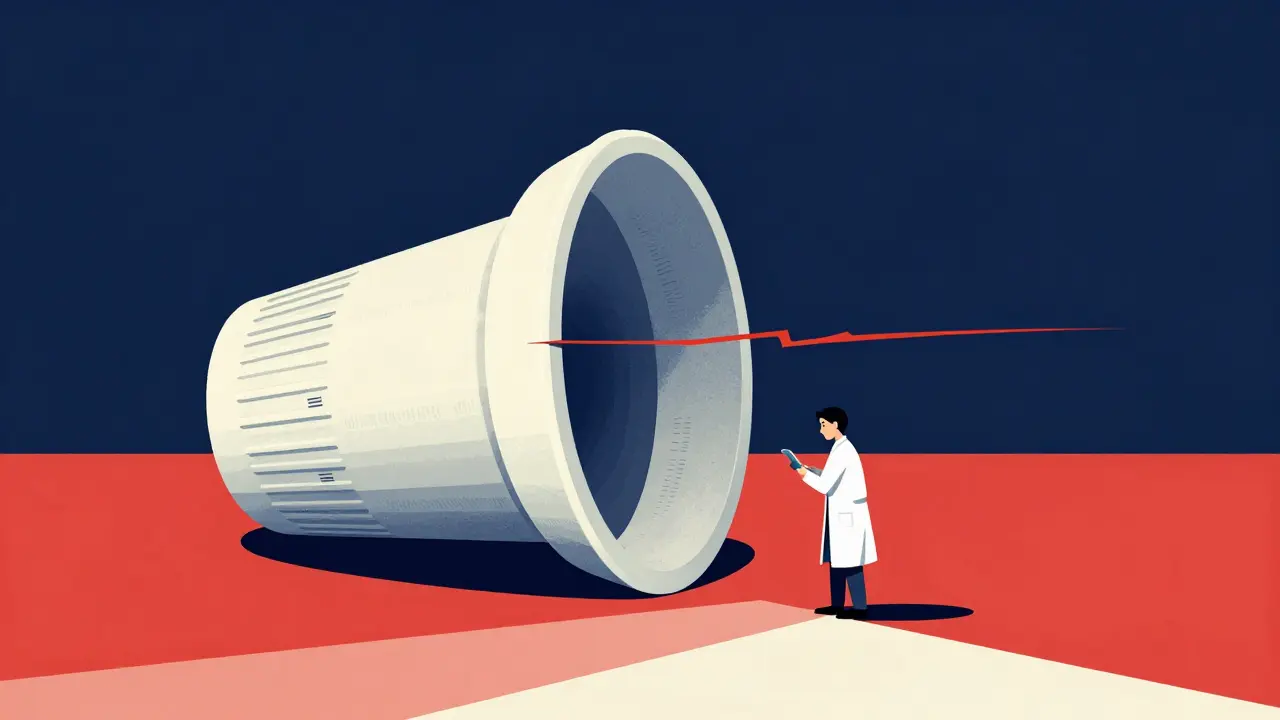
Imagine spending $50 million and seven years of your life developing a drug, only to have the regulator tell you that the shape of your inhaler's plastic cap is slightly different from the original and, because of that, your product can't hit the market. That is the frustrating reality for many pharmaceutical companies attempting to launch complex generic drugs is a category of generic medications that are significantly more difficult to replicate than simple tablets due to their active ingredients, delivery methods, or formulation. While most of us think of generics as simple "copies" of brand-name pills, some drugs are essentially architectural masterpieces that are incredibly hard to mimic.
What Actually Makes a Generic "Complex"?
Not all generics are created equal. A standard small-molecule drug-like a basic aspirin or a blood pressure pill-is relatively straightforward. You prove the same chemical is there, it dissolves at the right speed, and it gets into the bloodstream. But complex generics break these rules. They often involve Active Pharmaceutical Ingredients (APIs) that are unstable or massive, like proteins and peptides, which can trigger an immune response if the formula is slightly off.
Beyond the chemicals, the way the drug enters the body creates a massive hurdle. Think about long-acting injectables that are designed to release medicine slowly over several months. If the generic releases the drug too fast, it's toxic; too slow, and it's useless. Then there are drug-device combination products. An inhaler isn't just medicine; it's a piece of mechanical engineering. The FDA requires these to perform exactly like the reference product, meaning a tiny change in the device's airflow can lead to a rejected application.
The Regulatory Maze: Why the Standard Path Fails
For years, the gold standard for generics was the Abbreviated New Drug Application (ANDA). This process allows a company to skip expensive new clinical trials if they can prove "bioequivalence"-basically showing the generic works the same way as the brand name. But for complex products, the ANDA path is often a dead end because traditional bioequivalence tests aren't designed for a liposomal injection or a complex nasal spray.
Because of this, many developers are forced to use the 505(b)(2) application. This is a "hybrid" route that allows companies to use some existing data from the original drug but requires them to provide their own new clinical data. It's more expensive and takes longer, but for many, it's the only way to get a complex product through the door. The FDA recognized this gap during the 2017 GDUFA II reauthorization, acknowledging that the old rules simply didn't fit the science of modern medicine.
| Feature | Simple Generics (Small Molecule) | Complex Generics |
|---|---|---|
| Average Development Cost | Low to Moderate | $20M - $50M |
| Timeline to Market | 2 - 3 Years | 5 - 7 Years |
| Primary Approval Path | ANDA | ANDA or 505(b)(2) Hybrid |
| Technical Focus | Chemical Purity / Dissolution | Bioequivalence / Device Precision |
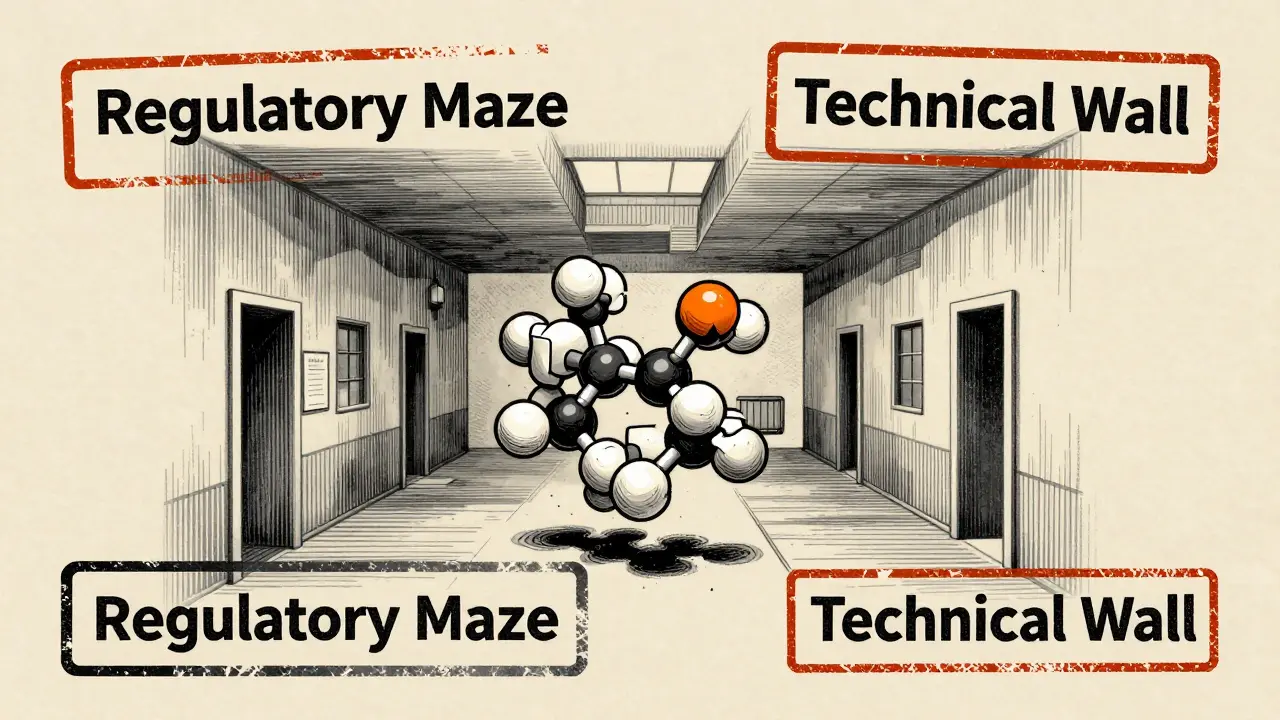
The Technical Wall: Formulation and Analysis
When a company tries to copy a complex drug, they hit what experts call "the technical wall." This isn't just one problem, but a cluster of six major challenges. Formulation is the biggest headache-figuring out how to keep a drug stable in a liposome (a tiny fat bubble) is a different beast than mixing a powder for a capsule. Then comes the analytical struggle. How do you prove that a complex polymer is identical to the original when the tools to measure it are still evolving?
Clinical challenges are equally daunting. For long-acting injectables, proving bioequivalence often requires lengthy human trials to ensure the drug release profile stays steady over weeks or months. This creates a paradox: the very things that make these drugs clinically valuable-their stability and slow release-are the things that make them a nightmare to approve. A single error in a "critical process parameter" during manufacturing can change the drug's behavior entirely, leading to an immediate FDA rejection.
Is the FDA Making it Easier?
The FDA isn't oblivious to the problem. They've launched the Pre-ANDA Meeting Program, which lets companies sit down with regulators before submitting their final application to iron out potential issues. By 2023, this program had processed over 1,200 requests. They've also leaned heavily into Product-Specific Guidances (PSGs)-essentially "cheat sheets" that tell companies exactly what data the FDA wants to see for a specific type of drug. As of 2019, there were about 1,700 of these guidances available.
However, the results have been slow. Between 2015 and 2023, only about 15 complex generic products received approval, while over 1,000 traditional generics sailed through. A rare win was the 2019 approval of the bupivacaine liposome injectable. This case was a breakthrough because it proved that if a company and the FDA collaborate closely on a scientifically challenging bioequivalence approach, it can actually work. But for most, the "evolving expectations" of the agency mean that a goalpost can move mid-review, adding months or years to the timeline.
The Future: AI and Quality by Design
We are starting to see a shift in how these drugs are built. Instead of "trial and error" in the lab, companies are moving toward Quality by Design (QbD). This approach uses mathematical models to predict how changes in the manufacturing process will affect the final product. Instead of hoping the drug is right, they build it to be right by design. Industry experts expect QbD to slash regulatory review cycles by 35% to 45% because the data submitted is much more robust.
Artificial intelligence is also entering the fray. Machine learning is being used to predict how complex molecules will interact with the human body, potentially reducing development timelines by up to 30% by 2027. By simulating how a drug dissolves or binds to a receptor, researchers can fail faster and pivot quickly, rather than waiting for a failed clinical trial to tell them they were wrong.
Why This Matters for the Patient
At the end of the day, this isn't just a fight between lawyers and scientists-it's about cost. When a simple generic enters the market, the price of the drug usually plummets. But because complex generics are so hard to approve, many branded drugs maintain a monopoly for years after their patents expire. This leaves patients paying premium prices for essential medications simply because no one has been able to crack the "complexity code" required by the FDA.
The global generics market is expected to hit $250 billion by 2028, with complex products making up a quarter of that. If the industry can bridge the gap between high-tech manufacturing and regulatory expectations, we could see a flood of more affordable, life-saving treatments. Until then, the hurdle remains high, and the risk for developers stays immense.
Why are complex generics more expensive to develop than simple ones?
Complex generics require specialized R&D skillsets and more expensive raw materials. Because they often involve intricate delivery systems (like inhalers) or unstable molecules (like peptides), they require more rigorous testing and often necessitate full clinical trials rather than just simple bioequivalence tests. This pushes development costs to $20-50 million, compared to much lower figures for standard tablets.
What is a 505(b)(2) application?
The 505(b)(2) is a hybrid regulatory pathway that allows a company to submit a drug application using a mix of existing data (from the original branded drug) and new data generated by the generic manufacturer. It is often the only viable path for complex generics that cannot satisfy the strict, simplified requirements of an ANDA.
How does a drug-device combination affect FDA approval?
In these products, the device is as important as the drug. If a generic inhaler's shape or mechanism differs slightly from the original, it can change how the drug is delivered to the lungs. The FDA may reject the product if they believe the device difference could impact patient outcomes, even if the chemical composition of the drug is identical.
What is the Pre-ANDA Meeting Program?
Established under GDUFA II, this program allows generic drug developers to meet with the FDA before submitting their application. This helps companies clarify the agency's expectations and ensure their scientific approach to bioequivalence is acceptable, reducing the likelihood of a Complete Response Letter (rejection).
Will AI actually speed up the approval of these drugs?
Yes, by using machine learning to predict molecular behavior and optimize formulations, developers can avoid costly mistakes in the lab. While AI doesn't change the FDA's standards, it allows companies to submit "cleaner," more accurate data, which can reduce the number of review cycles and speed up the overall timeline by an estimated 20-30%.