Weight Loss Medication Blood Pressure Risk Calculator
Risk Assessment Tool
Enter your information to estimate potential blood pressure changes when taking weight loss medications. Results are based on clinical studies and FDA guidelines.
When you start a weight loss medication like Wegovy or a GLP-1 receptor agonist that helps reduce appetite and improve blood sugar control, you’re not just changing how much you eat-you’re changing how your whole body processes medicine. Many people taking these drugs are also on medications for high blood pressure or depression. What happens when they mix? The answer isn’t simple, and ignoring it can lead to dizziness, fainting, or even a dangerous spike in blood pressure.
How GLP-1 Medications Affect Blood Pressure
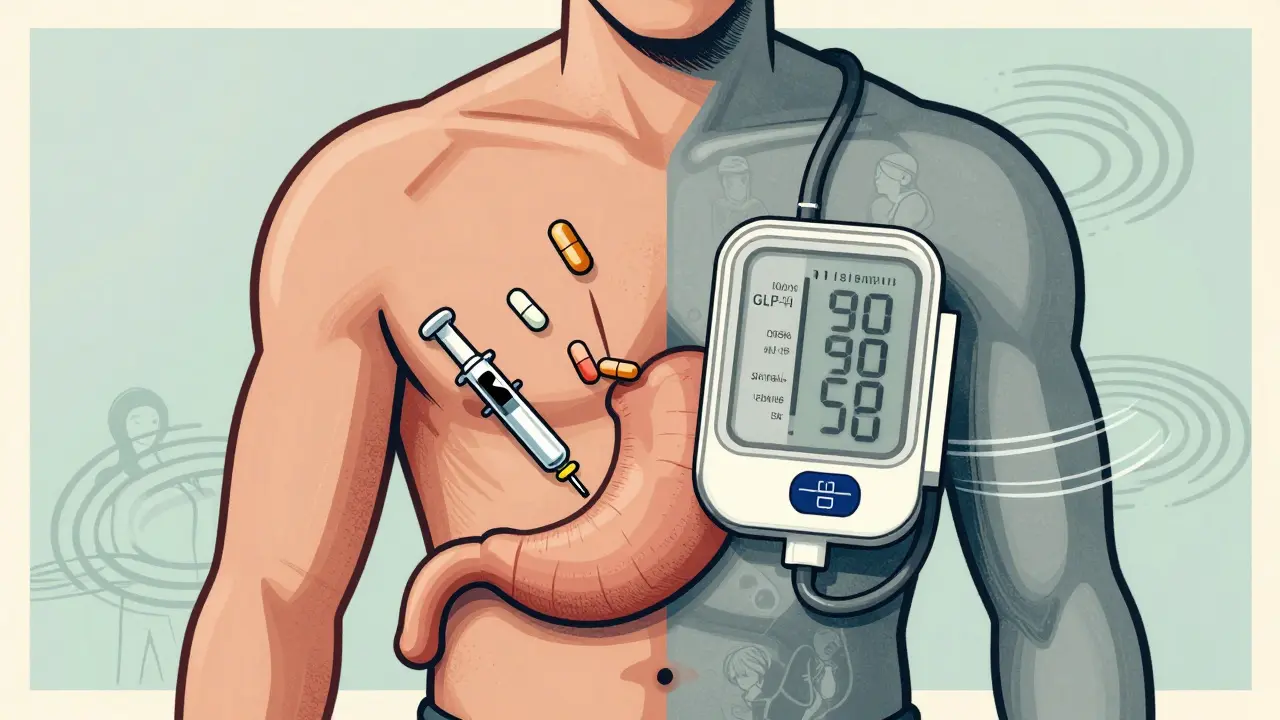
Drugs like Saxenda (liraglutide) and Wegovy (semaglutide) work by mimicking a natural hormone that tells your brain you’re full. But they also slow down how fast your stomach empties. This sounds harmless, but it changes how your body absorbs other drugs-including blood pressure pills. If you’re taking lisinopril (an ACE inhibitor) or losartan (an ARB), your body might absorb them slower or differently, leading to unpredictable drops in blood pressure.
Studies show that people on these medications lose weight, and that weight loss naturally lowers blood pressure. But for someone already on high blood pressure medicine, that drop can be too fast. In clinical trials, Wegovy lowered systolic blood pressure by an average of 6.2 mmHg, and Saxenda by 4.1 mmHg. That might not sound like much, but for someone whose blood pressure was already borderline normal, it can push them into hypotension-defined as readings below 90/60 mmHg.
One in six patients on GLP-1 medications and antihypertensives experience symptoms like lightheadedness, fatigue, or fainting. That number jumps to nearly half in patients over 65. One Reddit user shared that after starting Wegovy, their lisinopril dose had to be cut in half because their standing blood pressure dropped to 85/55. That’s not an outlier. Data from Drugs.com shows 28% of users on both types of medication reported dizziness, and 12% needed their blood pressure meds adjusted within three months.
Why Phentermine Is a Different Story
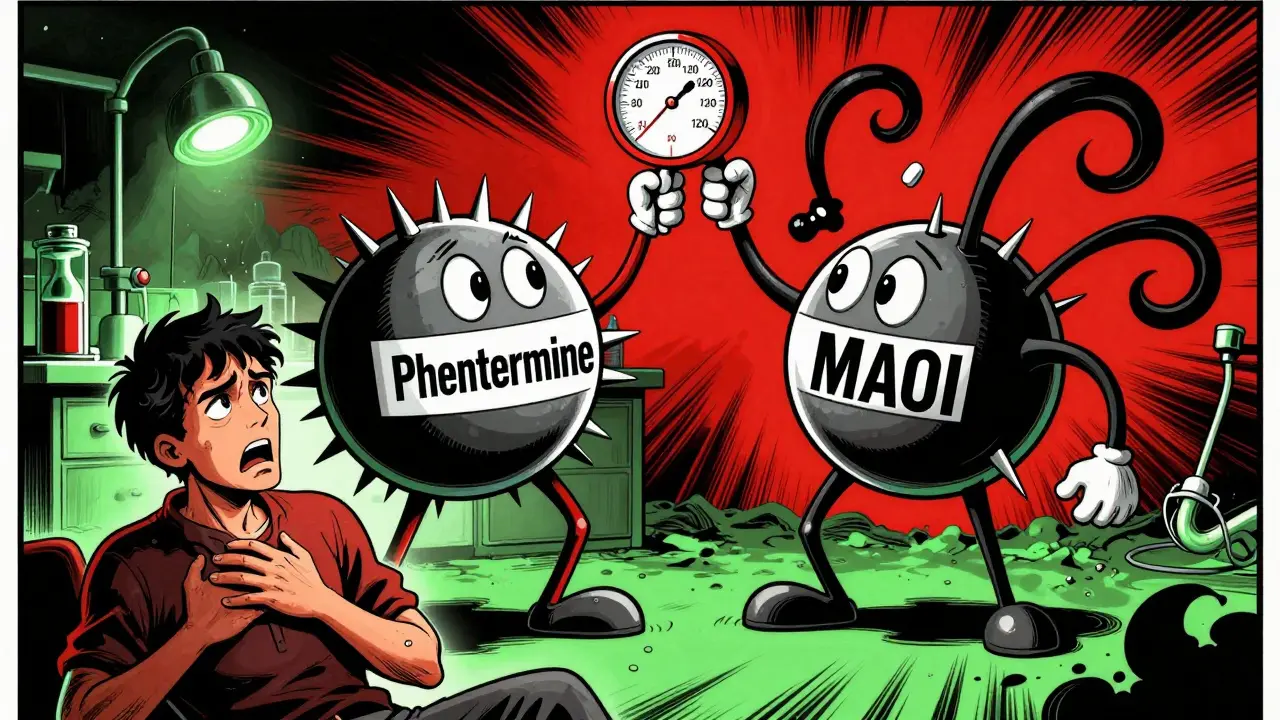
Not all weight loss drugs act the same. Phentermine (a stimulant approved in 1959) works by boosting norepinephrine, a chemical that increases heart rate and tightens blood vessels. That means it raises blood pressure-not lowers it. For someone with existing hypertension, this can be risky. Studies show phentermine can push systolic pressure up by 5 to 15 mmHg and diastolic by 3 to 10 mmHg.
The bigger danger comes when phentermine is mixed with MAOIs (monoamine oxidase inhibitors, a class of antidepressants). The FDA has issued multiple warnings about this combo. When phentermine and MAOIs interact, they can cause a hypertensive crisis-blood pressure spiking above 180/120 mmHg. In extreme cases, readings have exceeded 220/120 mmHg, requiring emergency care. The FDA says you must stop MAOIs at least 14 days before starting phentermine. Still, 0.8% of patients who didn’t follow this rule ended up in the ER.
Qsymia, which combines phentermine with topiramate, is a middle ground. Topiramate has a mild blood pressure-lowering effect, so the net result is often a small drop-around 2 to 5 mmHg systolic. But even this isn’t safe for everyone. People with heart disease, glaucoma, or kidney problems still need close monitoring.
Antidepressants and Delayed Absorption
Many people taking weight loss meds also take antidepressants-SSRIs like sertraline, fluoxetine, or escitalopram. The problem isn’t that these drugs directly interact. It’s that GLP-1 medications slow stomach emptying by 25-35%. That means antidepressants sit in your stomach longer before being absorbed. For some, this delays the drug’s effect. For others, it reduces the total amount absorbed.
One study found that sertraline absorption dropped by 18-25% when taken with liraglutide (Saxenda). That’s enough to make someone feel like their antidepressant stopped working. A user on Reddit reported, “My sertraline stopped working after starting Saxenda.” Their psychiatrist confirmed delayed gastric emptying was likely the cause. The American Psychiatric Association now recommends spacing out GLP-1 and antidepressant doses by at least two hours. About 78% of psychiatrists surveyed follow this practice.
It’s not just SSRIs. Any oral medication-anti-anxiety drugs, thyroid pills, even birth control-can be affected. If you notice your mood worsening, sleep changing, or anxiety creeping back, talk to your doctor. It might not be your mental health slipping-it could be your stomach.
Who’s at Highest Risk?
Not everyone needs to panic. But certain groups need extra caution:
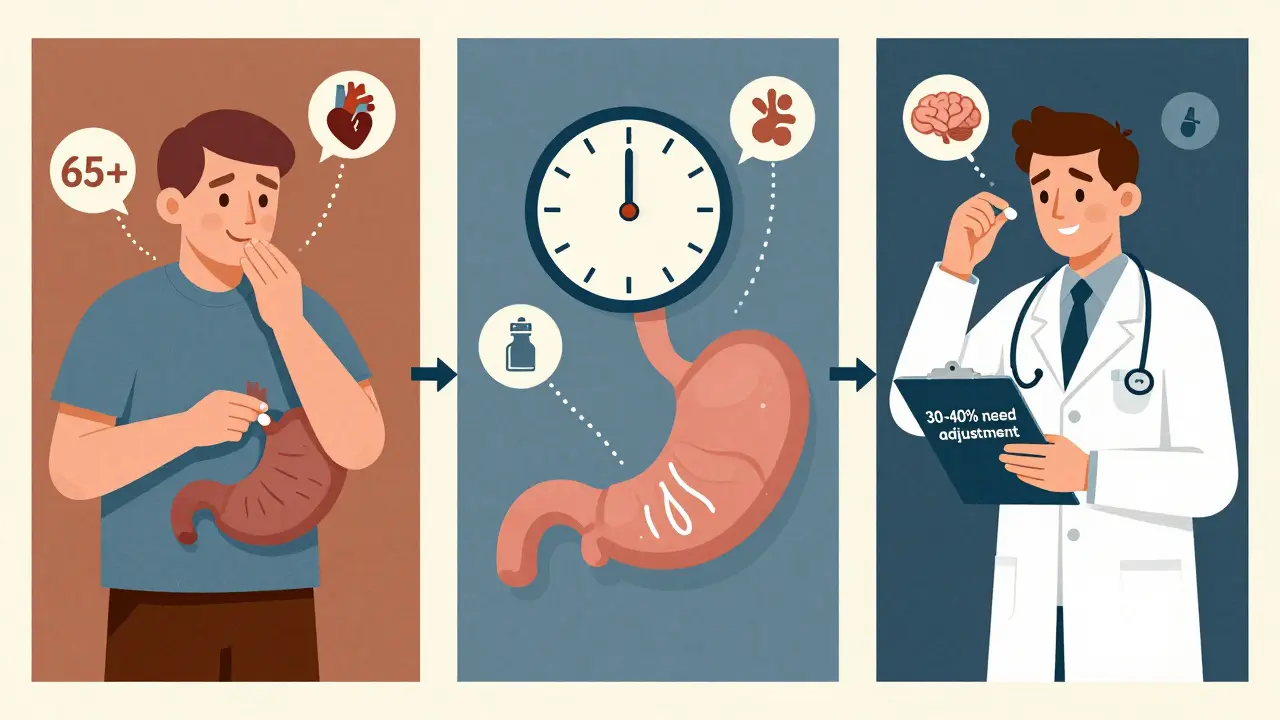
- People over 65: Their bodies handle blood pressure changes less well. Over 22% of elderly patients on GLP-1 meds drop more than 20 mmHg in systolic pressure.
- Those on ACE inhibitors or ARBs: These drugs already affect kidney function. Combined with GLP-1 meds, they raise potassium levels by 15-22%, increasing risk of heart rhythm issues.
- Diabetics on sulfonylureas: If you’re taking glipizide or glimepiride, GLP-1 meds can double your risk of low blood sugar. That’s why doctors often cut these doses before starting weight loss treatment.
- People on diuretics: Furosemide or hydrochlorothiazide can amplify the blood pressure-lowering effect of GLP-1 drugs by up to 40%.
According to the American Association of Clinical Endocrinologists, 30-40% of patients on GLP-1 medications need their blood pressure meds adjusted within the first three months. That’s not rare-it’s expected.
What You Should Do
If you’re considering or already taking a weight loss medication:
- Get your baseline blood pressure checked before starting. Know your numbers.
- Monitor weekly for the first month. Use a home monitor. Record readings in the morning and evening.
- Talk to both your endocrinologist and cardiologist. Don’t assume your primary care doctor is aware of all your meds. Bring a full list.
- Don’t adjust your blood pressure or antidepressant dose yourself. Even small changes can have big effects.
- If you’re on phentermine, confirm you’ve stopped MAOIs for at least 14 days. If you’re unsure, ask your pharmacist.
- Space out your medications. Take your antidepressant at least two hours before or after your GLP-1 shot.
Some clinics now use automated alerts in electronic health records to flag high-risk combinations. By 2025, that will be standard. But until then, you need to be your own advocate.
What’s Coming Next
New drugs are on the horizon. Retatrutide, a triple-agonist that targets three appetite-regulating hormones, is in late-stage trials. But we don’t yet know how it interacts with antidepressants. The NIH is funding a major study (NCT05876543) to see how semaglutide affects sertraline levels. Meanwhile, Novo Nordisk updated Wegovy’s label in late 2023 to warn of hypotension in 18.7% of patients on blood pressure meds.
The message is clear: weight loss medications aren’t just about eating less. They’re about your entire physiology changing. That means your meds need to change too. Ignoring these interactions isn’t risky-it’s dangerous. But with the right monitoring, most people can use these drugs safely and effectively.
Can weight loss medications cause low blood pressure?
Yes, especially GLP-1 medications like Wegovy and Saxenda. They lower blood pressure by helping you lose weight and by directly affecting blood vessels. In clinical studies, 12-18% of users on these drugs and blood pressure medications experience systolic pressure dropping below 90 mmHg. Symptoms include dizziness, fatigue, and fainting. Elderly patients and those on ACE inhibitors or diuretics are at highest risk.
Do I need to stop my blood pressure medication when starting Wegovy?
No, you don’t stop it-but you may need to reduce the dose. Most patients on GLP-1 medications and antihypertensives need their blood pressure drugs lowered by 25-50% within the first few months. Your doctor should monitor your blood pressure weekly for the first month, then monthly for three months. Never adjust your dose without medical guidance.
Can I take antidepressants with Saxenda or Wegovy?
Yes, but with caution. GLP-1 medications slow stomach emptying, which can reduce how much of your antidepressant gets absorbed. This may make your medication less effective. To minimize this, take your antidepressant at least two hours before or after your GLP-1 injection. If you notice your mood worsening, talk to your psychiatrist-your dose may need adjustment.
Is phentermine safe if I’m on blood pressure meds?
Phentermine can raise blood pressure, so it’s risky if you already have hypertension. It’s generally not recommended for people with uncontrolled high blood pressure. If you’re on antihypertensives, your doctor may still prescribe it-but only after close monitoring. The bigger danger is combining phentermine with MAOIs, which can cause a life-threatening hypertensive crisis. Always tell your doctor about every medication you’re taking.
How long should I wait before starting a weight loss medication after stopping an MAOI?
You must wait at least 14 days after stopping an MAOI before starting phentermine. This is a strict FDA requirement. Some MAOIs stay in your system for weeks. If you’re switching from an MAOI to a different antidepressant, wait until the new one is fully active and you’ve been off the MAOI for two full weeks. Failure to follow this rule has led to emergency room visits.


