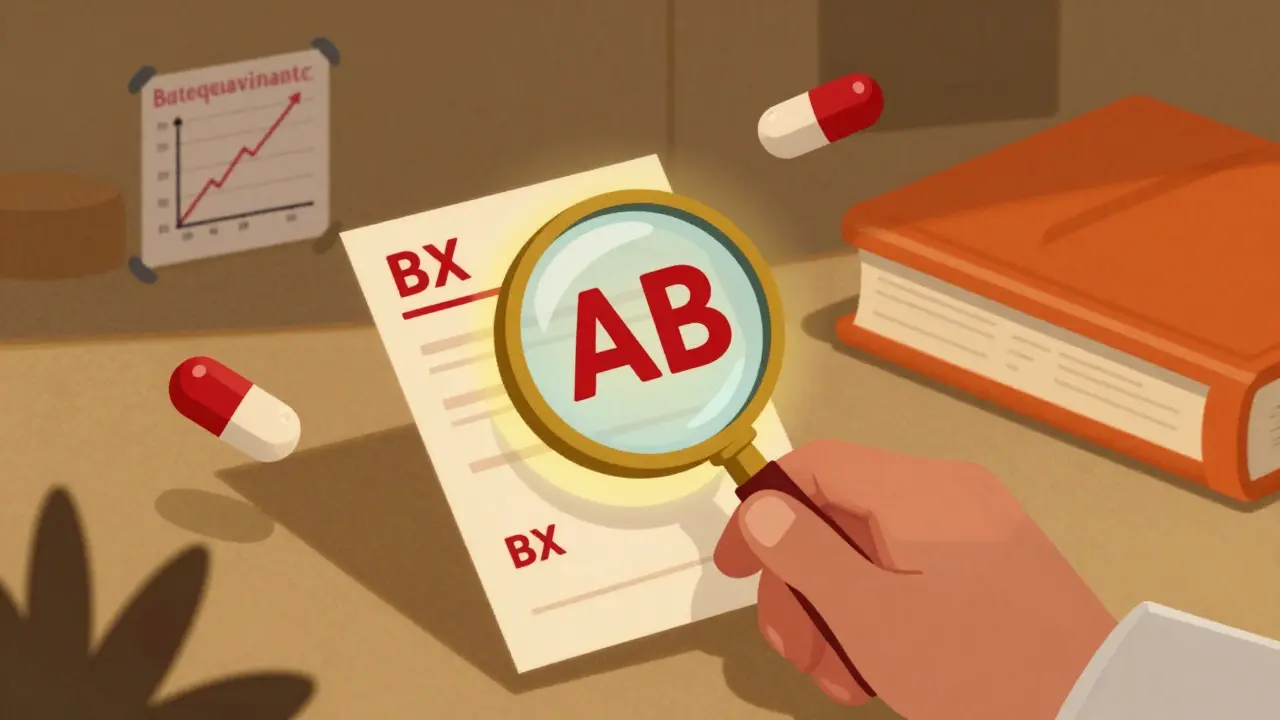
When you pick up a prescription at the pharmacy, you might not realize that a single letter code on the drug label is deciding whether you get a brand-name pill or a cheaper generic. That code - like AB, BC, or BX - is part of the FDA’s Therapeutic Equivalence (TE) system, a quiet but powerful tool that shapes how millions of Americans access affordable medications every day. This isn’t just bureaucracy. It’s the reason you pay $4 for a generic instead of $400 for the brand. And if you’re a pharmacist, doctor, or patient, understanding these codes can prevent confusion, delays, and even mistakes in treatment.
What the FDA Means by "Therapeutic Equivalence"
The FDA doesn’t just approve generics because they look alike. They have to work the same way. That’s what therapeutic equivalence means: two drugs - one brand, one generic - must have the same active ingredient, strength, dosage form, and route of administration, and they must deliver the same amount of medicine into your bloodstream at the same rate. In plain terms: if you take either one, your body responds identically.
This isn’t guesswork. The FDA requires rigorous testing called bioequivalence studies. These studies compare how fast and how much of the drug gets absorbed in healthy volunteers. If the generic’s absorption falls within 80% to 125% of the brand’s, it passes. But even that’s not the whole story. The FDA also checks that the generic doesn’t have harmful impurities, unstable ingredients, or packaging that affects how the drug works. Only after all that does it assign a TE code.
The Letter Code System: A, B, and Everything In Between
The TE code is one or two letters, and the first letter tells you everything you need to know:
- A means the product is considered therapeutically equivalent to the brand-name drug. You can substitute it with full confidence.
- B means the FDA hasn’t confirmed equivalence. Substitution isn’t automatically allowed. There’s a reason - and it’s not always a bad one.
But here’s where it gets detailed. The A category has subcodes:
- AB is the most common. It means the generic passed bioequivalence testing using standard methods - usually blood tests for oral pills.
- AB1, AB2, AB3, AB4 appear when multiple brand-name versions exist. For example, if two different brands are approved for the same drug, the FDA assigns AB1 to generics matching the first brand, AB2 to those matching the second. This prevents confusion when pharmacists have to pick the right match.
Now, the B codes? They’re trickier. These aren’t necessarily unsafe - they just need more scrutiny. Here’s what they mean:
- BC: Extended-release pills that don’t fully match the brand’s release pattern.
- BD: Products with known bioequivalence issues in the past.
- BE: Delayed-release tablets (like enteric-coated aspirin) where absorption timing matters.
- BT: Topical creams or ointments - hard to test because skin absorption varies.
- BN: Inhalers or nebulizer drugs - delivery method is complex.
- BP: Potential problems with absorption or stability.
- BR: Suppositories or enemas meant for systemic effect.
- BS: The drug doesn’t meet the FDA’s purity or stability standards.
- BX: Not enough data to make a call. No substitution allowed.
Over 90% of generic drugs in the U.S. carry an "A" rating. That’s the norm. But the remaining 10%? Those "B" codes are why some prescriptions still come with "Do Not Substitute" written on them.
Why Some Generics Get "B" Ratings - Even When They Should Work
It’s frustrating: you see a generic version of a drug you’ve been taking, and the pharmacist says, "I can’t switch you." Why? Because it has a "B" code. But here’s the twist - many of these "B" rated drugs are clinically identical. The issue isn’t the drug. It’s the test.
Take topical creams. How do you prove two ointments absorb the same way into skin? Blood tests don’t help. Skin thickness, moisture, and application technique vary too much. The FDA’s current method relies on lab tests that may not reflect real-world use. Same with inhalers: measuring how much medicine reaches your lungs isn’t easy. So even if a generic cream works perfectly for patients, it gets a "BT" code because the science to prove equivalence isn’t perfect yet.
Dr. Duxin Sun from the University of Michigan says this system was built for simple pills - not complex injections, patches, or nasal sprays. "We’re using 1980s methods on 2020s drugs," he wrote in a 2022 paper. That’s why the FDA’s 2022 draft guidance is trying to update the rules. They’re now testing new methods - like using skin models or measuring drug concentration in tissue - to better judge these harder-to-test products.
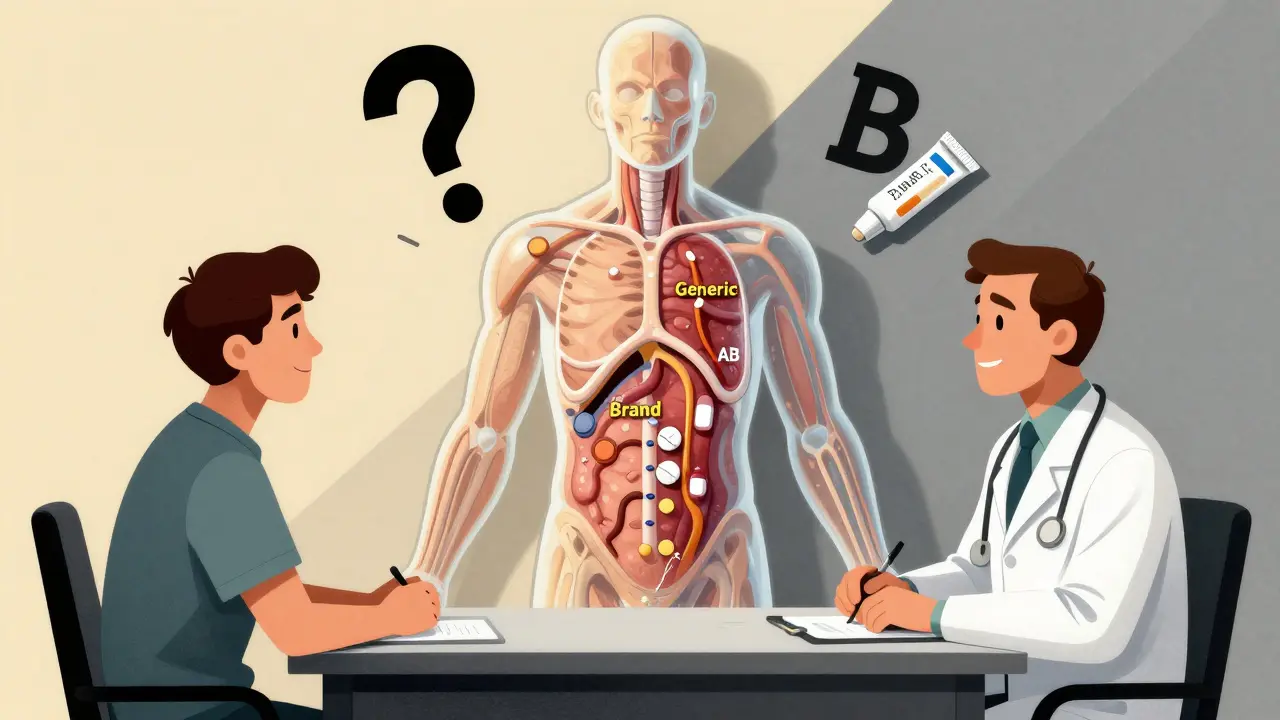
How Pharmacists Use TE Codes Every Day
For pharmacists, the Orange Book (the official FDA publication listing all TE codes) is a daily tool. Nearly 87% of independent pharmacists say they check it at least once a week, according to a 2022 survey by the National Community Pharmacists Association. Why? Because state laws require it.
Forty-nine states let pharmacists automatically swap an "A"-rated generic without calling the doctor. That saves time and money. But if the code is "B," they can’t substitute - unless the prescriber says it’s okay. Thirty-eight states require pharmacists to notify the doctor if they even try to substitute a "B"-rated product. That’s why you sometimes get a call from the pharmacy: "We tried to switch your medication, but the code says "B." Should we proceed?"
And it’s not just about rules. Pharmacists spend an average of 2.7 minutes per prescription verifying TE codes. Multiply that by millions of prescriptions, and you get over $1.2 billion saved each year by avoiding unnecessary brand-name use. That’s real money - and it’s all tied to these little letters.
Doctors, Patients, and the Confusion Around "B" Codes
But here’s the problem: not everyone understands the codes. A 2022 American Medical Association survey found that 42% of physicians don’t fully understand what "B" means. Some think it means "unsafe." Others think it means "ineffective." Neither is true. A "B" just means the FDA hasn’t confirmed equivalence - not that it doesn’t work.
That leads to mistakes. In some cases, pharmacists refuse to substitute a "B"-rated drug even when the doctor intended it. In others, doctors prescribe a brand-name drug thinking no generic exists - when one does, but it’s coded "B." Patients end up paying more, or worse, getting interrupted care.
One real example: a patient on a topical steroid cream for eczema was switched to a generic with a "BT" code. The pharmacist refused. The patient went weeks without treatment. Later, the doctor confirmed the generic was identical. The code didn’t reflect reality - the system did.
What’s Changing? The Future of TE Codes
The FDA knows the system has gaps. That’s why they’re updating their guidelines. By 2027, they aim to cut "B" ratings for complex generics by 30%. How? By accepting new kinds of evidence:
- Real-world patient data from electronic health records
- Advanced lab models that simulate skin or lung absorption
- Comparative clinical outcomes, not just blood levels
They’re also expanding Product-Specific Guidance documents - now over 1,850 - to give manufacturers clear instructions on how to prove equivalence for tricky drugs. More clarity means fewer "B" codes.
And it’s working. As of 2023, 12,600 out of 14,000 approved drug products in the Orange Book have an "A" rating. That’s 90%. The system works - for the majority. The challenge is the 10% left behind.
What You Should Do
If you’re a patient: Always ask your pharmacist if your generic has an "A" code. If it’s "B," ask your doctor: "Is this substitution okay?" Don’t assume "B" means "no."
If you’re a prescriber: Learn what the codes mean. Use the FDA’s Orange Book website - it’s free and searchable. When you write a prescription, specify "Dispense as Written" only if you truly mean it. Otherwise, let the system work.
If you’re a pharmacist: Check the TE code. Always. Use the Orange Book. And if you’re unsure about a "B" code, call the prescriber. You’re not overstepping - you’re protecting the patient.
The TE code system isn’t perfect. But it’s the reason generic drugs save the U.S. healthcare system $370 billion a year. It’s the invisible engine behind affordable medicine. Understanding it - even a little - helps everyone get the right drug, at the right price, without delay.
What does an "A" rating mean for a generic drug?
An "A" rating means the FDA has determined the generic drug is therapeutically equivalent to the brand-name drug. It has the same active ingredient, strength, dosage form, and route of administration, and has passed bioequivalence testing - meaning it delivers the same amount of medicine into the bloodstream at the same rate. Pharmacists can substitute an "A"-rated generic without needing approval from the prescriber in most states.
Can I trust a generic drug with a "B" rating?
A "B" rating doesn’t mean the drug is unsafe or ineffective. It means the FDA hasn’t confirmed therapeutic equivalence based on current testing methods. This often happens with complex products like inhalers, topical creams, or extended-release pills where traditional bioequivalence studies are hard to conduct. Some "B"-rated generics work just as well as the brand - but the system requires more evidence before allowing automatic substitution. Always consult your doctor before switching.
Why do some generic drugs have "AB1" or "AB2" codes?
"AB1," "AB2," and similar codes are used when there are multiple brand-name versions (called Reference Listed Drugs) for the same drug. Each generic must match one specific brand. The number tells you which brand it was tested against. For example, if two brands have different release patterns, the FDA assigns AB1 to generics matching the first brand and AB2 to those matching the second. This ensures pharmacists substitute the right version.
Are over-the-counter (OTC) drugs given TE codes?
No. TE codes are only assigned to prescription drugs. Over-the-counter medications are not evaluated under the FDA’s therapeutic equivalence system. This is because OTC drugs are generally simpler, have well-established safety profiles, and are not subject to the same substitution rules as prescriptions.
How often is the Orange Book updated?
The FDA updates the Orange Book monthly. New drug approvals, changes in therapeutic equivalence ratings, patent expirations, and other regulatory actions are reflected in real time. Pharmacists and prescribers are encouraged to check the online version regularly, as codes can change after a new study or FDA review. The most current version is always available on the FDA’s official website.


