When a generic drug gets tentative approval from the FDA, it doesn’t mean it’s ready to hit shelves. It means the agency has confirmed the drug is safe, effective, and manufactured to the same standards as the brand-name version - but something is still blocking it from being sold. That something is usually a patent, a legal maneuver, or a paperwork issue that’s dragging out the process. Between 2010 and 2022, nearly one in five tentatively approved generics never made it to market at all. Why? Let’s break down the real reasons.
Patent Litigation Is the Biggest Roadblock
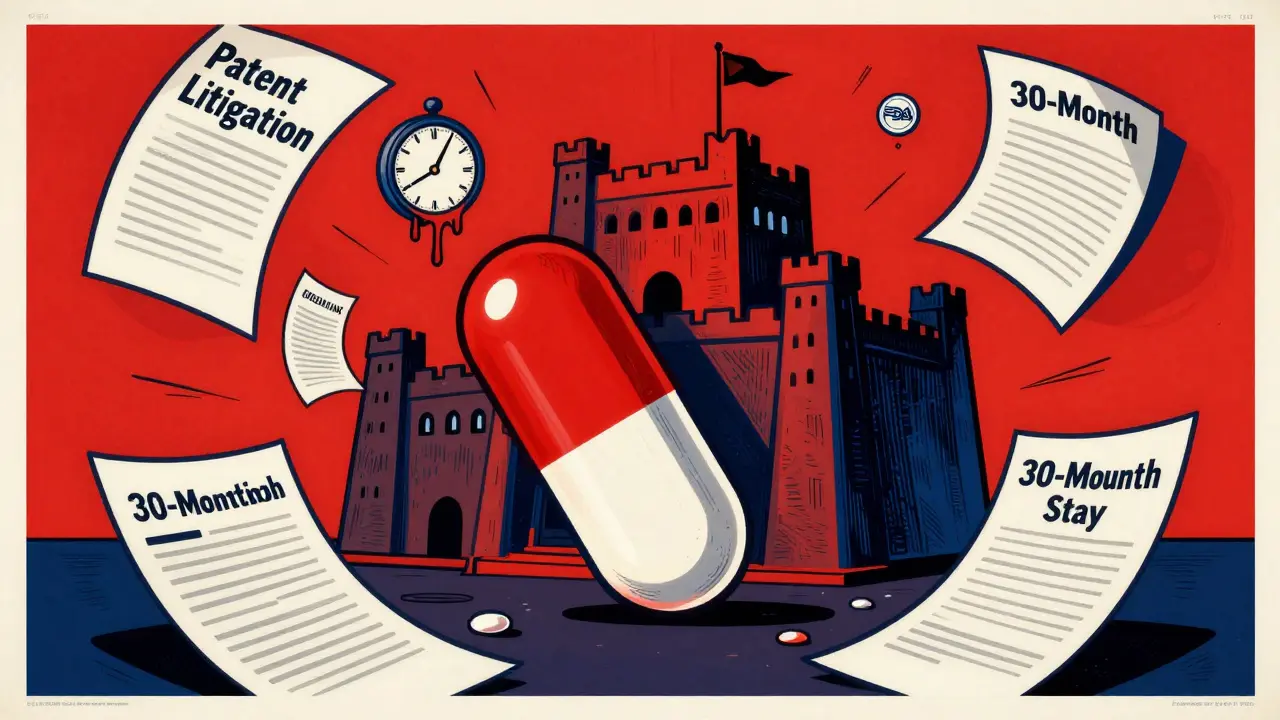
The most common reason a tentatively approved generic doesn’t launch is a lawsuit. Under the Hatch-Waxman Act, if a brand-name company files a patent infringement suit against a generic maker, the FDA is legally required to delay final approval for up to 30 months - even if the generic has already passed every scientific test. This is called the 30-month stay.According to a 2017 Commonwealth Fund analysis, 68% of tentatively approved generics between 2010 and 2016 were stuck in this legal limbo. The brand-name company doesn’t even need to win the case. Just filing it triggers the delay. And in many cases, they don’t win - they just buy time. One study found that 72% of citizen petitions filed by brand manufacturers during this period were based on weak or unsupported science, yet they still delayed generic entry by months.
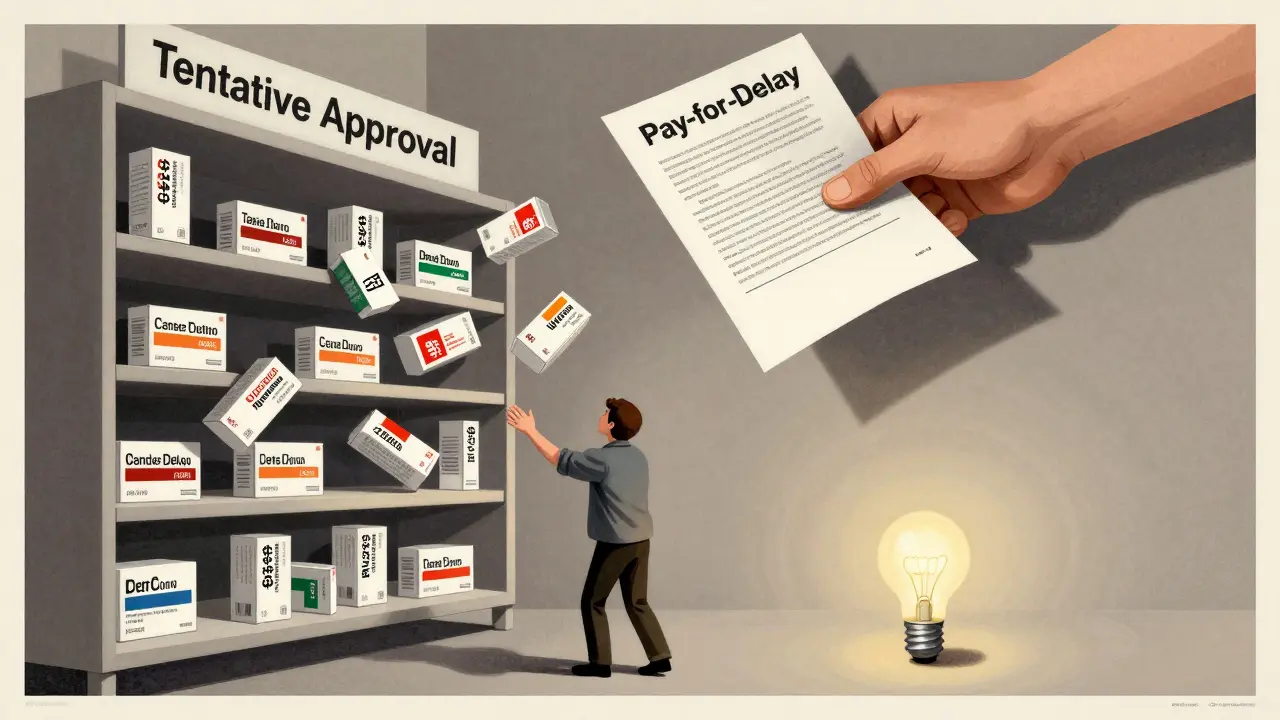
It gets worse. Some companies use “product hopping” - making tiny changes to their drug, like switching from a pill to a capsule, to extend patent life. The FTC found this happened in 17% of top-selling drugs. Others use “pay-for-delay” deals, where the brand pays the generic maker to stay off the market. Between 2009 and 2014, these deals delayed 987 generic launches, costing consumers billions.
Manufacturing Problems Keep Piling Up
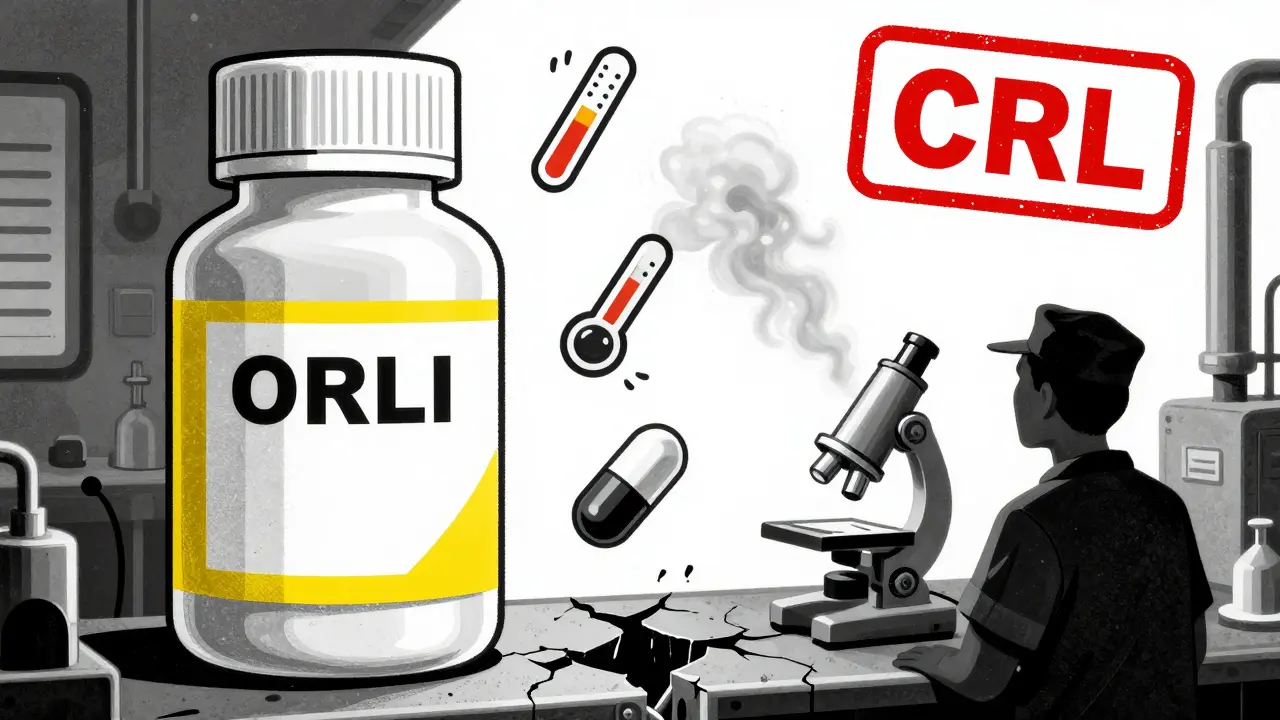
Even if there are no patents in the way, the FDA can still block a generic from launching because of how it’s made. Manufacturing issues caused 41% of complete response letters (CRLs) in 2022. That means the FDA sent the company a list of problems they had to fix before approval could happen.The most common manufacturing problems? Quality control systems that aren’t strong enough (63% of facility-related CRLs), poor environmental monitoring (29%), and equipment that hasn’t been properly tested (24%). These aren’t minor errors. They’re red flags that the drug could be contaminated, inconsistent, or unsafe.
Complex drugs - like inhalers, topical creams, or extended-release pills - are especially tricky. They require more testing, more validation, and more inspections. A 2022 FDA report showed that complex generics had 2.3 times more review cycles than simple pills. And even after the FDA gives tentative approval, companies often take over a year to scale up production. One study found that 62% of complex generics had launch delays longer than 12 months after patent expiration.
Applications Are Often Incomplete or Poorly Prepared
The FDA doesn’t approve applications because they’re good. They approve them because they’re complete. And too many applications aren’t.In 2021, 29% of initial generic applications had major gaps - missing chemistry data, incomplete bioequivalence studies, or unclear labeling. These aren’t typos. They’re fundamental omissions that force the FDA to send the application back for revision. The average time to respond to a deficiency letter? 9.2 months. The FDA recommends 6 months. Most companies miss that deadline.
Stability data is another big issue. About 43% of all deficiencies in 2022 were related to inadequate stability testing - meaning the company couldn’t prove the drug wouldn’t break down over time. Another 31% involved problems with the container or packaging, which affects how the drug is stored and delivered.
And here’s the kicker: companies often submit applications before they’re ready. Why? Because they want to get in line early. But if the first submission is sloppy, it sets off a chain reaction. The FDA flags it. The company fixes it. The FDA reviews it again. And again. Before GDUFA, the average application went through nearly four review cycles. Even now, it’s still 3.2 cycles - far above the 2.5 target.
Market Economics Don’t Always Add Up
Sometimes, the generic company decides not to launch - even after getting tentative approval. Why? Because it doesn’t make financial sense.A 2022 Drugpatentwatch analysis found that 30% of tentatively approved generics never reached the market. That number jumps to 47% for drugs with annual U.S. sales under $50 million. If the market is too small, the cost of manufacturing, distribution, and legal defense outweighs the potential profit.
Even when generics do launch, prices don’t always drop fast. A 2019 JAMA study showed that when only one generic is on the market, prices stay at 80% of the brand’s price for two full years. That discourages other companies from entering. So even if the patent expires, you might still have only one generic option - and no real price competition.
The FDA Is Trying to Fix This - But It’s Not Enough
The FDA knows the system is broken. That’s why they created the Competitive Generic Therapy (CGT) pathway in 2017. It gives priority review to drugs with little or no generic competition. Since then, 78% of CGT-designated drugs got tentative approval in under 8 months - compared to the usual 18.They’ve also launched a targeted initiative to fast-track 102 high-priority tentative approvals. In 2023, 67% of those got final approval within 12 months, compared to just 34% for non-priority drugs.
But progress is slow. First-cycle approval rates - where the FDA approves on the first try - only rose to 28% in 2022, up from under 1% before GDUFA. The goal for 2027 is 70%. That’s ambitious.
And the biggest problems? They’re not technical. They’re legal. Patent thickets, pay-for-delay deals, and citizen petitions are still being used to block competition. New laws like the CREATES Act and the Affordable Drug Manufacturing Act aim to crack down on these tactics, but enforcement is patchy.
The FDA’s own 2023 report admits: “Ongoing challenges with complex product development, patent litigation strategies, and resource constraints will continue to impact tentative approval timelines through at least 2025.”
What This Means for Patients
You might think a tentatively approved drug is just around the corner. But the reality is, it could take years - or never happen. That means patients pay more for brand-name drugs longer. In 2018, the Congressional Budget Office estimated patent-related delays added $9.8 billion to U.S. drug spending. By 2027, that number could hit $12.4 billion.And it’s not just about cost. It’s about access. Over 500 brand drugs still have no generic version at all - even though many have been on the market for decades. Some of them have tentative approvals. But they’re stuck.
If you’re waiting for a generic version of your medication, don’t assume it’s coming soon. Check with your pharmacist. Ask if the drug has tentative approval. And if it does, ask why it’s not on the market yet. The answer might surprise you.
What does tentative approval mean for a generic drug?
Tentative approval means the FDA has determined the generic drug meets all scientific and manufacturing standards for safety, effectiveness, and quality. But the drug cannot be sold yet because of patent protections or regulatory exclusivities on the brand-name version. It’s a green light for production - but not for sale.
How long does it take for a tentatively approved generic to launch?
The median time from tentative approval to market launch is about 16.5 months, but it can take much longer - up to several years - if patent litigation is involved. In some cases, the drug never launches at all.
Can a brand-name company stop a tentatively approved generic from launching?
Yes. If the brand company files a patent infringement lawsuit, the FDA is legally required to delay final approval for up to 30 months. They can also file citizen petitions to challenge the generic’s science, even if the claims are weak. These tactics are common and legally allowed.
Why do some generics never reach the market after tentative approval?
Some generics never launch because the market isn’t profitable enough - especially for drugs with low annual sales. Others are delayed by manufacturing challenges, slow responses to FDA requests, or strategic decisions by the company to wait for better pricing conditions.
Are complex generics harder to get approved?
Yes. Complex generics - like inhalers, topical creams, or extended-release pills - require more testing and have higher failure rates. They go through an average of 3.7 review cycles, compared to 2.9 for simple pills. Approval timelines for these drugs are often 14 months longer.
What is the Competitive Generic Therapy (CGT) pathway?
The CGT pathway is a faster review process for generic drugs that have little or no competition. Drugs in this program get priority review, and 78% of them receive tentative approval within 8 months - compared to the usual 18 months.
What’s Next?
The system is improving, but slowly. The FDA’s GDUFA III program, running from 2023 to 2027, aims to increase first-cycle approval rates to 70% and cut review times for priority drugs to 8 months. But unless patent abuse is curbed - and companies are held accountable for delaying competition - patients will keep paying more than they should.If you’re waiting for a cheaper version of your medication, patience might not be enough. Ask questions. Push for transparency. And remember: tentative approval isn’t final approval. It’s just the beginning of a long, often frustrating journey to affordable medicine.


