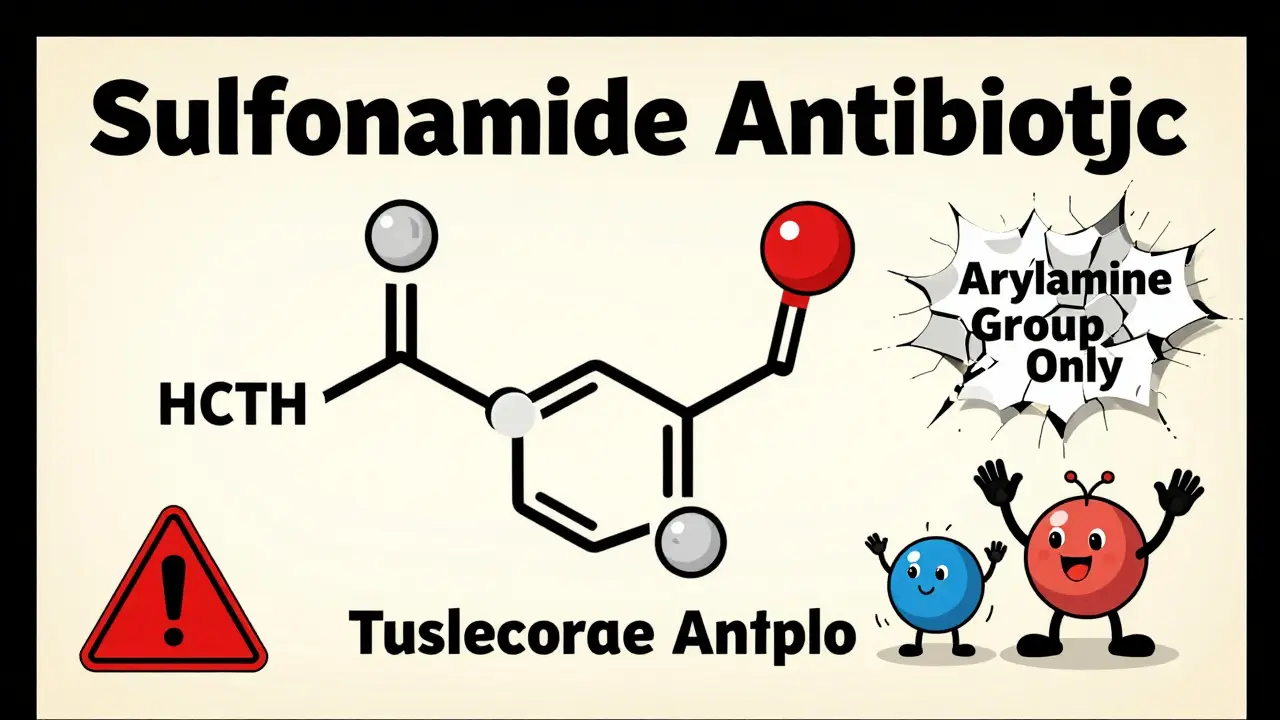
Many people think they’re allergic to sulfa drugs - and they’ve been told to avoid anything with "sulfur" in it. But here’s the truth: most of them aren’t allergic at all. Or if they are, it’s not the sulfur that’s the problem. It’s a specific chemical structure found only in certain antibiotics. The confusion is costing lives, money, and treatment options - and it’s all based on a misunderstanding that’s lasted decades.
What Actually Causes a Sulfa Allergy?
When someone says "I’m allergic to sulfa," they usually mean they had a reaction to an antibiotic like sulfamethoxazole (in Bactrim or Septra) or sulfadiazine. These are antimicrobial sulfonamides - drugs developed in the 1930s that helped win the battle against bacterial infections before penicillin became widespread. But here’s the twist: not all drugs with "sulfa" in the name are the same. The real culprit isn’t sulfur. It’s the arylamine group - a specific chemical structure attached to the sulfonamide molecule. When these antibiotics are broken down in the body, they form a reactive compound called hydroxylamine. That’s what triggers the immune system in some people, leading to rashes, fever, or worse - like Stevens-Johnson Syndrome. But drugs that don’t have this exact structure? They’re safe.Which Medications Are Safe?
You can probably take these without worry, even if you’ve been told to avoid "sulfa":- Furosemide (Lasix) - used for fluid buildup in heart failure or kidney disease
- Hydrochlorothiazide (HCTZ) - a common blood pressure pill
- Celecoxib (Celebrex) - an arthritis pain reliever
- Acetazolamide - used for glaucoma and altitude sickness
- Sulfonylureas like glyburide - diabetes medications
Which Medications Should You Avoid?
If you have a true, documented reaction to an antimicrobial sulfonamide, you should avoid these:- Sulfamethoxazole-trimethoprim (Bactrim, Septra)
- Sulfadiazine
- Sulfacetamide (eye drops)
- Dapsone (used for leprosy and skin conditions)

What About Sulfur, Sulfites, and Sulfates?
This is where confusion gets dangerous. People think "sulfa allergy" means they can’t take anything with "sulfur." But sulfur atoms are everywhere - in your body, in your food, in your water. And they’re not the issue.- Sulfates - like Epsom salt (magnesium sulfate) - are safe. They’re not sulfonamides.
- Sulfites - found in wine, dried fruit, and processed foods - can trigger asthma in some people, but that’s a completely different reaction. No cross-reactivity with sulfa antibiotics.
- Saccharin - the sweetener in Sweet’N Low - has no arylamine group. Safe.
Why Does This Misunderstanding Exist?
Because labels stick. A patient gets a rash after taking Bactrim. They’re told, "You’re allergic to sulfa." That note goes into their chart. Years later, when they need a diuretic for high blood pressure, the pharmacist sees "sulfa allergy" and flags hydrochlorothiazide - even though it’s chemically different. The doctor, unsure, prescribes something else - maybe a more expensive, riskier drug. A 2022 Patient Safety Network report found that 12.3% of antibiotic selection errors in hospitals came from incorrect sulfa allergy labels. Instead of using narrow-spectrum antibiotics like Bactrim, doctors ended up using fluoroquinolones - which carry a higher risk of C. difficile infection. The odds? 2.15 times higher. On Reddit’s r/Allergy community, 78% of respondents said they’d been denied safe medications because of a vague "sulfa allergy" label. One woman was denied furosemide for heart failure. Another had been avoiding HCTZ for 15 years - and never had a reaction.How Should Allergies Be Documented?
Stop writing "sulfa allergy." Start writing "sulfonamide antibiotic allergy." Precision matters. The Choosing Wisely campaign by the American College of Physicians says this should be standard in electronic health records. For mild reactions - like a skin rash without fever, swelling, or breathing trouble - doctors can safely challenge patients with a single dose of hydrochlorothiazide or furosemide under observation. In one study, 98.7% of 327 patients passed without issue. For severe reactions - like Stevens-Johnson Syndrome or DRESS - lifelong avoidance of antimicrobial sulfonamides is necessary. But even then, non-antibiotic sulfonamides remain safe options. Pharmacists are key. A 2021 study showed that when pharmacists reviewed and clarified allergy labels, unnecessary restrictions dropped by 68.4%. Hospitals saved $287 per patient on average - not just in drug costs, but in reduced hospital stays and fewer complications.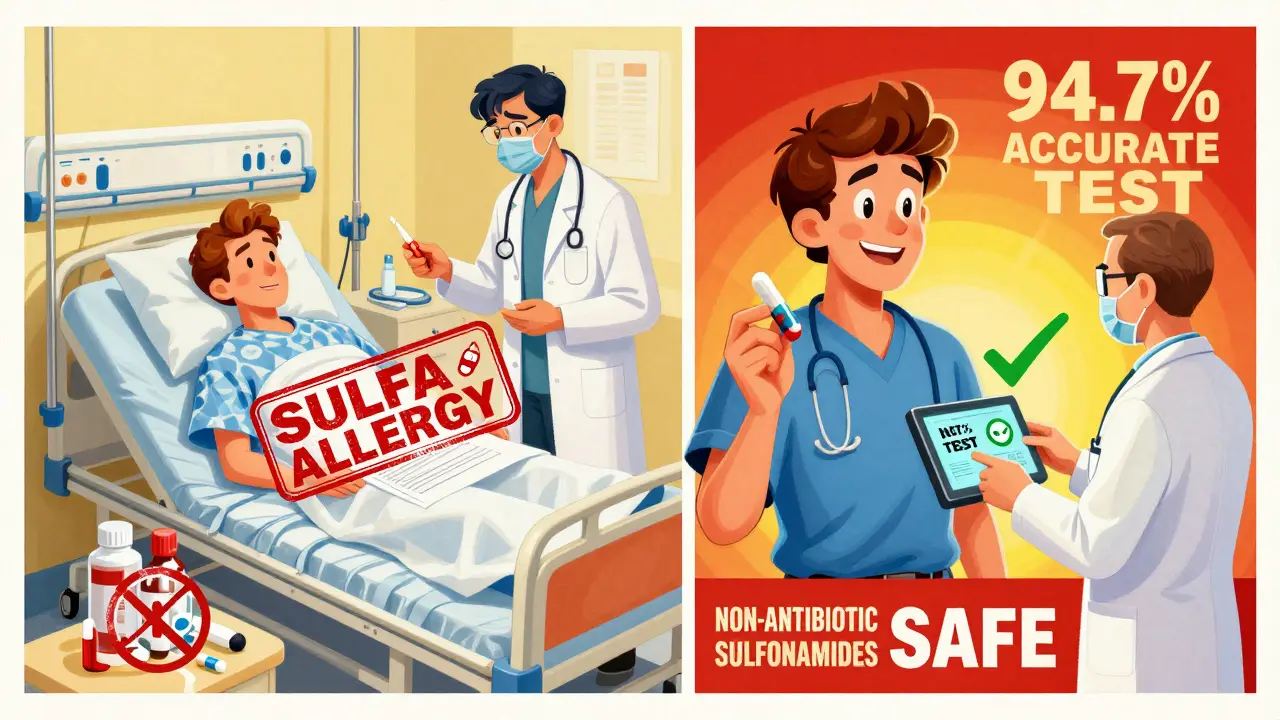
What’s Changing Now?
The FDA updated its drug labeling guidelines in 2021 to require manufacturers to clearly distinguish between antimicrobial and non-antimicrobial sulfonamides. In 2023, the FDA released draft guidance pushing for "sulfonamide antibiotic allergy" as the official term. Epic Systems, used by 63% of U.S. hospitals, added an alert in 2022 that separates the two classes. In a six-month pilot, inappropriate allergy flags dropped by 42%. Cerner plans to do the same in 2025. Allergists are catching up too. In 2015, only 37% recommended testing before removing a sulfa allergy label. Now, 89% do.What Should You Do?
If you’ve been told you have a sulfa allergy:- Check your records. Does it say "sulfonamide antibiotic allergy" - or just "sulfa allergy"?
- Ask your doctor: "Which drug caused the reaction?" If it was Bactrim or a similar antibiotic, you may be able to safely take HCTZ, furosemide, or celecoxib.
- If your reaction was mild (rash only), ask about a supervised challenge.
- If your reaction was severe (blistering skin, fever, organ involvement), avoid antimicrobial sulfonamides - but don’t assume you need to avoid everything else.
What About Other Sulfur-Containing Drugs?
There’s a myth that if you’re allergic to sulfa, you can’t take any drug with "sulfur" in it. That’s not true. Sulfur atoms are in thousands of compounds - from vitamins to fertilizers. The problem isn’t sulfur. It’s the arylamine group in antimicrobial sulfonamides. For example:- Insulin contains sulfur bonds - but no arylamine group. Safe.
- Penicillin contains sulfur - and it’s chemically unrelated to sulfonamides. No cross-reactivity.
- Cefazolin (a cephalosporin antibiotic) - also contains sulfur. But studies show less than 1% cross-reactivity with sulfa antibiotics. It’s not the sulfur. It’s the structure.
Is it safe to take hydrochlorothiazide if I have a sulfa allergy?
Yes. Hydrochlorothiazide (HCTZ) is a non-antibiotic sulfonamide. It lacks the arylamine group that triggers immune reactions in people allergic to sulfonamide antibiotics like Bactrim. Studies show less than 1% of patients with confirmed sulfonamide antibiotic allergies react to HCTZ - the same rate as people without any allergy. Major guidelines from the American Academy of Allergy, Asthma & Immunology and the Mayo Clinic confirm it’s safe.
Can I take celecoxib (Celebrex) if I’m allergic to sulfa?
Yes. Celecoxib is a non-antibiotic sulfonamide. It does not contain the arylamine group responsible for allergic reactions to antibiotics like sulfamethoxazole. A 2023 Mayo Clinic study found no increased risk of reaction - the odds ratio was 1.03, meaning no higher than the general population. The American College of Rheumatology specifically recommends celecoxib for patients with sulfonamide antibiotic allergies.
Do all sulfa-containing drugs cross-react?
No. Cross-reactivity only happens between antimicrobial sulfonamides - like sulfamethoxazole, sulfadiazine, and dapsone. Non-antibiotic sulfonamides like furosemide, hydrochlorothiazide, and celecoxib do not cross-react. The difference lies in their chemical structure, not the presence of sulfur. Sulfasalazine is an exception - it breaks down into a sulfonamide antibiotic, so about 10% of people with antibiotic allergies react to it.
I had a rash after taking Bactrim. Does that mean I’m allergic to all sulfa drugs?
Not necessarily. A rash after Bactrim could be a true allergy - but it could also be a non-allergic reaction. Many people who think they’re allergic to sulfa have never been tested. Studies show that over half of people labeled with "sulfa allergy" can tolerate non-antibiotic sulfonamides. If your reaction was mild (no fever, swelling, or breathing trouble), a supervised challenge with a drug like hydrochlorothiazide can confirm whether you’re truly at risk.
Should I get tested for a sulfa allergy?
If you’ve been told you have a sulfa allergy and you’ve never had a formal evaluation, yes - especially if you need medications like diuretics, glaucoma eye drops, or arthritis pain relievers. Component-resolved diagnostics can now detect IgE antibodies to the hydroxylamine metabolite with 94.7% accuracy. Testing can prevent unnecessary restrictions and help you access safer, more effective treatments.