Every year, nearly 40 million Americans take a statin. For many, it’s a daily pill that keeps their heart safe. But for others, it’s a source of constant discomfort - aching legs, tired muscles, or the fear that the medicine might be doing more harm than good. If you’ve been prescribed a statin, you’ve probably heard the same thing from your doctor: the benefits far outweigh the risks. But what does that really mean? And why do so many people stop taking them?
How Statins Actually Lower Cholesterol
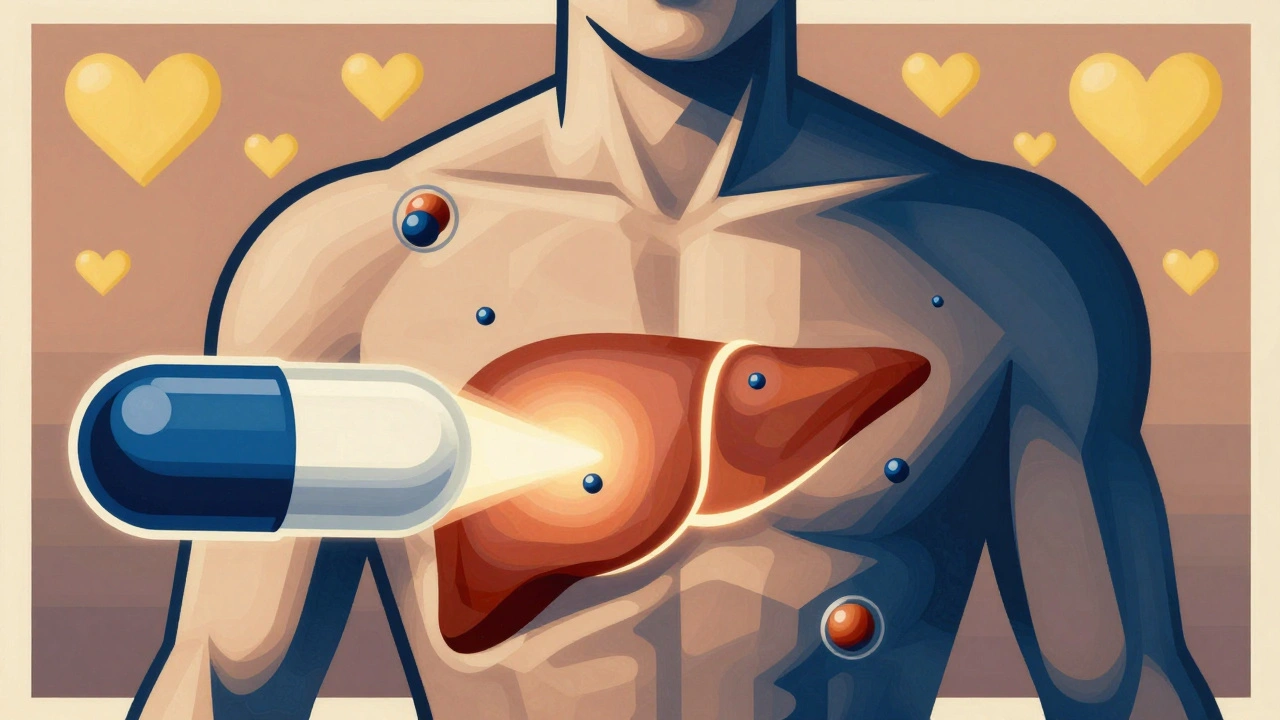
Statins don’t just "lower cholesterol" - they rewire how your body makes it. These drugs block an enzyme called HMG-CoA reductase, which your liver uses to produce cholesterol. When that enzyme slows down, your liver starts pulling more LDL (bad cholesterol) out of your bloodstream to make up for the loss. The result? LDL levels drop by 30% to 60%, depending on the drug and dose.That’s not just a number on a lab report. For every 1 mmol/L (about 39 mg/dL) drop in LDL, your risk of a heart attack or stroke falls by about 22%. In large studies like the Heart Protection Study and the 4S trial, statins cut major heart events by 30% over five years. That’s not a small win - it’s life-saving for people with a history of heart disease, diabetes, or very high cholesterol.
But statins don’t stop at LDL. They also reduce inflammation in your arteries, stabilize plaque so it doesn’t rupture, and improve how the inner lining of your blood vessels works. These "pleiotropic" effects happen even before LDL drops significantly. That’s why some patients feel better - less chest tightness, fewer episodes of angina - within months, even if their cholesterol hasn’t changed much yet.
Who Benefits the Most?
Not everyone needs a statin. The guidelines are clear: if you’ve had a heart attack, stroke, or bypass surgery, you should be on one. Same if you have diabetes and are over 40, or if your 10-year risk of a heart event is over 7.5%. That’s based on your age, blood pressure, cholesterol, smoking status, and other factors.But here’s the thing: many people without any history of heart disease are prescribed statins anyway - often because their LDL is "too high." The problem? For low-risk people, the benefit is tiny. You might lower your chance of a heart attack from 2% to 1.5% over 10 years. That’s a 25% relative reduction - but only a 0.5% absolute change. For someone who’s healthy, that’s a lot of pills for a very small gain.
On the other hand, if your LDL is 190 mg/dL or higher, or if you have a family history of early heart disease, the numbers flip. The benefit becomes huge. That’s why doctors don’t just look at one number. They look at your whole picture.
Muscle Pain: The Most Common Reason People Quit
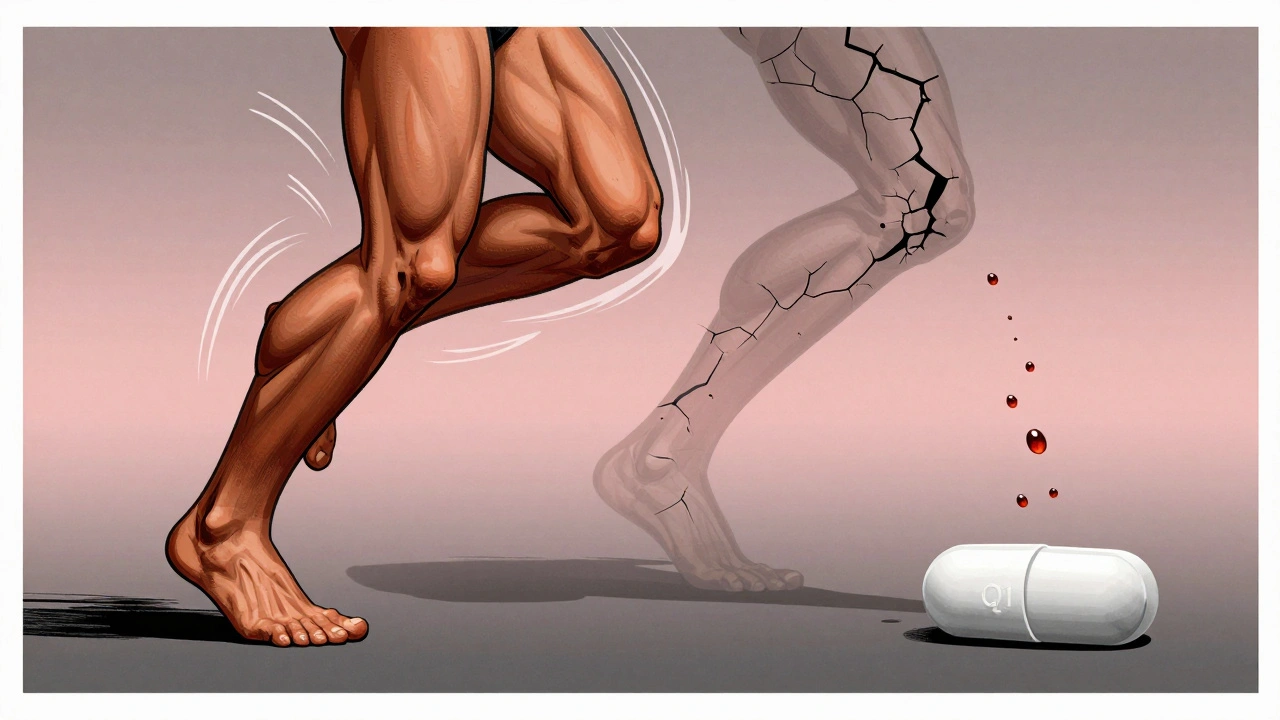
If you’ve ever stopped taking a statin, odds are it was because of your muscles. About 1 in 10 people report muscle aches, weakness, or cramps. It’s not always dramatic. Sometimes it’s just that your legs feel heavy after walking. Other times, it’s so bad you can’t climb stairs or get out of a chair.Here’s what most people don’t know: true muscle damage (rhabdomyolysis) is extremely rare - less than 1 in 1,000 people per year. But mild muscle pain? That’s common. And it’s often dismissed as "just aging" or "getting out of shape." But for many, it’s the statin.
Some statins are worse than others. Simvastatin and lovastatin are more likely to cause muscle issues, especially at higher doses. Atorvastatin and pravastatin are better tolerated. Rosuvastatin is potent but can still cause problems in some people. Switching from one statin to another is one of the most effective ways to reduce symptoms - and it works for about half of people who stop because of muscle pain.
Coenzyme Q10 supplements are often recommended, but studies show mixed results. Some people swear by them. Others notice nothing. The science isn’t solid, but it’s harmless to try if your doctor agrees.
Why Muscle Pain Happens (And Why It’s Not Just "All in Your Head")
Statins interfere with more than just cholesterol. They also block the production of coenzyme Q10, which your muscles need for energy. They reduce the building blocks of proteins that help muscle cells repair themselves. And they affect how calcium moves in and out of muscle cells - a process critical for normal contraction.Some people have a genetic variation in the SLCO1B1 gene that makes them extra sensitive to statin side effects, especially simvastatin. This isn’t tested routinely, but if you’ve had bad reactions to multiple statins, it might be worth discussing with your doctor.
And yes, the nocebo effect plays a role - if you’ve heard stories about muscle pain, you’re more likely to notice it. But dismissing all muscle pain as psychological ignores real biology. Studies using placebo-controlled trials show that people on statins report more muscle symptoms than those on sugar pills - even when they don’t know which they’re taking.
What to Do If Your Muscles Hurt
Don’t just quit. Talk to your doctor. Here’s what works:- Check your creatine kinase (CK) levels. If they’re normal and your pain is mild, you probably don’t have muscle damage.
- Try switching to a different statin. Pravastatin or fluvastatin are often better tolerated.
- Lower the dose. Sometimes 10 mg of atorvastatin works just as well as 40 mg for your risk level.
- Take it every other day. Some people do fine on alternate-day dosing.
- Rule out other causes. Thyroid problems, vitamin D deficiency, or even overtraining can mimic statin side effects.
If you’ve tried everything and still feel awful, you might need to go off statins entirely. But don’t do it without a plan. Your doctor can help you find alternatives - ezetimibe, PCSK9 inhibitors, or lifestyle changes - that still protect your heart.
The Real Trade-Off: Heart Health vs. Daily Discomfort
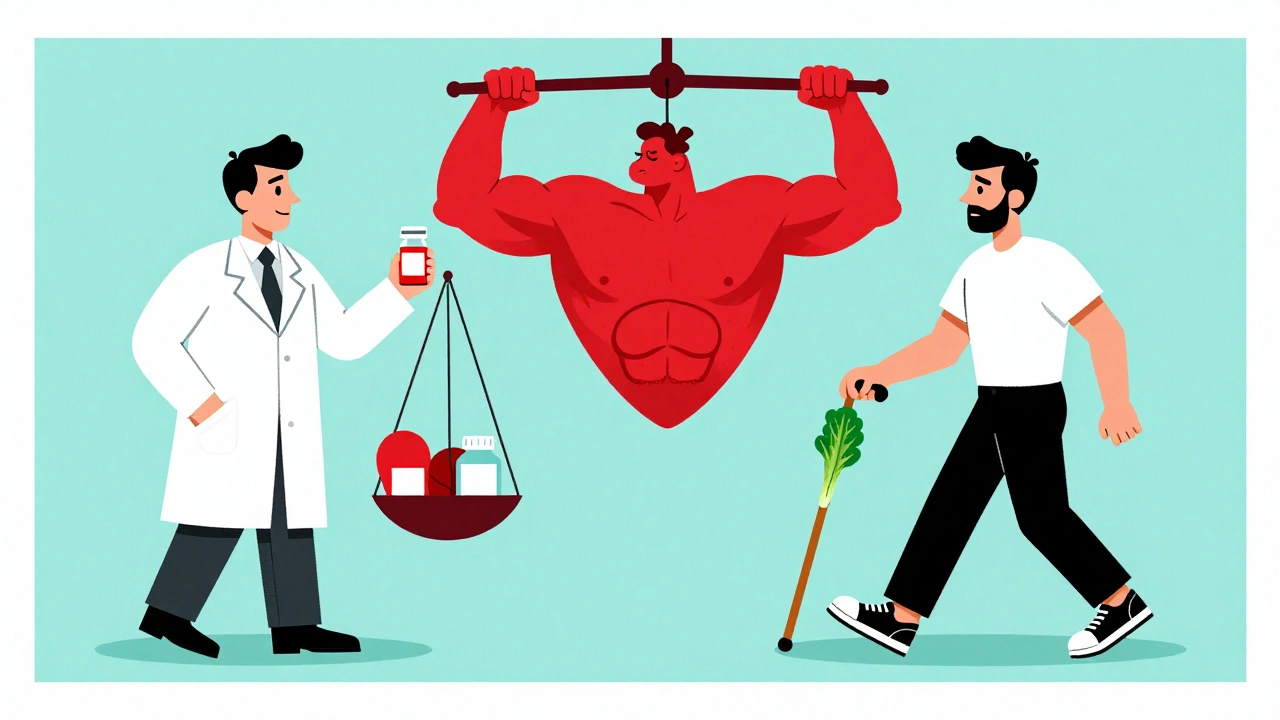
This isn’t a simple yes-or-no question. It’s about your life. If you’ve had a heart attack, the choice is easy. The risk of another one is too high to skip the statin. But if you’re 55, healthy, with a slightly high LDL, and you’re waking up with sore legs every morning - then the balance shifts.One woman I know stopped her statin after three months. Her cholesterol went up 15%, but her muscle pain vanished. She started walking 5 miles a day, cut out processed carbs, and lost 20 pounds. Two years later, her LDL is back to normal - without a pill.
That’s not the norm. But it’s not rare either. For some, lifestyle changes can replace the drug. For others, a lower dose or a different statin does the trick. The goal isn’t to avoid statins at all costs. It’s to find the version of the treatment that lets you live without pain - and still keep your heart safe.
What the Future Holds
Researchers are working on statins that target only the liver, not the muscles. Some new versions are already in trials. Others are exploring ways to deliver statins directly to artery walls, bypassing muscle tissue entirely. In the meantime, genetic testing might become routine - helping doctors pick the right statin for your DNA before you even start.For now, the message is simple: statins save lives. But they’re not perfect. And you don’t have to suffer to be protected. If you’re struggling, you’re not alone. And you’re not wrong to ask for help.
Do statins really prevent heart attacks?
Yes - for people at high risk. In those with existing heart disease, diabetes, or very high cholesterol, statins reduce heart attacks by about 30% over five years. For low-risk people, the benefit is much smaller - sometimes less than a 1% absolute reduction in risk over 10 years.
Can muscle pain from statins be reversed?
Almost always. Muscle pain usually goes away within weeks of stopping or switching statins. In rare cases where damage is more serious, recovery can take months. The key is not to ignore it - talk to your doctor early so you can adjust your treatment before it gets worse.
Are generic statins as good as brand names?
Yes. Atorvastatin, simvastatin, and rosuvastatin are all available as generics and work exactly the same as their brand-name versions (Lipitor, Zocor, Crestor). The only difference is cost - generics can cost as little as $4 a month.
What’s the safest statin for muscle pain?
Pravastatin and fluvastatin are generally the least likely to cause muscle issues. Rosuvastatin and atorvastatin are more potent but can still cause side effects in sensitive individuals. Simvastatin, especially at doses over 40 mg, carries the highest risk.
Can I stop statins if I feel fine?
Only if your doctor agrees. Stopping statins increases your risk of heart attack or stroke, especially if you’re in a high-risk group. Even if you feel fine, the drug is working behind the scenes to protect your arteries. Never stop without a plan - your doctor can help you find alternatives if needed.
Do statins cause weight gain?
No, statins don’t directly cause weight gain. But some people report increased appetite or reduced activity due to muscle fatigue, which can lead to weight gain over time. If you’ve gained weight after starting a statin, look at your diet and movement habits - not the drug itself.
Is it safe to take statins long-term?
Yes. Millions of people take statins for decades without serious problems. The biggest risks - muscle pain, liver enzyme changes, or slightly higher blood sugar - are usually manageable. Long-term studies show that the benefits of preventing heart disease far outweigh these small, rare side effects for most patients.
Final Thought: Your Body, Your Choice
Statins are one of the most studied drugs in history. They’ve saved millions of lives. But they’re not magic. They’re tools - powerful, but imperfect. If you’re taking one and feeling worse, you’re not being difficult. You’re being human.The goal isn’t to take the most pills. It’s to live well - with energy, without pain, and with a heart that stays strong. That means listening to your body, asking questions, and working with your doctor to find the right balance. You don’t have to choose between a healthy heart and a healthy body. There’s a way to have both.


