SSRI Hyponatremia Risk Assessor
Based on the 2024 meta-analysis data presented in the article.
Risk Level
Interpretation:
Imagine feeling suddenly foggy, weak, or confused just weeks after starting a new medication for depression. You might assume it’s the anxiety talking, or perhaps just aging if you’re older. But what if your brain is actually starving for salt? This isn’t a rare glitch. It’s a known, serious side effect called hyponatremia, which means dangerously low sodium levels in your blood.
Selective serotonin reuptake inhibitors (SSRIs) are among the most prescribed drugs in the world. They help millions manage depression and anxiety. Yet, they carry a hidden risk: they can trick your body into holding onto too much water, diluting your sodium to dangerous levels. For some, especially older adults, this leads to falls, seizures, or hospitalization. Understanding this link isn't just medical trivia-it could prevent a crisis.
What Is SSRI-Induced Hyponatremia?
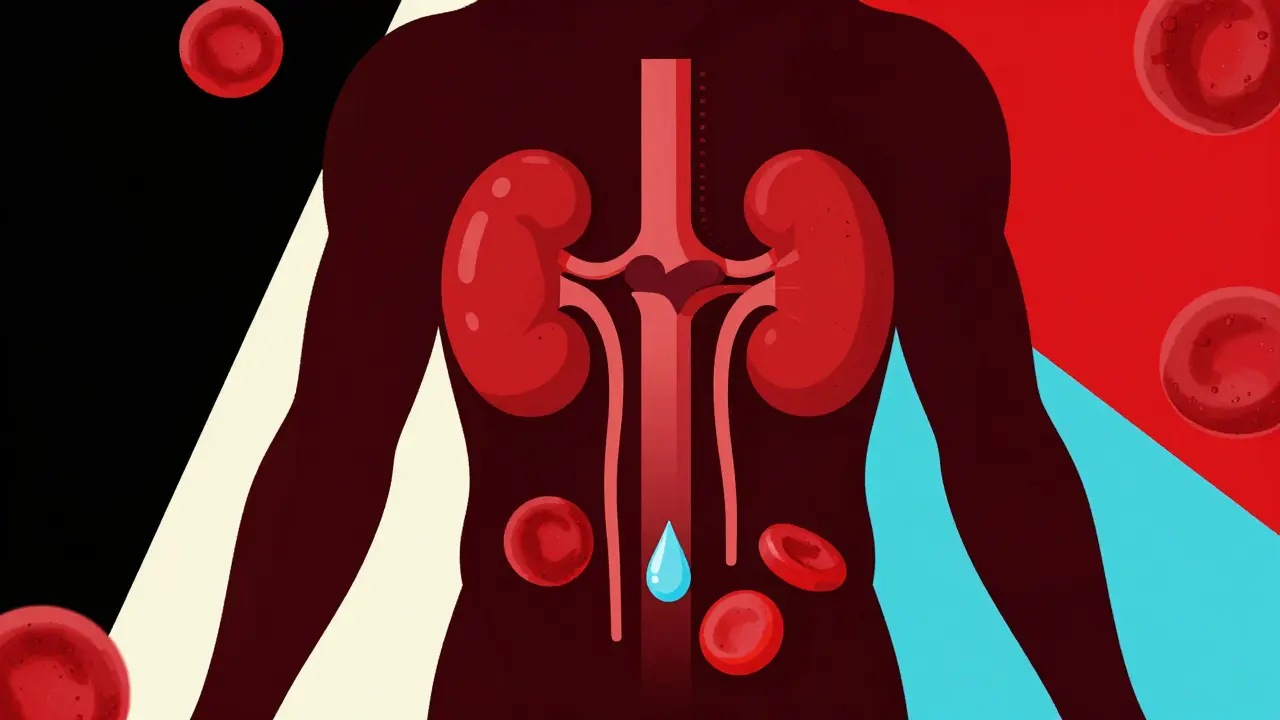
Sodium is an electrolyte that helps control how much water is inside and around your cells. When your serum sodium drops below 135 mmol/L, you have hyponatremia. In severe cases, levels can plummet to 105-125 mmol/L. SSRIs cause this by triggering a condition known as SIADH (Syndrome of Inappropriate Antidiuretic Hormone Secretion).
Here is the simple mechanics of it. Serotonin influences the part of your brain that controls thirst and urine output. SSRIs increase serotonin activity. Sometimes, this signals your pituitary gland to release too much antidiuretic hormone (ADH). ADH tells your kidneys to hold onto water instead of peeing it out. The result? Your blood volume increases, but the sodium concentration drops because it’s diluted by excess water. You become "euvolemic"-meaning you aren’t dehydrated, but your chemistry is off-balance.
This usually happens within two to four weeks of starting the drug or increasing the dose. It’s not immediate, which makes it easy to miss. By the time symptoms appear, the damage to your cognitive function may already be underway.
Who Is at Highest Risk?
Not everyone who takes an SSRI will develop low sodium. However, certain groups face significantly higher odds. Age is the biggest factor. According to a 2024 meta-analysis published in *European Psychiatry*, while the general risk sits between 1.9% and 4.4%, patients over age 65 face a risk of 13.9% to 18.6%. That is nearly one in five older adults.
Other major risk factors include:
- Female sex: Women account for about 65% of reported cases.
- Low body weight: Patients weighing less than 60 kg (132 lbs) are more vulnerable.
- Kidney issues: Pre-existing renal impairment (eGFR <60 mL/min/1.73m²) reduces the body’s ability to handle fluid shifts.
- Medication combos: Taking diuretics (especially thiazides like hydrochlorothiazide) alongside an SSRI increases risk by more than four times.
If you fall into any of these categories, you need to be extra vigilant. The combination of aging kidneys, lower muscle mass, and polypharmacy creates a perfect storm for electrolyte imbalance.
Symptoms to Watch For
Hyponatremia doesn’t always announce itself with dramatic signs. Early symptoms are subtle and often mistaken for other conditions. Many doctors initially attribute them to dementia, normal aging, or worsening depression. This delay costs patients time and health.
Look out for these red flags:
- Mental confusion or disorientation
- Persistent nausea or vomiting
- Headaches that won’t go away
- Fatigue or malaise (a general feeling of being unwell)
- Loss of appetite
If untreated, these mild symptoms can escalate rapidly. Severe hyponatremia (sodium below 125 mmol/L) can cause muscle cramps, twitching, seizures, coma, and even death. A case report from 2022 described a 78-year-old woman who developed severe confusion and required ICU admission after her sodium dropped to 118 mmol/L just ten days after starting sertraline. Her story highlights why early detection is critical.
Which Antidepressants Carry the Most Risk?
Not all antidepressants affect sodium equally. The risk correlates with how strongly the drug binds to the serotonin transporter (SERT). SSRIs generally pose a higher threat than non-SSRI alternatives.
| Drug Class / Name | Relative Risk (Odds Ratio) | Risk Level |
|---|---|---|
| Citalopram | 2.37 | High |
| Sertraline | 2.15 | High |
| Fluoxetine | 1.98 | Moderate-High |
| Paroxetine | 1.82 | Moderate-High |
| Venlafaxine (SNRI) | 1.72 | Moderate |
| Bupropion | 0.85 | Low-Moderate |
| Mirtazapine | 0.47 | Lowest |
As the table shows, citalopram and sertraline carry the highest risks among common SSRIs. In contrast, mirtazapine, an atypical antidepressant, has the lowest risk profile. It is only 47% as likely to cause hyponatremia compared to SSRIs. For elderly patients, many experts now recommend mirtazapine or bupropion as safer first-line options to avoid this specific complication.
Diagnosis and Testing Protocols
You cannot diagnose hyponatremia by symptoms alone. You need blood work. If you are starting an SSRI, especially if you are over 65, ask your doctor for a baseline serum sodium test before you take the first pill.
Standard clinical guidelines suggest the following monitoring schedule:
- Baseline: Test sodium levels within 7 days before starting therapy.
- Follow-up: Repeat the test at 2 weeks after initiation or any dose increase.
- Ongoing: High-risk patients should be tested monthly for the first three months.
To confirm SIADH, doctors also check urine sodium (>30 mmol/L) and urine osmolality (>100 mOsm/kg). These tests ensure the low sodium isn’t caused by dehydration or kidney failure, but rather by inappropriate water retention.
Treatment and Management
If your sodium drops, the treatment depends on severity. Mild cases (125-134 mmol/L) are often managed by restricting fluid intake to 800-1000 mL per day and stopping or switching the offending medication. Sodium levels typically normalize within 72 to 96 hours.
Severe cases (<125 mmol/L) require hospitalization. Doctors may administer hypertonic saline intravenously. This must be done carefully. Raising sodium too quickly can cause osmotic demyelination syndrome, a devastating neurological injury. The goal is to raise sodium by no more than 6-8 mmol/L in the first 24 hours.
The good news is that once the SSRI is discontinued, most patients recover fully. However, the window for misdiagnosis is wide. On average, it takes over seven days from symptom onset to get the correct diagnosis. Don’t wait. If you feel confused after starting a new med, get checked.
Prevention Strategies for Patients and Caregivers
Knowledge is your best defense. Here is how to protect yourself or your loved ones:
- Know your meds: Keep a list of all medications, including over-the-counter diuretics.
- Advocate for testing: If your doctor prescribes an SSRI and doesn’t mention sodium testing, ask about it.
- Watch for changes: Pay attention to sudden personality changes, clumsiness, or persistent headaches.
- Consider alternatives: If you are high-risk, discuss mirtazapine or bupropion with your psychiatrist.
The American Geriatrics Society explicitly lists SSRIs as potentially inappropriate for older adults due to this risk. Shifting prescribing habits is already happening. Between 2018 and 2023, SSRI initiation for patients over 65 dropped by 22.3%, while mirtazapine prescriptions rose by 34.7%. This shift reflects growing awareness and a move toward safer care.
How long does it take for SSRIs to cause low sodium?
Symptoms typically appear within two to four weeks of starting the medication or increasing the dose. This delayed onset often leads to misdiagnosis, as patients and doctors may attribute early signs like fatigue or confusion to the underlying depression or aging.
Can drinking more water fix hyponatremia caused by SSRIs?
No, drinking more water will make it worse. SSRI-induced hyponatremia is caused by water retention, not dehydration. Adding more water further dilutes your sodium levels. Treatment usually involves fluid restriction, not hydration.
Is mirtazapine safe for everyone?
Mirtazapine has a much lower risk of causing hyponatremia compared to SSRIs, making it a preferred choice for elderly patients. However, like all medications, it has its own side effects, such as weight gain and sedation. It should only be used under a doctor's supervision.
What are the signs of severe hyponatremia?
Severe hyponatremia (sodium below 125 mmol/L) can cause seizures, coma, respiratory arrest, and death. Earlier warning signs include severe confusion, disorientation, muscle twitching, and persistent nausea. Immediate medical attention is required.
Should I stop my SSRI if I suspect low sodium?
Do not stop medication abruptly without consulting your doctor, as this can cause withdrawal symptoms. However, if you experience severe confusion or seizures, seek emergency care immediately. Your doctor will likely order blood tests and may adjust or switch your medication.