
Imagine being prescribed a life-saving cancer treatment that also carries a serious risk of birth defects or severe heart problems. Without extra safeguards, you might not get the medicine, or worse, you could suffer harm from it. This is where REMS comes in. Standing for Risk Evaluation and Mitigation Strategies, REMS is the U.S. Food and Drug Administration’s (FDA) formal system for managing high-risk prescription drugs. It ensures that the benefits of these powerful medications outweigh their dangers by adding specific safety steps beyond standard labeling.
If you are a patient, a pharmacist, or a healthcare provider, understanding REMS is crucial. It affects how you access medication, what paperwork you need to sign, and even which pharmacy can dispense your pills. Let’s break down how this system works, why it exists, and what it means for you in 2026.
What Exactly Is a REMS Program?
A Risk Evaluation and Mitigation Strategy is a mandatory risk management plan required by the FDA for certain prescription drugs with serious safety risks. The FDA doesn’t apply REMS to every drug. You won’t find a REMS program for common painkillers like ibuprofen or basic antibiotics. Instead, it targets medications where the potential for harm is significant enough that regular warnings on the label aren’t enough.
The legal foundation for REMS was laid by the Food and Drug Administration Amendments Act of 2007 (FDAAA). Before this law, the FDA relied on ad-hoc monitoring systems for dangerous drugs like thalidomide and isotretinoin. These earlier efforts were inconsistent. The 2007 act gave the FDA explicit authority to require REMS as part of drug approval or later if new safety concerns arise. Today, there are approximately 120 active REMS programs covering about 185 individual drugs. While this sounds like a lot, it represents only about 5.7% of all prescription drugs on the market. The goal isn’t to restrict access but to enable access to medically necessary treatments that might otherwise be too risky to approve.
Who Needs to Follow REMS Requirements?
REMS involves multiple stakeholders, each with specific responsibilities. Understanding your role helps you navigate the process without frustration.
- Patients: You may need to enroll in a registry, agree to specific monitoring tests (like pregnancy tests or blood work), or receive counseling on safe use. For some drugs, you must confirm you understand the risks before receiving the medication.
- Prescribers: Doctors often need to complete certification training to prescribe certain REMS drugs. They must verify that patients meet safety criteria before writing the prescription.
- Pharmacists: Pharmacists play a critical gatekeeping role. They must verify prescriber certification, check patient enrollment status, and sometimes dispense the drug only through specialty pharmacies. This adds time to the dispensing process but prevents errors.
- Manufacturers: Drug companies are responsible for developing, implementing, and maintaining the REMS program. They bear the cost, which averages $2.7 million annually per program, and must report regularly to the FDA on its effectiveness.
The Four Main Components of a REMS Program
Not all REMS programs are created equal. The FDA tailors requirements based on the severity of the risk. Most programs include one or more of the following components:
| Component | Description | Prevalence |
|---|---|---|
| Medication Guide | Paper handouts provided with the drug containing FDA-approved information about serious adverse events and safe use instructions. | Required in 78% of REMS programs |
| Communication Plan | Materials designed to inform healthcare providers about safety risks, such as letters to prescribers, educational websites, or safety alerts. | Required in 62% of REMS programs |
| Elements to Assure Safe Use (ETASU) | Specific actions required to mitigate risk, such as prescriber certification, special pharmacy distribution, or patient monitoring. This is the most stringent component. | Required in 45% of REMS programs |
| Patient Package Insert | Detailed written information included in the drug packaging, similar to a Medication Guide but often more technical. | Less common than Medication Guides |
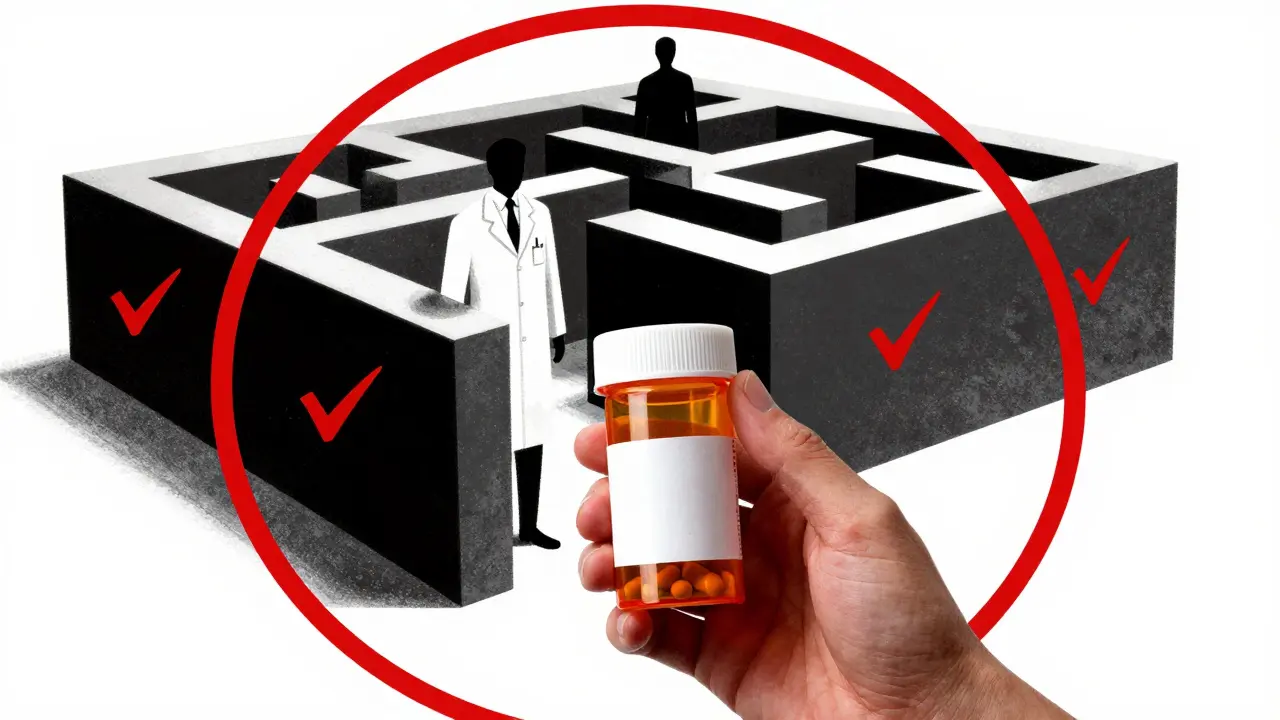
Elements to Assure Safe Use (ETASU) are the strictest REMS requirements involving specific actions like prescriber certification and specialized pharmacy distribution. When a drug has an ETASU, the process becomes more complex. For example, 100% of ETASU programs require prescriber training or certification. Additionally, 87% require special certifications for pharmacies, and 63% limit where the drug can be dispensed, often restricting it to specialty pharmacies or hospital settings. If you are prescribed a drug with ETASU, expect extra steps: your doctor will likely need to register online, and you may have to visit a specific pharmacy or infusion center.
Why Do Some Drugs Require REMS?
The FDA uses a benefit-risk framework to decide if a REMS is necessary. They look at several factors:
- Severity of the Risk: Does the drug cause birth defects, organ damage, or death? For instance, isotretinoin (Accutane) causes severe birth defects, so it requires the iPLEDGE REMS program with strict pregnancy testing protocols.
- Availability of Alternatives: Are there safer drugs available? If a drug is the only option for a deadly disease, the FDA may allow it with strict REMS controls rather than rejecting it outright.
- Therapeutic Area: Oncology and hematology drugs have the highest concentration of REMS programs. About 31.7% of all REMS cover cancer therapies because many chemotherapy and targeted therapy agents carry significant toxicity risks.
- Patient Population: Drugs used in vulnerable populations, such as children or pregnant women, may face stricter scrutiny.
For example, lenalidomide (Revlimid) is highly effective for multiple myeloma but causes birth defects. Its REMS program requires prescriber certification, pharmacy registration, and mandatory pregnancy testing for female patients. Without these controls, the drug would likely not remain on the market due to the unacceptable risk to fetuses.
Challenges and Criticisms of REMS
While REMS saves lives by preventing adverse events, it is not without flaws. A major criticism is the administrative burden it places on healthcare providers and patients. A 2023 survey by the American Society of Hematology found that 68% of hematologists spend more than five hours weekly managing REMS requirements. This includes filling out forms, verifying certifications, and dealing with portal errors.
Patients also face hurdles. According to a GoodRx survey, 42% of patients prescribed REMS drugs experienced at least one treatment delay. Delays happen when prescribers haven’t completed certification, pharmacies aren’t registered, or patients miss required monitoring tests. For someone fighting cancer or a chronic autoimmune disease, even a few days’ delay can be distressing.
Generic drug manufacturers face another issue. REMS programs can create barriers to generic entry. A Health Affairs study in October 2024 reported that 78% of generic manufacturers experienced delays averaging 14.3 months due to REMS-related issues. This happens because generic makers must align their REMS with the brand-name version, which can involve complex negotiations and sample access problems. These delays keep prices high and limit competition.

How REMS Is Changing in 2026
The FDA recognizes these challenges and is working on modernization. The REMS Modernization Initiative aims to reduce administrative burden while maintaining safety. Key developments include:
- Standardized Documentation: Efforts to harmonize forms and processes across different REMS programs to reduce confusion.
- Electronic Verification: Moving away from paper-based checks to real-time digital verification systems for prescriber and pharmacy status.
- REMS Dashboard: Planned for Q3 2025, this tool will provide transparent metrics on program effectiveness and burden, helping stakeholders see how well REMS is working.
- Real-World Data Integration: Future REMS programs may use digital health technologies and real-world data to monitor risks more precisely, rather than relying solely on periodic reports.
The 21st Century Cures Act Reauthorization, signed into law in December 2022, mandates the FDA to develop a REMS Assessment Standard by December 2025. This should improve consistency in evaluating whether a REMS is still needed. In rare cases, if evidence shows a REMS does not improve safety, the FDA can remove it. Only three REMS programs have been fully discontinued since 2007, including Zeposia in March 2023, showing that removal is uncommon but possible.
Tips for Navigating REMS Successfully
If you are dealing with a REMS drug, here are practical steps to avoid delays:
- Check Early: Ask your doctor if the drug requires REMS before starting treatment. Get certified early if you are a prescriber.
- Use Specialty Pharmacies: Many REMS drugs require specialty pharmacy distribution. Ensure your pharmacy is registered for the specific program.
- Keep Records: Maintain copies of your certification, enrollment confirmation, and monitoring test results. Digital records are best.
- Communicate Clearly: Inform your pharmacist and doctor immediately if you miss a monitoring appointment or change pharmacies.
- Leverage Resources: Visit the REMS@FDA website for official guidelines and contact information for program managers. Don’t hesitate to ask your manufacturer’s support team for help.
What is the difference between a Medication Guide and a REMS?
A Medication Guide is a paper handout that provides information about serious risks and safe use. It is a common component of many REMS programs but is not the same thing. REMS is the overall regulatory program that may include a Medication Guide, Communication Plans, and Elements to Assure Safe Use (ETASU). All REMS programs include either a Medication Guide or a Patient Package Insert, but not all drugs with Medication Guides have full REMS programs.
Can a REMS program be removed from a drug?
Yes, but it is rare. The FDA can remove REMS requirements if evidence shows the program does not improve patient safety or if the risk profile changes. Since 2007, only three REMS programs have been fully discontinued. The most recent was for Zeposia in March 2023. Manufacturers must periodically assess their REMS and submit reports to the FDA, which then decides if modifications or removal are appropriate.
Why do generic drugs sometimes take longer to launch due to REMS?
Generic manufacturers must implement a REMS that aligns with the brand-name version. This often requires accessing samples of the drug for testing and coordinating with the brand manufacturer. A 2024 Health Affairs study found that 78% of generic manufacturers faced delays averaging 14.3 months due to these REMS-related barriers. Legislative proposals aim to shorten this review period to 90 days to encourage faster generic entry.
Do I need to pay extra for a drug with a REMS program?
The REMS program itself does not add a direct fee to your prescription bill. However, the administrative costs borne by manufacturers (averaging $2.7 million annually per program) can contribute to higher drug prices. Additionally, if a REMS requires specialty pharmacy distribution or frequent monitoring tests, those services may incur separate costs depending on your insurance coverage.
How can I find out if my medication has a REMS program?
You can search the FDA’s REMS@FDA database online. Alternatively, ask your doctor or pharmacist. If a drug has a REMS, you will likely be asked to sign consent forms, complete training, or undergo specific monitoring before receiving the medication. The package insert will also mention if a REMS is required.