Probiotic Timing & Strain Advisor
Personalized Probiotic Schedule Generator
Your Recommended Schedule
Daily Timing Guide
Post-Treatment Recovery Plan
Continue taking your probiotic for 1-2 weeks after finishing your antibiotics to support full microbiome recovery.
Key Reminders
- Store properly Check Label
- Stay hydrated Essential
- Eat fiber-rich foods Support Gut
- Monitor symptoms Important
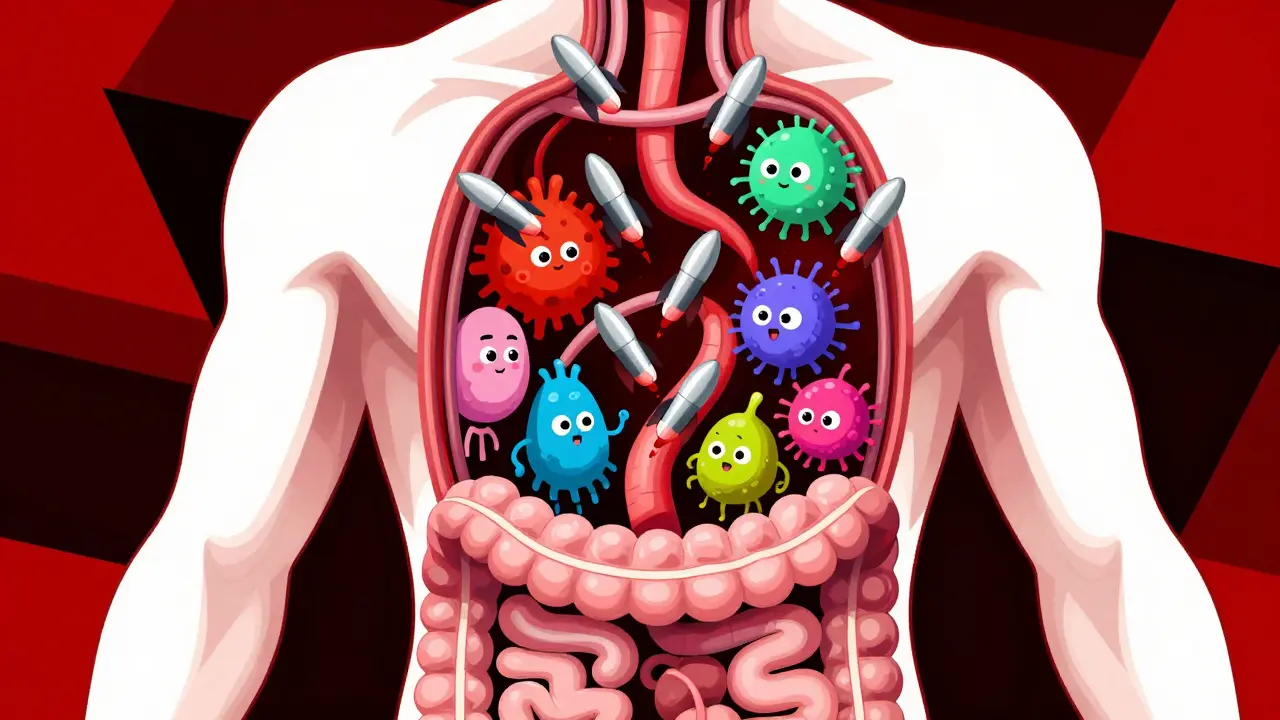
You take that first pill of antibiotics, feeling relieved that your infection is finally under control. But a week later, you’re dealing with something else entirely: stomach cramps, bloating, and maybe even diarrhea. It’s a frustrating twist-curing one problem only to create another. This happens because antibiotics are broad-spectrum weapons; they don’t just kill the bad bacteria causing your infection, they wipe out the good bacteria in your gut too.
This disruption can lead to Antibiotic-Associated Diarrhea (AAD), which affects between 5% and 30% of people taking these medications. For some, it’s mild annoyance. For others, it leads to severe complications like Clostridioides difficile infection (CDI), a serious intestinal condition. Enter probiotics. These live microorganisms are increasingly used to help restore balance and reduce these gastrointestinal side effects. But do they actually work? And if so, which ones should you pick?
How Probiotics Protect Your Gut During Treatment
To understand why probiotics help, you have to look at what’s happening inside your digestive system. Your gut houses over 100 trillion bacteria that aid in digestion, regulate immunity, and keep harmful pathogens in check. When you introduce antibiotics, you essentially blow up this ecosystem. The resulting vacuum allows opportunistic pathogens, like C. difficile, to grow unchecked.
Probiotics are defined as live microorganisms that confer a health benefit when administered in adequate amounts. They work by replenishing the beneficial bacteria that antibiotics destroy. Think of them as reinforcements arriving on the battlefield. They produce short-chain fatty acids that nourish your gut lining and compete with bad bacteria for space and resources.
The evidence supporting this is strong. A 2020 Cochrane review analyzed 13 trials involving 2,454 participants. In high-risk populations, those who took probiotics had an incidence of C. difficile-associated diarrhea of just 3.1%, compared to 11.6% in the control group. That’s a significant drop in risk. However, not all probiotics are created equal, and the strain matters immensely.
Choosing the Right Strain Matters
You might walk into a pharmacy and see dozens of bottles labeled "Gut Health." But generic labels aren't enough. Research shows that efficacy is highly strain-specific. Two of the most studied and effective strains for preventing antibiotic-associated diarrhea are Lactobacillus rhamnosus GG (LGG) and Saccharomyces boulardii.
LGG is a bacterial probiotic found in many supplements. It has extensive clinical backing for reducing the risk of AAD. On the other hand, S. boulardii is unique because it is a yeast, not a bacterium. This distinction is crucial. Since antibiotics target bacteria, they generally do not kill S. boulardii. This means you can take it closer to your antibiotic dose without worrying about the antibiotic neutralizing the probiotic before it works. A 2018 meta-analysis showed S. boulardii reduced AAD risk by 50%.
| Strain | Type | Key Benefit | Timing Note |
|---|---|---|---|
| Lactobacillus rhamnosus GG | Bacteria | Strong evidence for reducing AAD | Take 2-3 hours apart from antibiotics |
| Saccharomyces boulardii | Yeast | Reduces AAD risk by ~50%; resistant to antibiotics | Can be taken closer to antibiotic dose |
| Bifidobacterium species | Bacteria | Supports general gut flora recovery | Take 2-3 hours apart from antibiotics |

Timing Is Everything
If you decide to use probiotics, timing is critical. If you swallow your antibiotic and your probiotic at the exact same moment, the antibiotic will likely kill the probiotic bacteria before they can colonize your gut. Most experts recommend separating the doses by at least two to three hours.
For example, if you take your antibiotic in the morning with breakfast, wait until lunchtime or early afternoon to take your probiotic. This window ensures the antibiotic concentration in your gut has lowered enough for the probiotic to survive and thrive. Continue this routine throughout your antibiotic course and for at least one to two weeks after finishing the medication. This post-treatment phase is vital for rebuilding your microbiome fully.
Safety Concerns and Who Should Avoid Them
While probiotics are generally safe for healthy adults, they are not risk-free. Because they involve introducing live organisms into your body, there are rare but serious risks. Documented cases include fungemia (yeast in the blood) from S. boulardii and bacteremia (bacteria in the blood) from Lactobacillus strains.
These risks are significantly higher for certain groups. If you are immunocompromised, have a central venous catheter, or are critically ill, you should avoid probiotics unless explicitly directed by your doctor. The Henry Ford Health System warns that probiotics may be harmful for people with immune system disorders. Additionally, if you have Short Bowel Syndrome or pancreatitis, consult your healthcare provider before starting any supplement regimen.
Another concern is product quality. In the U.S., probiotics are sold as dietary supplements under DSHEA regulations. This means manufacturers do not need to prove safety or efficacy to the FDA before selling them. ConsumerLab testing revealed that 30% of probiotic supplements failed to contain the stated number of live organisms, and 15% contained unlisted microbial strains. Look for brands that undergo third-party testing to ensure you’re getting what’s on the label.

What to Expect: Side Effects and Recovery
Ironically, adding probiotics might initially make your stomach feel worse. As your gut adjusts to the new bacteria, you might experience temporary gas, bloating, or increased thirst. This is normal and usually resolves within a few days. Don’t panic and stop taking them immediately unless the symptoms are severe. Give your body time to adapt.
Real-world user experiences align with clinical data. Many users report that probiotics prevented the diarrhea that typically accompanies their antibiotic courses. However, some individuals with pre-existing conditions like Irritable Bowel Syndrome (IBS) report exacerbated symptoms. Listen to your body. If you notice worsening pain or persistent issues, contact your doctor.
Practical Steps for Implementation
Ready to try probiotics during your next round of antibiotics? Here is a simple checklist to follow:
- Consult your doctor: Especially if you have underlying health conditions or a weakened immune system.
- Pick a proven strain: Look for Lactobacillus rhamnosus GG or Saccharomyces boulardii on the label.
- Check the CFU count: Aim for 5 to 10 billion Colony Forming Units (CFUs) per day during treatment.
- Time it right: Take the probiotic 2-3 hours after your antibiotic dose.
- Continue after treatment: Keep taking the probiotic for 1-2 weeks after finishing your antibiotics to support full recovery.
- Store properly: Some probiotics require refrigeration to stay alive. Check the bottle instructions.
Remember, while probiotics are a powerful tool, they are part of a broader strategy. Eating fiber-rich foods, staying hydrated, and getting enough sleep also support your gut’s natural healing process. By combining these habits with targeted probiotic use, you can minimize the unpleasant side effects of antibiotics and get back to feeling like yourself faster.
Should I take probiotics every time I take antibiotics?
It is recommended for most healthy adults, especially if you are prone to digestive issues or are taking broad-spectrum antibiotics. However, always consult your doctor first, particularly if you have a compromised immune system or serious underlying health conditions.
Can I take my probiotic at the same time as my antibiotic?
Generally, no. Taking them together may result in the antibiotic killing the probiotic bacteria before they can work. It is best to separate the doses by at least 2 to 3 hours. An exception is Saccharomyces boulardii, a yeast-based probiotic that is not affected by antibiotics, though spacing them out is still often recommended for optimal absorption.
Which probiotic strain is best for antibiotic-associated diarrhea?
The two most clinically supported strains are Lactobacillus rhamnosus GG (LGG) and Saccharomyces boulardii. Studies show these specific strains significantly reduce the risk of diarrhea caused by antibiotics. Multi-strain formulas are also popular, but single-strain products with proven efficacy are often more reliable.
Are probiotics safe for everyone?
No. While safe for most healthy people, probiotics can pose serious risks to individuals with weakened immune systems, those who are critically ill, patients with central venous catheters, or those with Short Bowel Syndrome. Always seek medical advice before starting probiotics if you fall into these categories.
How long should I continue taking probiotics after finishing antibiotics?
It is advisable to continue taking probiotics for at least 1 to 2 weeks after completing your antibiotic course. This helps ensure that your gut microbiome has sufficient time to recover and repopulate with beneficial bacteria, reducing the likelihood of late-onset digestive issues.