
Have you ever heard that pomegranate juice is healthy-so healthy, in fact, that you should drink it every day? It’s packed with antioxidants, tastes great, and even has a reputation for lowering blood pressure. But here’s something most people don’t tell you: pomegranate juice might be messing with your medications without you even knowing it.
If you’re taking warfarin, statins, certain blood pressure meds, or even some antidepressants, what you drink with breakfast could be changing how your body processes your pills. And unlike grapefruit juice, which comes with clear warnings on bottles, pomegranate juice? Not so much. That’s the problem. The science is mixed. Some studies say it’s risky. Others say it’s fine. So what should you actually do?
How Pomegranate Juice Interferes With Your Body’s Drug Processing
Your liver and intestines have a team of enzymes called cytochrome P450 that break down drugs so your body can use them-or get rid of them. Two of the most important ones are CYP3A4 and CYP2C9. Together, they handle about 60% of all prescription medications. That includes warfarin (a blood thinner), atorvastatin (a cholesterol drug), and even some painkillers and antidepressants.
Pomegranate juice contains compounds like punicalagins and ellagitannins. These aren’t just antioxidants-they’re also enzyme inhibitors. In lab tests, they’ve been shown to block CYP3A4 and CYP2C9. When that happens, your body can’t break down the drug as quickly. That means more of the drug stays in your bloodstream. For some medications, that’s harmless. For others? It can be dangerous.
Think of it like traffic. Your body’s enzymes are toll booths. If you block one, cars (your drugs) pile up behind it. Too many cars? You get a backup. In medical terms, that’s called increased drug concentration. And for drugs with a narrow therapeutic index-where the difference between a helpful dose and a toxic one is small-that backup can lead to bleeding, low blood pressure, or even organ damage.
The Warfarin Question: Real Risks, Not Just Theory
Of all the drugs that might interact with pomegranate juice, warfarin is the one that keeps popping up in real cases. Warfarin’s job is to thin your blood, but too much can cause internal bleeding. Its dose is finely tuned, and even small changes in how your body processes it can throw your INR (a blood test that measures clotting time) out of whack.
There are documented cases. One man on Reddit reported his INR jumped from 2.4 to 4.7 after drinking a glass of pomegranate juice every day for three days. His doctor had to cut his warfarin dose by 30% to get things back under control. Another case, reported in the Pharmaceutical Journal, showed a patient’s INR rising from 2.5 to 4.1 after regular pomegranate juice consumption.
But here’s the twist: not everyone has this reaction. A 2022 survey of over 1,200 people taking chronic medications found that nearly 30% drank pomegranate juice regularly. Only 4.7% reported any possible interaction. On PatientsLikeMe, 89% of 214 warfarin users said their INR didn’t change at all.
So why the difference? It might come down to genetics, how much juice you drink, or even what time of day you drink it. Some people’s CYP2C9 enzymes are naturally slower. Others have faster metabolism. Pomegranate juice doesn’t affect everyone the same way.
What About Other Medications?
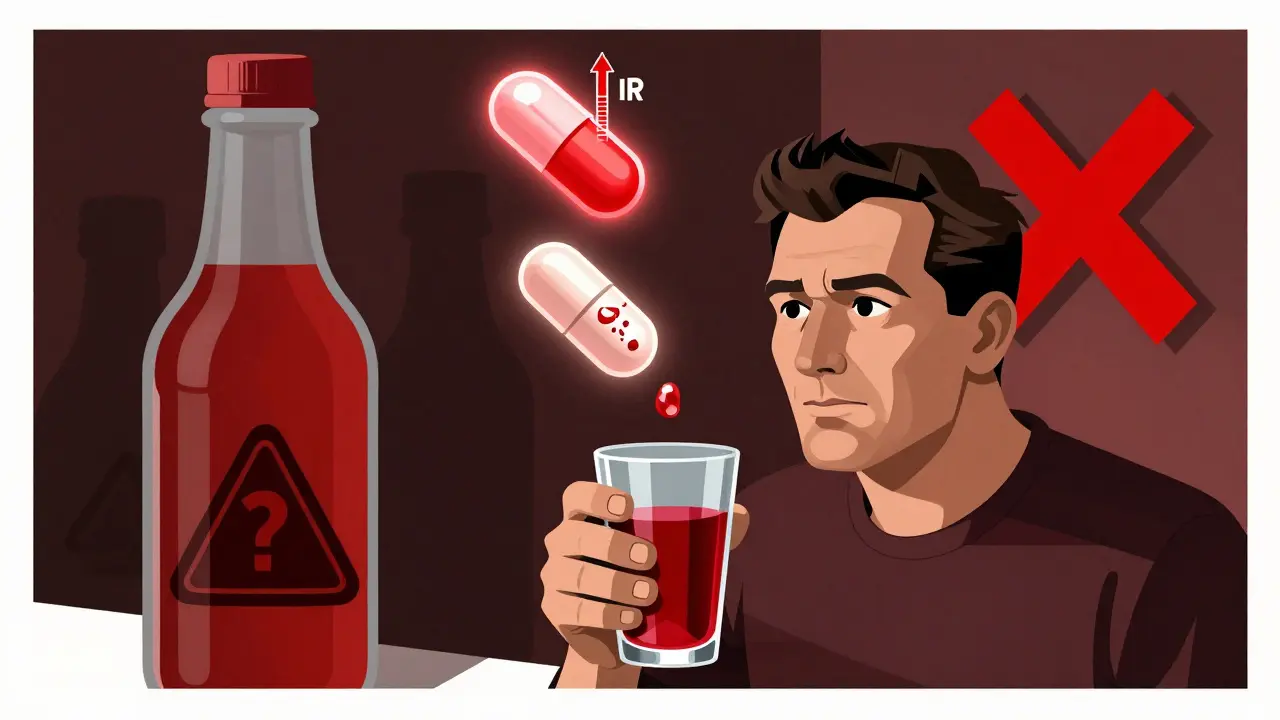
It’s not just warfarin. Pomegranate juice has been flagged for possible interactions with:
- Statins (like atorvastatin and simvastatin): Higher levels could raise the risk of muscle damage.
- ACE inhibitors (like lisinopril): Could cause blood pressure to drop too low, especially if you’re already on multiple blood pressure meds.
- Antidepressants (like sertraline and quetiapine): May increase side effects like dizziness or drowsiness.
- Immunosuppressants (like cyclosporine): Risk of kidney damage if levels spike.
The FDA doesn’t have a formal warning for pomegranate juice-unlike grapefruit juice, which can increase statin levels by up to 15 times. But WebMD lists pomegranate juice as having a “moderate interaction” with 17 medications. That’s not nothing.
What Do Experts Actually Recommend?
There’s no universal rule. But here’s what major health organizations say right now:
- Mayo Clinic (updated September 2023): Avoid more than 8 ounces of pomegranate juice per day. If you do drink it, keep it consistent. Don’t start or stop suddenly.
- American Heart Association (2021): Don’t quit pomegranate juice cold turkey. Abrupt changes in diet can be riskier than steady, moderate intake.
- European Medicines Agency (2022): For warfarin users, increase INR monitoring during the first few weeks of drinking pomegranate juice. No need to cut it out entirely.
- University of North Carolina Pharmacy (2020): Space out your juice and your meds by at least two hours. That can reduce the chance of interaction.
Dr. David Mischoulon from Massachusetts General Hospital put it best: “Lab results don’t always translate to real life.” Just because a test tube shows inhibition doesn’t mean your body will react the same way.

What Should You Do? A Practical Guide
Here’s a simple step-by-step plan if you’re on medication and considering pomegranate juice:
- Check your meds. Look up your prescription on a reliable drug interaction checker (like Mayo Clinic’s or WebMD’s). If pomegranate juice is listed, proceed with caution.
- Don’t assume it’s safe. Just because your friend drinks it without issues doesn’t mean you will. Genetics, age, liver function, and other meds all matter.
- Start slow. If you’ve never had it before, try a small amount (4 oz) once a week. Wait a few days. Monitor for side effects like unusual bruising, dizziness, or fatigue.
- Be consistent. If you decide to drink it, stick to the same amount and schedule. Don’t skip days or binge on weekends. Fluctuations are riskier than steady intake.
- Get your INR checked. If you’re on warfarin, ask your doctor to test your INR within a week of starting pomegranate juice. Then again after two weeks.
- Talk to your pharmacist. They see drug interactions every day. Bring your list of meds and ask: “Could pomegranate juice affect any of these?”
The Bottom Line
Pomegranate juice isn’t poison. For most people, it’s a healthy drink. But if you’re on certain medications, it’s not just a snack-it’s a variable in your treatment plan. You wouldn’t change your medication dose without talking to your doctor. Don’t change your juice intake without talking to them either.
The science is still evolving. New studies are underway, including one funded by the National Institutes of Health that’s looking at how genetics play a role. Results won’t be in until 2025. Until then, the safest approach is simple: know your meds, know your juice, and keep your doctor in the loop.
Can I drink pomegranate juice if I’m on warfarin?
You can, but with caution. Some people experience increases in INR, which raises bleeding risk. Others see no change. The key is consistency: drink the same amount every day, avoid sudden changes, and get your INR checked within a week of starting. Always talk to your doctor before adding it to your routine.
Is pomegranate juice as risky as grapefruit juice?
No. Grapefruit juice is far more potent-it can increase blood levels of some statins by up to 15 times. Pomegranate juice’s effect is much milder and inconsistent. While grapefruit juice comes with clear FDA warnings, pomegranate juice does not. That doesn’t mean it’s harmless, but the risk level is generally lower and more variable.
Does timing matter? Should I take my meds before or after juice?
Yes. Some pharmacists recommend waiting at least two hours between taking your medication and drinking pomegranate juice. This gives your body time to absorb the drug before the juice hits your gut enzymes. It’s not foolproof, but it reduces the chance of interaction.
What if I only drink pomegranate juice once a week?
Occasional use is less likely to cause problems than daily consumption. But if you’re on a narrow-therapeutic-index drug like warfarin, even occasional intake can trigger an unexpected change. It’s safer to avoid it completely or stick to a strict, consistent schedule-even if it’s just once a week.
Are pomegranate supplements safer than juice?
No. Supplements often contain concentrated forms of the same compounds found in juice-sometimes even more. They’re less regulated, so you don’t always know how much you’re getting. For someone on medication, supplements are riskier than juice. Avoid them unless your doctor says otherwise.


