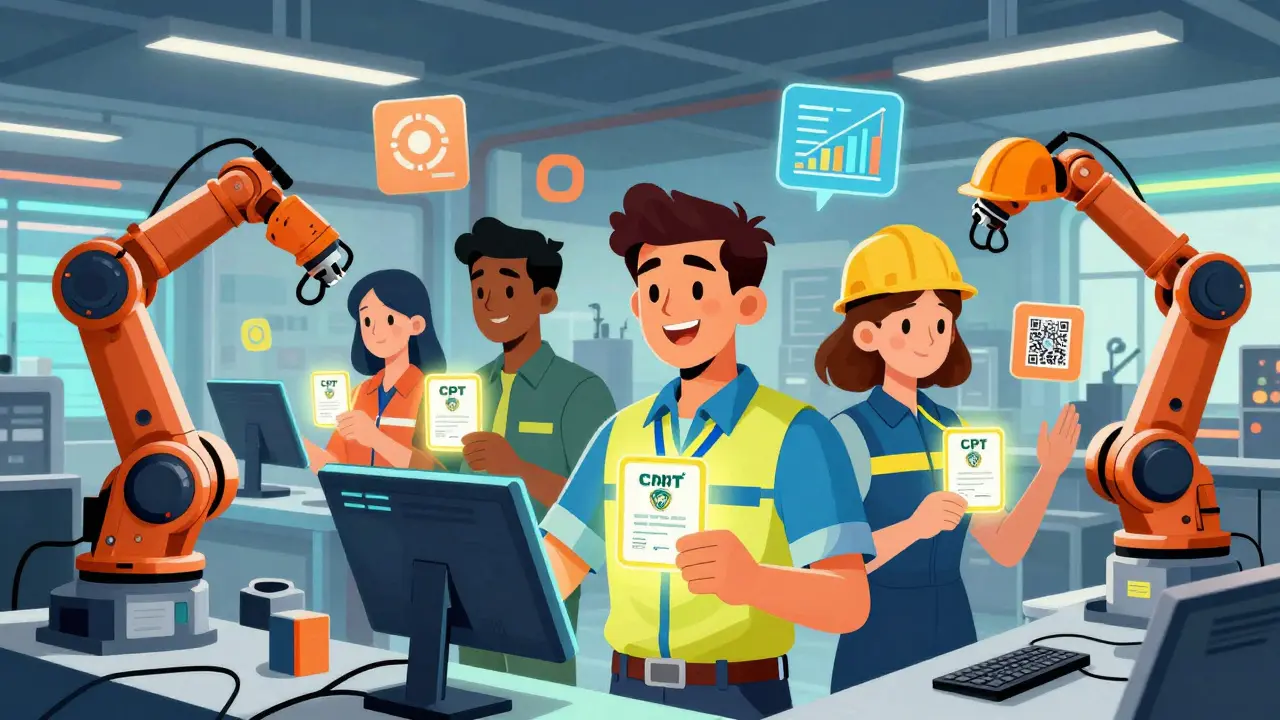
When you walk into a modern factory, you don’t just see machines. You see people-workers who know how to read digital dashboards, adjust robotic arms, spot a 0.002-inch tolerance error, and call a safety stop before something goes wrong. These aren’t just laborers. They’re trained professionals. And the qualifications they hold? They’re the difference between a plant running smoothly and one shutting down because of a preventable mistake.
What It Really Takes to Work in Manufacturing Today
Forget the old idea that manufacturing jobs only need a high school diploma and a strong back. That’s still true for some entry-level roles, but it’s no longer enough to get ahead-or even to keep your job. Today’s manufacturing staff need a mix of technical skills, safety knowledge, and digital fluency. The baseline? A high school diploma or GED. About 92% of employers accept this as the minimum. But here’s the catch: workers with just that baseline have a 37% higher turnover rate than those with formal training. Companies aren’t just hiring bodies-they’re hiring reliable, skilled operators.Core Certifications That Actually Matter
Not all certifications are created equal. Some are fluff. Others? They open doors, raise pay, and save lives. Here are the three that matter most in 2026:- Certified Production Technician (CPT) from the Manufacturing Skill Standards Council (MSSC): This is the entry point for frontline workers. It covers four areas: safety, quality practices, manufacturing processes, and maintenance awareness. It’s nationally recognized, accepted in all 50 states, and often funded by state programs. Workers with CPT earn 76% more on average than those without, according to U.S. Department of Labor data.
- Six Sigma Certifications (White Belt to Master Black Belt): These aren’t just for managers. Green Belts-those who lead small process improvement projects-are now common on the shop floor. They learn to use data to cut waste, reduce defects, and improve output. A Green Belt can earn $85,000 a year. A Black Belt? Around $110,000. The catch? You need 100-240 hours of training and a real project to complete. And starting in 2025, ASQ requires basic Python and SQL knowledge for certification.
- Manufacturing Technician Level 1 (MT1) from the Manufacturing Skills Institute: Designed for high school graduates and adult learners, MT1 is gaining traction because it’s tied to state-funded education programs. Virginia, for example, pays $2,200 per teacher to get certified to teach MT1 in high schools. The credential is valid for three years and requires ongoing training to renew. It’s not as flashy as Six Sigma, but it’s practical, hands-on, and growing fast.
Safety Isn’t Optional-It’s the Foundation
OSHA says proper safety training cuts workplace injuries in manufacturing by 52%. That’s not a suggestion. It’s the law. Every worker needs to know how to use PPE, respond to chemical spills, lock out machines during maintenance, and report near-misses. But here’s the problem: only 38% of small manufacturers do regular safety recertification. That’s dangerous. A worker who’s trained once and never refreshed is a liability. Top plants don’t just run annual safety drills-they integrate safety checks into daily routines. One Michigan plant started requiring every operator to verbally confirm a safety step before starting a machine. Within six months, their incident rate dropped by 61%.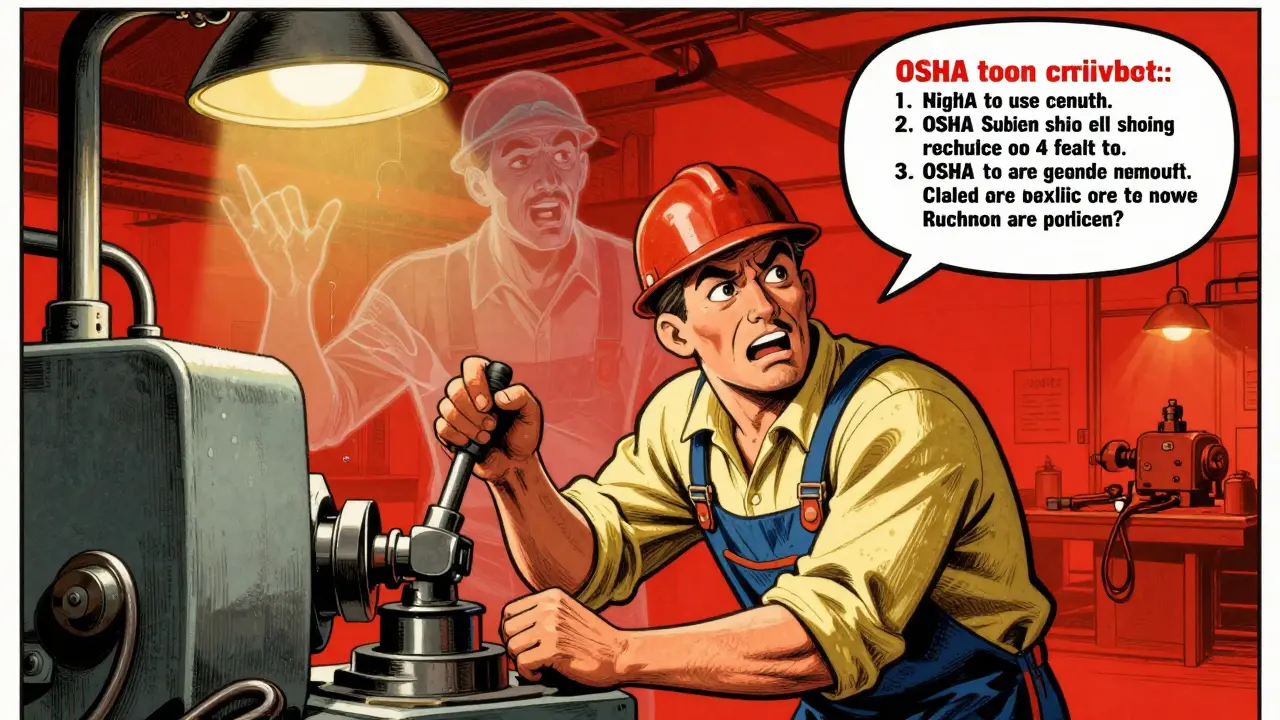
Soft Skills Are the Hidden Key
You’d think technical skills would be the biggest factor in production success. But Harvard Business School’s Dr. John P. Kotter found that 70% of production failures come from communication breakdowns-not machine malfunctions. A worker who can’t explain a defect to a supervisor, or who doesn’t speak up when something feels off, can cost a company thousands. That’s why modern training programs now include:- Clear verbal communication
- Team problem-solving
- Reading and interpreting work orders
- Giving and receiving feedback
Training Pathways: College, Certificates, or On-the-Job?
There’s no single right path. But each has trade-offs:| Pathway | Time | Cost | Wage Impact | Best For |
|---|---|---|---|---|
| High School Diploma Only | 0 | $0 | Baseline | Entry-level, short-term roles |
| Community College (Manufacturing Tech) | 18-24 months | $3,000-$8,000 | +40% to base pay | Operators, technicians |
| CPT or MT1 Certification | 3-6 months | $100-$500 | +76% average | Frontline workers, career starters |
| Six Sigma Green Belt | 4-6 months | $1,000-$2,500 | $85,000 median salary | Process improvement roles |
| Engineering Degree (B.S.) | 4 years | $20,000-$50,000/year | $90,000-$130,000+ salary | Supervisors, engineers, managers |
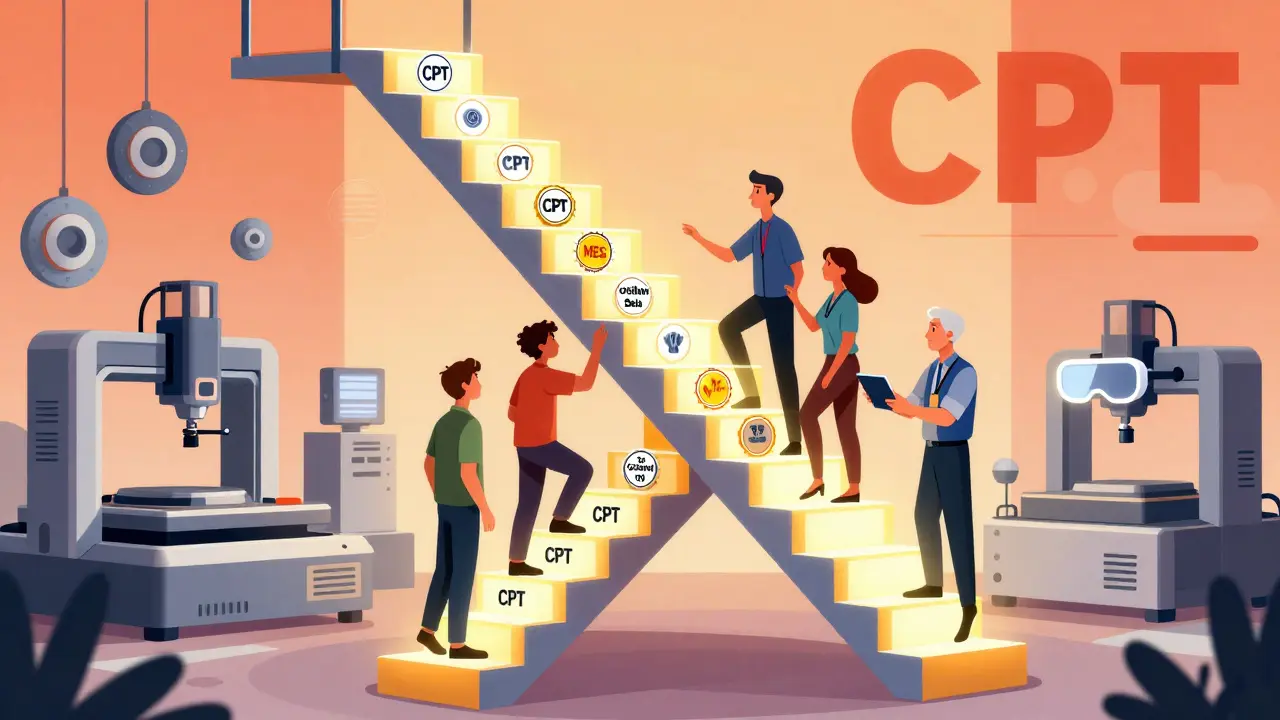
Community college programs have a 91% job placement rate. But if you’re already working and can’t afford to quit, stackable micro-credentials are the smart move. You earn a CPT, then a Six Sigma White Belt, then a Green Belt-all while working. By 2025, 63% of manufacturers plan to use this model.
The Digital Shift: You Can’t Ignore It
Manufacturing isn’t just about turning knobs anymore. It’s about reading screens, interpreting sensor data, and troubleshooting software glitches on CNC machines. A 2023 MIT study found that 58% of manufacturers report shortages in data analytics skills. That’s why new training now includes:- Basic use of MES (Manufacturing Execution Systems)
- Understanding OEE (Overall Equipment Effectiveness) metrics
- Using tablets to log defects instead of paper
- Recognizing alerts from predictive maintenance tools
Why Some Training Programs Fail
It’s not about the content. It’s about how it’s delivered. Here are the top three reasons training fails:- One-and-done training: A single 4-hour safety class in January won’t stick. Skills fade without reinforcement. Top companies do 15-minute refreshers every week.
- No tracking: If you don’t measure progress, you can’t prove ROI. Use digital skills matrices to track who’s certified in what, and when they need renewal.
- Ignoring veteran workers: 42% of manufacturing workers are 45 or older. They’re not tech-resistant-they’re unfamiliar. Cross-training them with younger workers cuts resistance by 41%.
What Small Manufacturers Can Do (Without Breaking the Bank)
Big companies have budgets. Small ones don’t. But they still need trained staff. Here’s how they win:- Use the Manufacturing Extension Partnership (MEP): 1,400+ free centers across the U.S. offer training consultations, curriculum help, and even grant writing support.
- Apply for state grants: 17 states now fund MT1 training for high schools and adult learners. Check your state’s workforce development site.
- Partner with local community colleges: Many offer low-cost, employer-tailored courses. You pay for the class, they customize it for your machines.
- Start a mentorship program: Pair new hires with experienced workers. ASQ found that certification retention jumps from 57% to 85% when mentorship is involved.
The Future Is Stackable
The idea of one big degree or one big certification is fading. The future is stacking small, recognized credentials. Earn a CPT. Then a Lean Yellow Belt. Then a digital literacy micro-credential. Each one adds value. Each one is portable. Each one can be earned while you work.By 2028, the Manufacturing Institute predicts integrated credentialing systems will dominate. That means your resume won’t just say “high school graduate.” It’ll say: “CPT, MT1, Six Sigma Green Belt, OSHA 10, MES Certified.” That’s the new standard.
Do I need a college degree to work in manufacturing?
No, you don’t need a college degree for most manufacturing jobs. Entry-level positions often only require a high school diploma or GED. But to move into technical roles, earn higher pay, or qualify for promotions, certifications like CPT or MT1 are essential. A degree is only necessary if you’re aiming for engineering, management, or quality assurance leadership roles.
Which certification pays the most in manufacturing?
Six Sigma Black Belt certifications typically lead to the highest salaries, with median pay around $110,000 per year. Master Black Belts can earn over $130,000. For frontline workers without a degree, CPT certification offers the best return on investment-76% higher wages than non-certified peers. MT1 is less lucrative but more accessible and widely supported by state education programs.
How long does manufacturing training take?
It depends on the credential. CPT and MT1 can be completed in 3-6 months. Six Sigma Green Belt requires 100-160 hours of study and a project, usually taking 4-6 months. Community college programs take 18-24 months. A bachelor’s degree takes four years. The trend is toward shorter, stackable credentials that you can earn while working.
Is safety training required by law?
Yes. OSHA’s 1910 General Industry Standards require employers to provide safety training on hazards like machine guarding, chemical exposure, lockout/tagout, and emergency response. Failure to comply can result in fines up to $16,000 per violation. Regular recertification is not always legally required-but it’s a best practice that cuts injuries by over half.
Can I get free manufacturing training?
Yes. The Manufacturing Extension Partnership (MEP) offers free training consultations and resources across the U.S. Many states fund MT1 certification for high school students and adult learners. Community colleges often have subsidized programs for local manufacturers. Check with your state’s workforce development agency-they often have grants for job training.
What’s the biggest mistake companies make in training?
They treat training as a one-time event. Workers forget skills without reinforcement. The best companies build training into daily routines: 15-minute safety huddles, weekly skill refreshers, and digital tracking of certifications. They also involve veteran workers in mentoring new hires-this reduces resistance to new tech by 41%.
Are digital skills really that important in manufacturing?
Absolutely. 58% of manufacturers report shortages in data analytics skills. Workers now need to read digital dashboards, interpret sensor alerts, log defects via tablets, and understand basic OEE metrics. Companies using augmented reality for training report 39% fewer errors. Digital fluency isn’t optional-it’s part of the job description now.
If you’re starting out in manufacturing, don’t wait for your employer to train you. Take the first step: get your CPT. It’s affordable, nationally recognized, and opens doors. If you’re managing a team, stop assuming people know how to use the machines. Build a training plan. Track progress. Reward improvement. The best factories aren’t the ones with the newest robots-they’re the ones with the best-trained people.


