Every year in the U.S., more than 100,000 people die from opioid overdoses. Most of these deaths happen because someone didn’t get help fast enough. The good news? naloxone can reverse an opioid overdose in minutes - if it’s nearby and you know how to use it. This isn’t just for doctors or first responders. It’s for parents, friends, neighbors, and anyone who might be around someone using opioids - even if they’re prescribed by a doctor.
How Naloxone Works
Naloxone is a medication that kicks opioids out of the brain’s receptors. It doesn’t feel good. It doesn’t get you high. It doesn’t do anything if there are no opioids in your system. But when someone overdoses - their breathing slows or stops - naloxone acts like a reset button. Within 3 to 5 minutes, it brings breathing back. That’s it. No magic. No side effects for people who don’t need it.
The most common form today is a nasal spray, like Narcan. You just spray it into one nostril. No needles, no training required. Even if you’ve never used it before, the instructions are printed right on the box. A 2021 study found that nasal spray worked successfully in 85% of cases when used by people with no medical background. That’s higher than injections, which require more skill.
But here’s the catch: naloxone doesn’t last as long as some opioids. Fentanyl, carfentanil, and other synthetic opioids stick around for hours. Naloxone wears off in about 30 to 90 minutes. That means someone can stop breathing again after the first dose wears off. That’s why you must call 911 even after giving naloxone. Medical help is still needed.
Who Needs Naloxone?
You don’t have to be a drug user to need naloxone. People on long-term pain meds like oxycodone or hydrocodone are at risk, especially if they take more than prescribed or mix them with alcohol or sleep aids. Older adults, people with chronic pain, and those recently released from jail or rehab are especially vulnerable. One study found that nearly half of all opioid overdose deaths happen in people with a prescription.
And it’s not just about street drugs. Fentanyl is now mixed into fake pills that look like Xanax or Adderall. People think they’re taking something safe. They’re not. A single pill can kill. That’s why naloxone should be in every home where someone takes opioids - even if they’re just for back pain.
Recognizing an Overdose
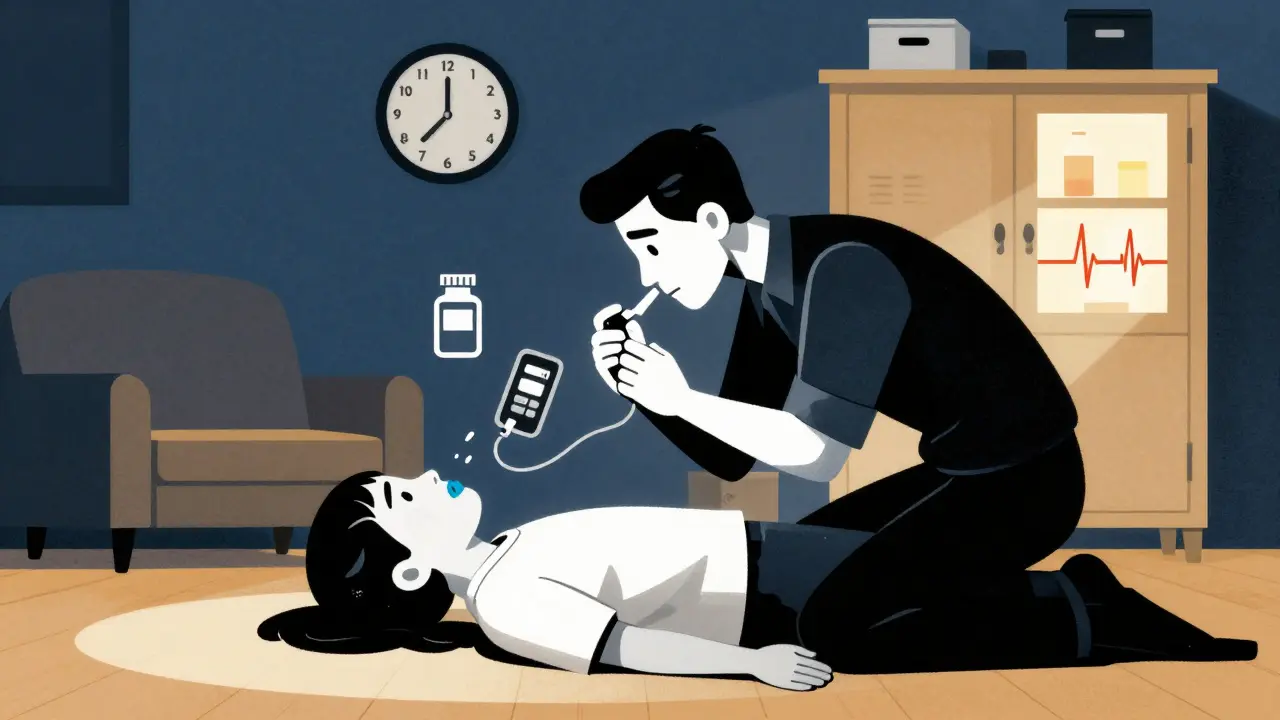
Most people don’t know what an opioid overdose looks like. It’s not always someone slumped over with a needle in their arm. Often, it’s quiet. The person is unresponsive. Their lips or fingernails turn blue. Their breathing is shallow or stops. They might make gurgling sounds - like they’re drowning in their own saliva.
Don’t wait for them to wake up. Don’t shake them or splash water. Don’t try to make them walk. Time matters. If someone isn’t responding and isn’t breathing normally, give naloxone immediately. Then call 911. Keep giving breaths if you know how. If you don’t, just stay on the line with the dispatcher. They’ll guide you.
Safe Storage Matters
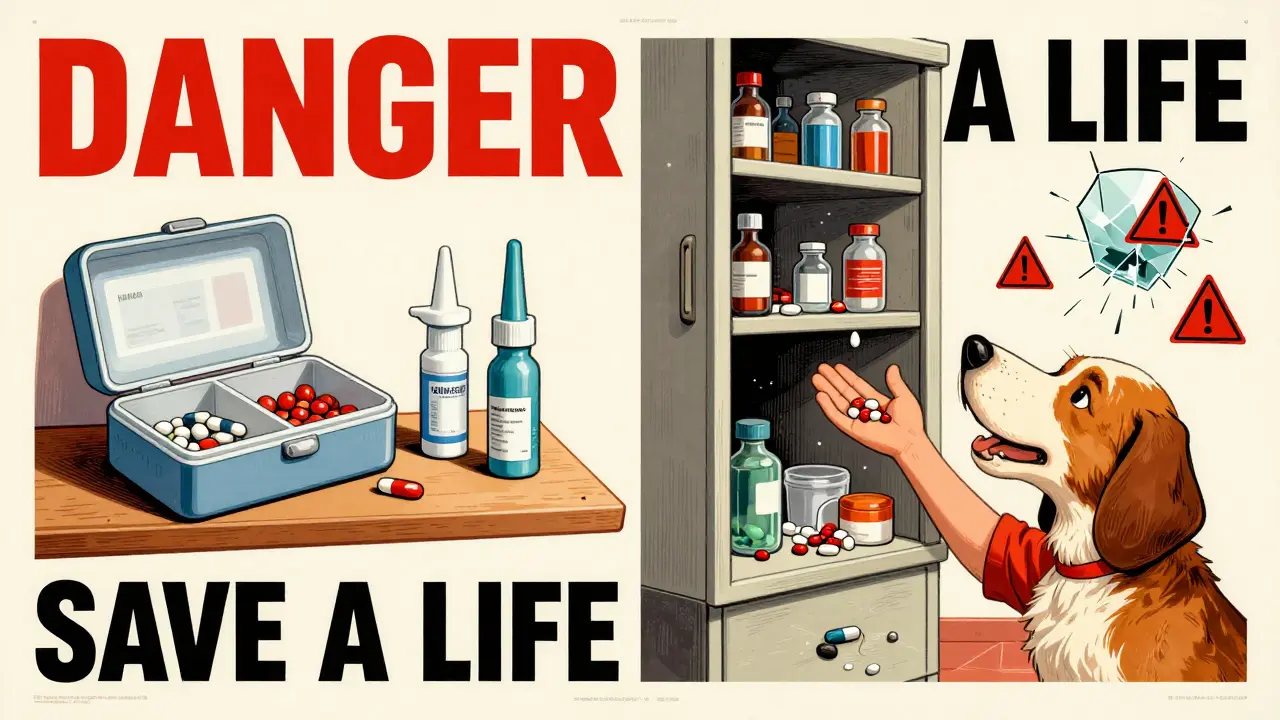
Naloxone only helps if it’s there when you need it. That means storing it right. Keep it at room temperature. Don’t leave it in the car in summer - heat can break it down. Don’t freeze it. Keep it in a dry place, like a medicine cabinet or a drawer. Make sure everyone in the house knows where it is.
If you’re storing opioids at home, lock them up. A 2023 CDC report showed that 70% of teens who misused prescription painkillers got them from a family member’s medicine cabinet. Keep pills in a locked box. Use a pill dispenser with a code. Throw away expired meds at a drop-off site. Don’t flush them. Don’t toss them in the trash where kids or pets might find them.
And don’t assume your child or grandparent won’t need naloxone. A 78-year-old on oxycodone after hip surgery is just as at risk as someone using heroin. One wrong mix of pills, one extra dose, one bad batch of fake pills - and it’s over.
What Naloxone Can’t Do
Naloxone only works on opioids. It won’t help if someone overdoses on alcohol, Xanax, cocaine, or meth. If you’re unsure what they took, give naloxone anyway. It won’t hurt. But if they’re not responding after two doses, it’s likely not an opioid overdose. Still call 911. They might need other help.
Also, naloxone can cause withdrawal. If someone is dependent on opioids, they might wake up angry, nauseous, sweating, or in pain. That’s not the drug working - that’s their body reacting. It’s scary, but it’s not life-threatening. The priority is keeping them breathing. After naloxone, they’ll need medical care to manage withdrawal safely.
Getting Naloxone - Free or Low Cost
You don’t need a prescription anymore. In every state, you can walk into a pharmacy and buy naloxone nasal spray. Most insurance plans cover it. If you don’t have insurance, many pharmacies sell it for under $40. Some community health centers, harm reduction groups, and even libraries give it out for free.
Check with your local health department. In Portland, you can get two free naloxone kits at any county health office. Nationwide, the federal government funds programs that ship free naloxone to anyone who asks. Just search “free naloxone near me.”
What to Do After Giving Naloxone
After you give naloxone, stay with the person. Roll them onto their side - the recovery position. That keeps their airway open if they vomit. Keep talking to them. Even if they wake up, they might be confused or scared. Reassure them. Tell them help is coming.
Don’t let them leave. Even if they feel fine, the opioids might come back. Many people have died because they walked away after the first dose of naloxone. Stay until EMS arrives. If you have a second dose, keep it ready. Fentanyl overdoses often need two or three doses.
And always call 911. Naloxone is not a substitute for medical care. It’s a bridge. The person needs to be monitored for at least two hours after the last dose. Hospitals can give them longer-acting treatments, fluids, and support to avoid another overdose.
Real Stories, Real Impact
On Reddit’s r/OpiatesRecovery, users share stories of saving lives. One person reversed three overdoses with nasal spray - each time, the person woke up within two minutes. Another said they kept naloxone in their purse after their brother died of an overdose. They’ve used it twice since. Both people survived.
But there’s also heartbreak. One user wrote: “I gave naloxone, called 911, but waited too long to act. He was already blue. I didn’t know how fast it had to be.” That’s why training matters. A 15-minute session at a community center teaches you how to spot the signs, how to spray, and how to stay calm. Most people pass the test on the first try.
What’s Next for Naloxone
Scientists are working on better versions. A new 8-mg nasal spray was approved in 2024 for fentanyl overdoses. Another drug, nalmefene, lasts longer and might replace naloxone in the future. But for now, naloxone is still the best tool we have.
The Biden administration is spending $200 million to get naloxone into more homes, schools, and workplaces. The goal is to distribute 2 million kits a year. That’s progress. But it’s not enough. We need everyone to know: if you’re around opioids, you need naloxone. Not someday. Now.
It’s not about judgment. It’s about survival. You can’t control whether someone uses drugs. But you can control whether they live through an overdose. Keep naloxone in your home. Teach your family how to use it. And if you ever need it - don’t hesitate. Save a life. It’s that simple.


