Waking up with puffy eyelids or noticing that your socks leave deep indentations in your ankles isn't just an inconvenience-it's a sign that your kidneys are struggling to keep up. When you have Chronic Kidney Disease (CKD), your body loses its ability to balance sodium and water. This causes fluid to leak out of your blood vessels and settle into your tissues, a condition known as edema. If left unchecked, this fluid buildup can put a massive strain on your heart and lungs.
The goal isn't just to "get rid of the water," but to find a sustainable balance that removes excess fluid without crashing your remaining kidney function. For most people, this requires a three-pronged attack: adjusting what you eat, using the right medications, and using physical tools to push fluid back toward your heart.
The Fast Facts on Fluid Control
- The Sodium Limit: Aim for under 2,000 mg of sodium per day (about 5 grams of salt).
- First-Line Meds: Loop diuretics are generally the gold standard for advanced kidney failure.
- Physical Support: Graduated compression stockings can reduce leg volume by up to 20%.
- The Danger Zone: Rapid fluid removal can trigger acute kidney injury; slow and steady is the rule.
How Diuretics Tackle Fluid Overload
Think of diuretics as a way to force your kidneys to dump salt and water into your urine. However, not all diuretics work the same way, and your choice depends heavily on your eGFR (estimated Glomerular Filtration Rate), which tells us how well your kidneys are filtering.
For those in the later stages of CKD (where eGFR is below 30), loop diuretics like furosemide (Lasix), bumetanide, or torsemide are the heavy hitters. They work deep in the kidney's loop of Henle to block sodium reabsorption. A typical starting dose of furosemide might be 40-80 mg, but in severe cases, doctors may scale this up to 320 mg to get the fluid moving. Interestingly, the FDA recently approved intravenous furosemide specifically for CKD-related edema, which has shown to clear fluid 38% more effectively than oral pills for patients with very low kidney function.
If your kidney function is still relatively high (eGFR above 30), thiazide diuretics like hydrochlorothiazide might be used. In some stubborn cases, doctors use "sequential nephron blockade"-combining both a loop and a thiazide diuretic. While this is incredibly effective at drying out the body, it comes with a catch: it can increase the risk of acute kidney injury by about 23%.
| Diuretic Type | Typical eGFR Range | Common Examples | Primary Goal |
|---|---|---|---|
| Loop Diuretics | < 30 mL/min | Furosemide, Torsemide | Aggressive fluid removal |
| Thiazides | > 30 mL/min | Hydrochlorothiazide | Mild to moderate fluid control |
| Potassium-Sparing | Variable (High risk) | Spironolactone | Heart failure/Ascites management |
The Battle Against Hidden Sodium
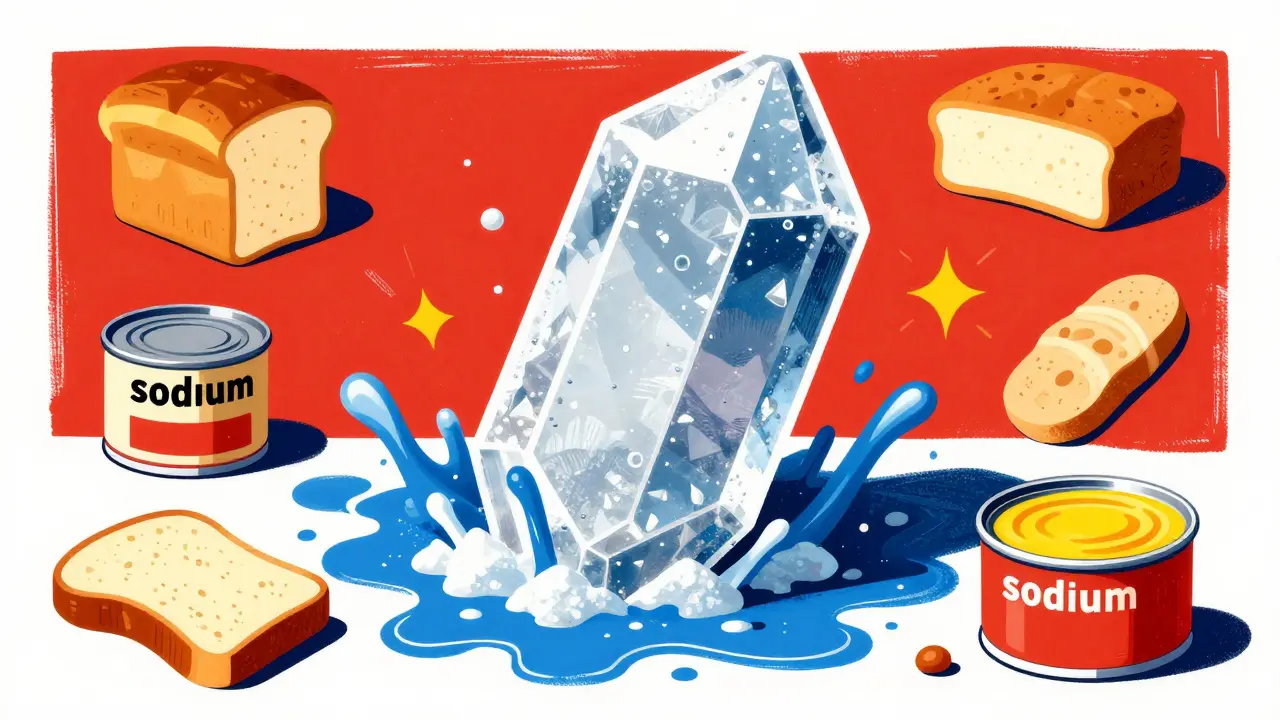
You can take the strongest diuretics in the world, but if you're eating 4,000 mg of sodium a day, you're essentially fighting a losing battle. Salt acts like a sponge, holding onto water in your bloodstream and pulling it into your tissues. To truly manage edema in CKD, you have to get serious about salt restriction.
Most guidelines recommend keeping sodium under 2,000 mg per day. For those in stages 4 or 5, that limit often drops to 1,500 mg. The hardest part? Most of the salt isn't coming from your salt shaker; it's hidden in processed foods. For instance, just two slices of bread can pack 400 mg of sodium, and a single cup of canned soup can hit 1,200 mg-more than half your daily allowance in one go.
It's not just about the salt, though. In advanced CKD, you may also need to limit total fluid intake to 1,500-2,000 mL per day. Keep an eye on "hidden fluids" like watermelon (which is 92% water) or yogurt. When you limit both sodium and fluid, you're reducing the amount of raw material your body has to create edema in the first place.
Physical Interventions: Compression and Elevation
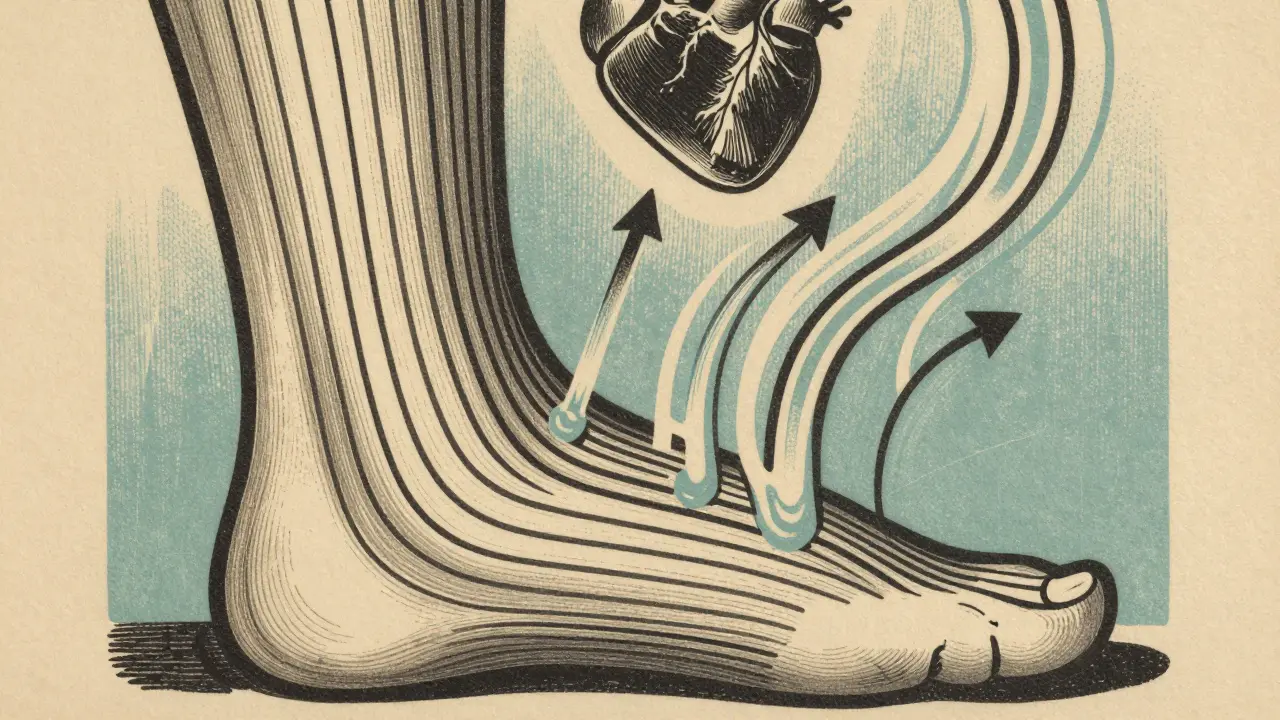
While meds and diet work from the inside out, mechanical interventions work from the outside in. If you have swelling in your legs and ankles, gravity is your enemy. Fluid naturally pools in the lower extremities, and once it's there, it's hard to get back into the circulation system.
One of the simplest tricks is elevation. Raising your legs above the level of your heart can reduce dependent edema by nearly 30% simply by helping the veins push fluid back toward the center of your body. But for long-term management, compression therapy is the way to go. Graduated compression stockings (usually 30-40 mmHg) apply pressure to the ankles and calves, preventing fluid from leaking into the tissue and squeezing existing fluid back into the bloodstream.
If standard stockings aren't enough-common in cases of nephrotic syndrome-intermittent pneumatic compression devices are an option. These are sleeves that inflate and deflate in cycles, and they've been shown to be 35% more effective at reducing leg circumference than stockings alone. To make these work, don't just sit still. Adding a 30-minute walk five days a week can boost edema control by another 22% because muscle movement acts as a natural pump for your lymphatic system.
Balancing the Risks: The Clinical Tightrope
Managing fluid in CKD is a delicate balancing act. On one hand, untreated volume overload is dangerous; patients with persistent edema have a 28% higher all-cause mortality risk. On the other hand, being too aggressive with diuretics can lead to dehydration, which further damages the kidneys.
There is a very narrow "therapeutic window." If you push diuretic doses too high-for example, exceeding 160 mg of furosemide daily in stage 4 CKD-the risk of a hospitalizing acute kidney injury jumps significantly. This is why your doctor will likely monitor your weight daily. A target loss of 0.5 to 1.0 kg per day is generally considered safe for acute fluid removal. Any faster, and you risk "drying out" your kidneys too quickly, leading to a crash in your eGFR.
For those dealing with abdominal swelling, or ascites, a procedure called paracentesis (draining fluid with a needle) is often used. However, this must be paired with albumin replacement to keep the remaining fluid in your blood vessels and prevent a circulatory collapse.
Why do my legs swell more in the evening?
This is due to gravity. Throughout the day, fluid pools in your lower extremities. Because CKD impairs your kidneys' ability to flush out extra sodium, this fluid accumulates more easily. Elevating your legs in the evening and wearing compression stockings during the day can help mitigate this.
Can I use salt substitutes to flavor my food?
Be very careful. Many salt substitutes replace sodium with potassium. In CKD, especially stages 4 and 5, your kidneys cannot effectively remove potassium. High potassium levels (hyperkalemia) can be life-threatening, potentially causing heart arrhythmias. Always check with your nephrologist before using potassium-based substitutes.
How do I know if my diuretic dose is too high?
Common warning signs include extreme dizziness, muscle cramps, and a sudden drop in blood pressure (hypotension). If you notice a sharp increase in fatigue or a sudden decrease in urine output despite taking your meds, you may be experiencing acute kidney injury from over-diuresis. Contact your doctor immediately.
Will compression stockings cure my edema?
No, they don't "cure" the cause of the edema (the kidney dysfunction), but they manage the symptoms. They prevent fluid from accumulating in the legs and help move it back into the system so it can be processed by diuretics or dialysis.
What is a 'dry weight' in CKD?
Dry weight is the lowest weight a patient can safely reach without experiencing symptoms of low blood volume, such as dizziness or fainting. It represents your weight without excess fluid buildup. Monitoring your daily weight helps your medical team adjust your diuretic doses to maintain this target.
Next Steps for Better Fluid Control
If you're struggling to keep the swelling down, start by keeping a three-day food and fluid log. Note every sauce, bread slice, and drink. This helps a renal dietitian identify the hidden sodium sources that are sabotaging your progress. If you find compression stockings too difficult to put on, look into "donning aids" or consider a lower-pressure starter sleeve to let your skin adjust.
For those in advanced stages, ask your doctor about bioimpedance spectroscopy (BIS). This is a newer technology that more accurately measures where fluid is hiding in your body, allowing for much more precise dosing of diuretics than just relying on a bathroom scale.


