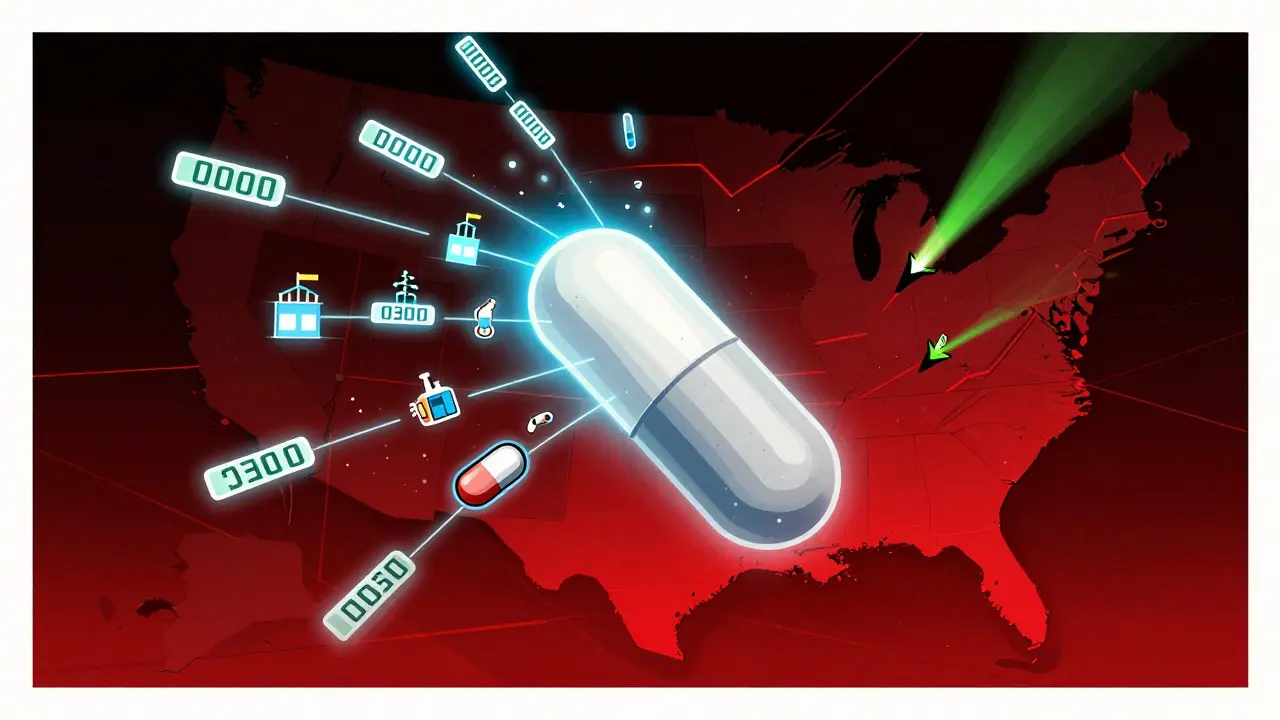
Every pill you take has a story. Not the kind you read in a novel, but a digital trail of where it came from, who made it, when it was packed, and which batch it belongs to. That story is written in a lot number and a serial code. And if those aren’t there-or if they’re fake-you could be swallowing something dangerous.
Counterfeit drugs aren’t just a problem in faraway countries. They’re in pharmacies, online stores, and even some hospital supply chains. The World Health Organization estimates that 1 in 10 medical products in low- and middle-income countries are fake. In high-income countries, it’s rarer-but still happening. And the only thing standing between you and a lethal fake pill is a simple tracking system: lot numbers and serial codes.
What’s the difference between a lot number and a serial code?
Think of a lot number like a family name. It identifies a group of products made at the same time, under the same conditions. If a factory produces 10,000 bottles of blood pressure medication on March 5, 2025, during the night shift, they all get the same lot number: say, BP250305N. That tells regulators and pharmacists: ‘These 10,000 bottles came from the same batch.’
A serial code, on the other hand, is like a social security number for a single unit. Each bottle gets its own unique code: BP250305N-00001, BP250305N-00002, and so on. It’s not just about the batch-it’s about that exact bottle. If one of them turns out to be contaminated, you don’t have to recall all 10,000. You just pull the one with the bad serial code.
In the pharmaceutical world, both matter. Lot numbers help track production issues-like a bad ingredient or a faulty machine. Serial codes help track individual packages from the factory to your medicine cabinet. Together, they form a digital fingerprint for every drug.
Why does this matter for counterfeit drugs?
Fake drugs are hard to spot. They look real. The packaging is perfect. The label matches. But they don’t have the right tracking codes-or they have fake ones.
Here’s how it works: Legitimate manufacturers embed lot and serial codes into their systems. These codes are registered with regulators and linked to verified production records. When a pharmacy receives a shipment, they scan the codes. If the system says, ‘This lot number was never produced by this company,’ or ‘This serial code was already reported as stolen,’ the drug is flagged. It never reaches the patient.
In 2023, a U.S. pharmacy chain intercepted 14,000 fake opioid pills because their tracking system flagged mismatched serial numbers. The pills were printed in China, shipped to a warehouse in Florida, then labeled as U.S.-made. Without serial tracking, they’d have ended up in prescriptions.
The FDA’s Drug Supply Chain Security Act (DSCSA), fully enforced since 2023, requires every prescription drug package to have a unique serial number. That’s not optional. It’s the law. And it’s why counterfeiters are struggling more than ever.
How track-and-trace stops recalls from becoming disasters
Even legitimate drugs can go bad. A batch might get contaminated. A temperature sensor might fail during shipping. When that happens, you need to act fast.
Without lot tracking, a company might have to recall every single bottle of a drug-even if only one box is bad. That’s expensive. It’s wasteful. And it causes panic. In 2022, a major insulin manufacturer had to recall 300,000 units because of a labeling error. But because they used lot numbers, they only had to pull 1,200 bottles-the ones from the single affected batch. The rest stayed on shelves. Patients didn’t miss doses. The company saved over $2 million in recall costs.
That’s the power of precision. Lot numbers let companies pinpoint the problem. Serial codes let them trace it all the way to the patient. In hospitals, pharmacists scan codes when they dispense medication. If a recall comes out, they can instantly see who got the bad batch-and notify them before they take a dose.
The FDA says track-and-trace systems reduce recall investigation time by 72%. That’s not just efficiency. It’s life-saving.
How the system works behind the scenes
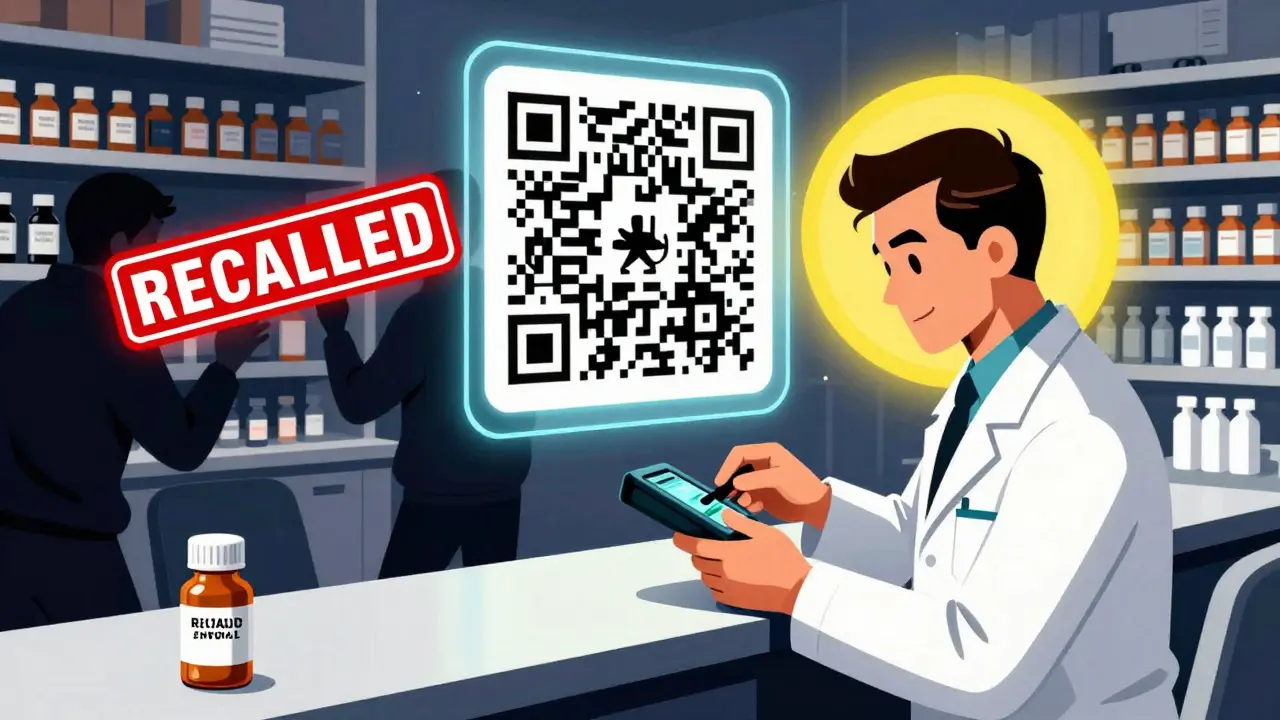
It’s not magic. It’s technology. Most manufacturers use barcode or QR codes printed on packaging. These codes link to a secure database. When a distributor scans a code, the system checks:
- Is this lot number registered with the manufacturer?
- Is this serial code already in use?
- Has this package been reported lost or stolen?
- Did it stay within the right temperature range during transport?
Some systems now use blockchain to make the data tamper-proof. Once a serial code is logged, it can’t be changed. That’s why counterfeiters can’t just print new labels-they’d need to hack into a secure, distributed ledger. Impossible for most.
Pharmacies and hospitals use handheld scanners or smartphone apps to check codes. Even small clinics can do it. Apps like QR Inventory and Medicode Scan let you scan a code and get a real-time status: ‘Verified,’ ‘Recalled,’ or ‘Unrecognized.’
And it’s not just the U.S. The EU’s Digital Product Passport (coming in 2027) will require every medicine to have a digital twin linked to its serial code. China, India, and Brazil are rolling out similar rules. This isn’t a trend. It’s the new global standard.
What happens when the system fails
It’s not perfect. Sometimes, people mess up.
In 2023, a medical device company got an FDA warning letter because their warehouse staff wrote down lot numbers by hand. One digit was wrong. A batch of pacemaker batteries was shipped with the wrong tracking code. When the company tried to recall them, they couldn’t find the exact units. The error led to a 3-week delay in fixing the issue-and put patients at risk.
The fix? No more manual entry. Mandatory scanning. Every time a box moves-from the factory floor to the delivery truck to the pharmacy shelf-it must be scanned. No exceptions.
Companies that do this see human error drop from 13% to under 0.5%. That’s the difference between a near-miss and a tragedy.
What you can do as a patient
You don’t need to be a tech expert. But you can protect yourself.
- Always buy prescription drugs from licensed pharmacies. Avoid websites that don’t require a prescription.
- If you’re handed a medication, ask: ‘Can you scan the code to verify it?’ Most pharmacies will do it on the spot.
- Check the packaging. Is the lot number printed clearly? Is there a serial code? If it’s missing, or looks smudged, be suspicious.
- Use the FDA’s Drugs@FDA app or website to look up your drug’s manufacturer and expected lot range.
Counterfeiters rely on silence. They count on you never checking. Don’t let them win.
The future: smarter, faster, safer
Track-and-trace is getting smarter. AI is now predicting which batches are likely to fail before they even leave the factory. Sensors in shipping containers monitor temperature and humidity in real time. If a shipment of insulin gets too warm, the system alerts the pharmacy before the package arrives.
By 2027, Gartner predicts 65% of pharmaceutical tracking systems will use AI to flag anomalies. That means fake drugs won’t just be caught-they’ll be stopped before they’re even made.
And it’s not just pills. Vaccines, cancer drugs, antibiotics-all of them will soon have digital passports. Your medicine won’t just be safe. It will be traceable, verifiable, and transparent.
This isn’t about bureaucracy. It’s about trust. You deserve to know your medicine is real. And now, for the first time in history, you can.


