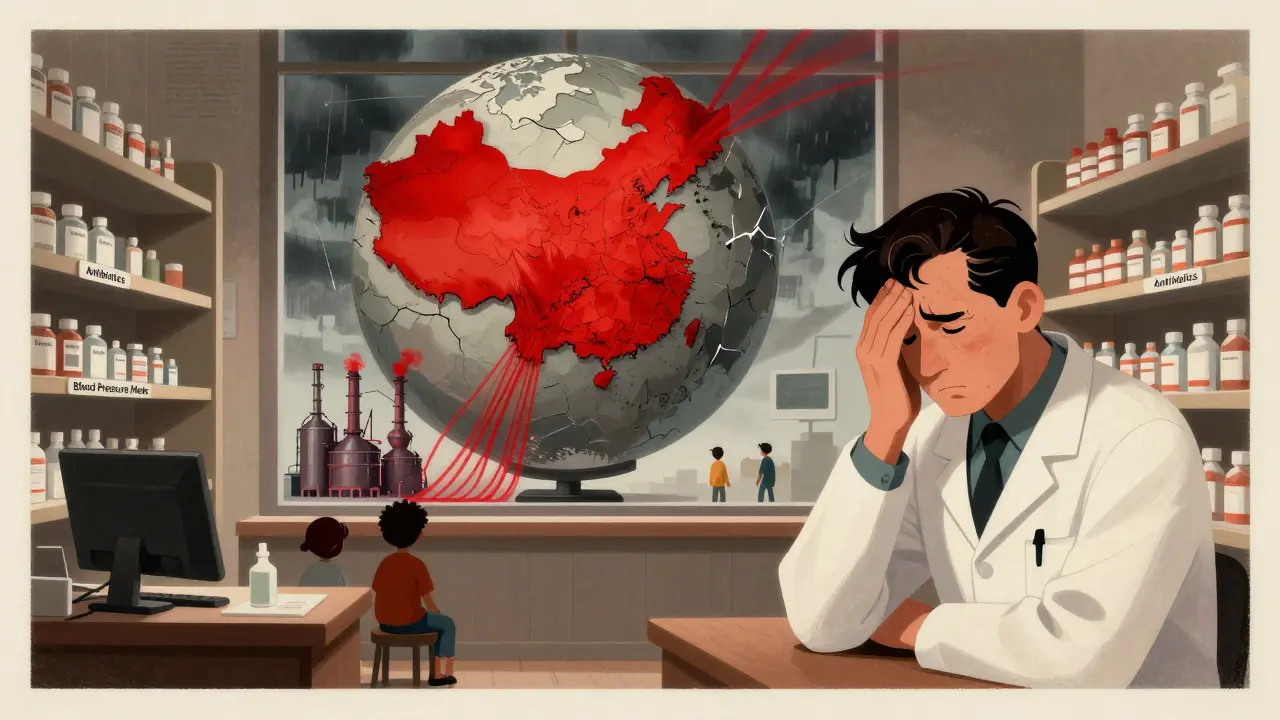
It’s 2025, and you’re standing in a pharmacy waiting for a simple prescription. The pharmacist shakes their head. "Sorry, we’re out. Not just here-nationwide." This isn’t a scene from a movie. It’s happening to antibiotics, insulin, blood pressure meds, even generic painkillers. The reason? International supply chains are breaking under the weight of their own efficiency.
How We Got Here
For decades, drug makers chased the lowest cost. Active pharmaceutical ingredients (APIs)-the actual medicine in a pill-started being made in China and India. Why? Labor was cheaper, regulations looser, and scale massive. By 2025, over 80% of APIs used in U.S. medicines come from just two countries. That’s not a backup plan. That’s the only plan. It worked-until it didn’t. When the pandemic hit, factories in Wuhan shut down. Ports in Shanghai froze. Suddenly, the U.S. had no way to make basic drugs. Even after the worst passed, the damage stuck. Companies didn’t rebuild local capacity. They just waited for China to restart. And it did-but not fast enough, and not reliably. Now, every delay in Shanghai or Mumbai ripples across American hospitals. A 10-day shipment delay from India? That’s 50,000 fewer heart pills in U.S. pharmacies. A tariff hike on Chinese chemicals? That’s a 30% price jump on generic antibiotics. And when prices rise, manufacturers cut production. Fewer pills. More shortages.The Numbers Don’t Lie
The data is stark. In 2024, the U.S. faced over 300 drug shortages-the highest number in a decade. Half of them involved APIs sourced from Asia. According to the FDA, 70% of these shortages were directly tied to foreign manufacturing disruptions. That’s not coincidence. It’s design. Lead times from China to the U.S. have grown by 50% since 2019. A shipment that used to take 30 days now takes 45. And that’s without a port strike or a trade war. Add in customs delays, export bans, or a single factory fire in Hyderabad, and you’re looking at 90-day delays. Hospitals don’t have 90 days. Patients don’t have 90 days. Meanwhile, U.S. logistics costs hit $2.3 trillion in 2025-8.7% of the entire national GDP. A huge chunk of that is moving pills across oceans. But here’s the kicker: even with all that spending, delivery reliability has dropped. Just-in-time inventory, once praised as lean and efficient, now looks like a dangerous gamble. When your only supplier goes dark, you have zero buffer.Why Reshoring Isn’t Simple
You might think: just make these drugs in America. But it’s not that easy. Building a U.S.-based API plant costs 4 to 5 times more than one in China. Labor, energy, environmental compliance, permits-it all adds up. A single facility can cost $500 million. And it takes 3 to 5 years to get it running. No company wants to sink that kind of money unless they’re forced to. That’s why most are trying something else: multi-shoring. Instead of relying on China, they’re spreading production across India, Mexico, Ireland, and even Poland. Mexico is gaining traction because it’s close. Shipping from Monterrey to Texas takes 3 days. From Shanghai? 30. Transportation costs drop by 30-40%. But labor there is 15-20% pricier than in China. So you trade shipping savings for higher wages. Some are even turning to microfactories-small, automated plants that can churn out niche drugs locally. One company in Ohio cut its lead time for a critical cancer drug from 60 days to 14. But these setups need $10 million in automation upfront. Only big players can afford that.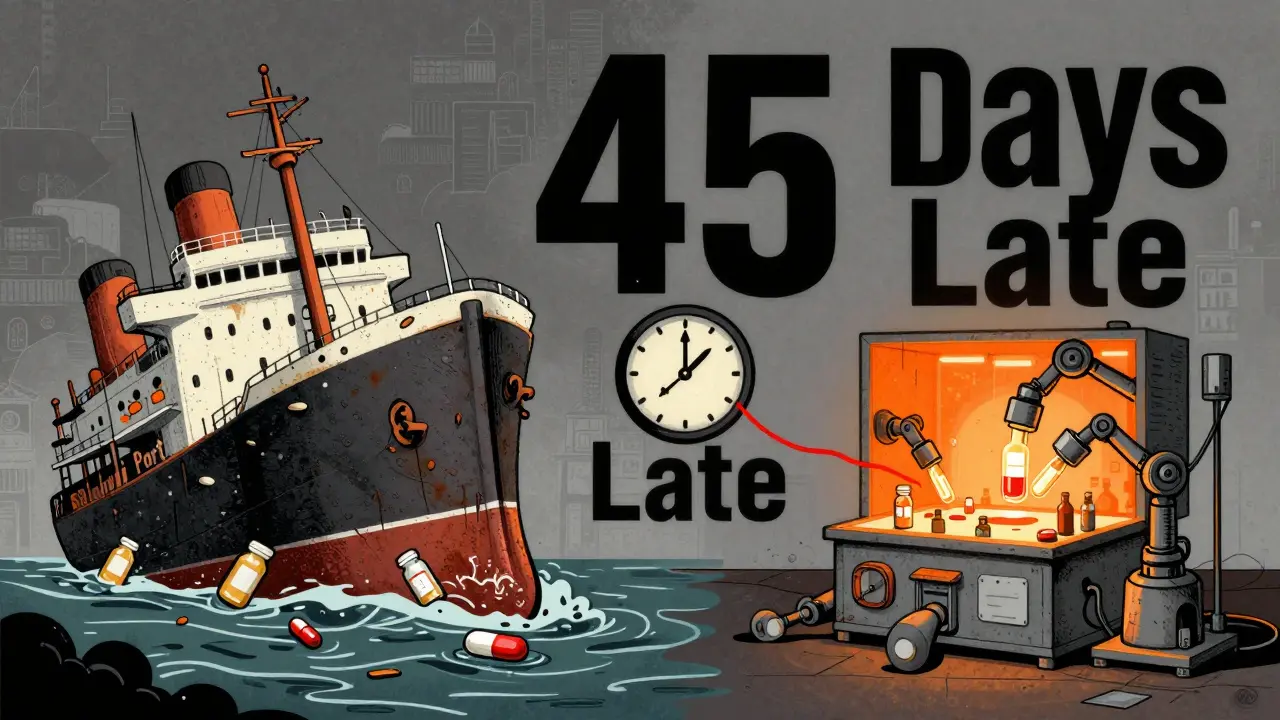
Who’s Suffering the Most?
It’s not just big pharma. It’s the small clinics, the rural hospitals, the patients on fixed incomes. When a generic blood thinner disappears, doctors have to switch to a brand-name version that costs 10 times more. Patients skip doses. Some stop taking it entirely. Studies show that even a 30-day gap in anticoagulant therapy increases stroke risk by 40%. Small manufacturers-those making older, low-margin drugs-are the first to drop out. Why invest in a drug that only makes $0.05 per pill when you can focus on high-profit cancer treatments? The market rewards innovation, not necessity. And it’s not just about money. It’s about control. In 2024, China restricted exports of a key chemical used in 12 different antibiotics. The U.S. had no alternative. That’s not a supply chain issue. That’s a national security risk.The Digital Fix
Technology is stepping in-but not fast enough. AI-powered forecasting now helps companies predict shortages 60 days earlier than before. Digital twins-virtual copies of factories-let firms simulate disruptions before they happen. One U.S. medical device maker cut its disruption days from 120 to 45 by using these tools. Blockchain is being tested to track APIs from raw material to finished pill. If a batch in India is contaminated, you know exactly which U.S. shipments are affected. No guessing. No recalls of 100,000 bottles when only 2,000 are bad. But adoption is uneven. Only 68% of big pharma companies use AI in their supply chains. For smaller ones? Less than 20%. And cybersecurity is a growing threat. Sixty percent of manufacturers say they’re worried about hackers targeting their supply chain software. A single breach can lock down a whole production line.What’s Changing Now?
The U.S. government is finally acting. The Inflation Reduction Act of 2022 included $1.5 billion for domestic pharmaceutical production. That money is starting to flow. Four new API plants are under construction in Indiana, North Carolina, and Puerto Rico. The renegotiated USMCA (U.S.-Mexico-Canada Agreement) now includes special provisions for medical supply chains. Tariffs on critical drugs from Mexico are frozen until 2030. That’s a big deal. The FDA is also speeding up approvals for alternative suppliers. In 2024, they fast-tracked 17 new API sources from Ireland and Brazil. That’s up from just 3 in 2020. But here’s the truth: these moves are still small compared to the scale of the problem. The U.S. still imports 80% of its APIs. Even with new plants, it’ll take until 2030 to cut that in half.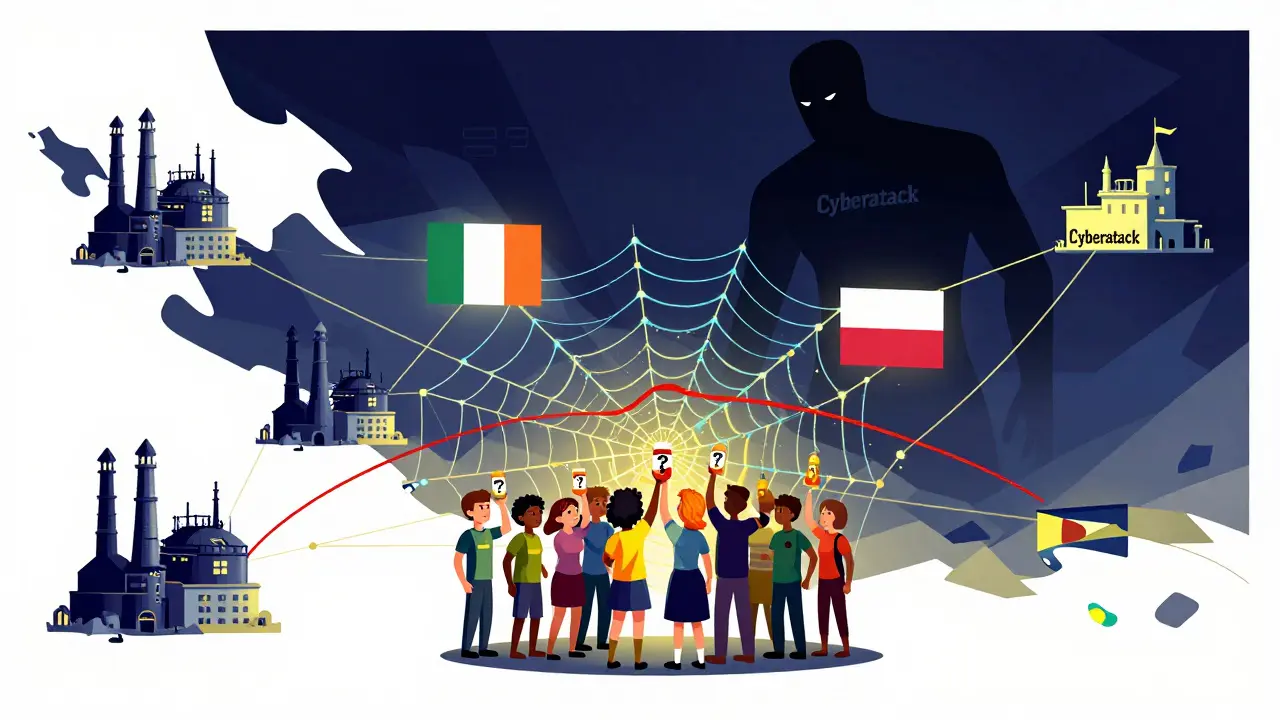
What You Can Do
As a patient, you can’t fix a global supply chain. But you can be smarter. Ask your pharmacist: "Is this drug made in the U.S.?" If it’s not, ask if there’s a similar brand made domestically. Some generics have the same active ingredient but come from different sources. Don’t hoard. Stockpiling creates artificial shortages. If everyone rushes to buy 3 months’ worth of metformin, the next person can’t get any. Support policies that fund domestic manufacturing. Contact your representative. Vote for candidates who prioritize supply chain resilience. This isn’t just about drugs-it’s about basic health security.The Road Ahead
The old model-cheap, fast, centralized-is over. The new one? Slower, more expensive, but more reliable. Companies are starting to accept that. In 2020, only 35% of drug makers used multiple suppliers. By 2025, that number is 78%. The goal isn’t to make everything in America. It’s to never again be at the mercy of one country, one port, or one factory. The best supply chains now look like a spiderweb, not a single wire. The next big drug shortage won’t come from a pandemic. It’ll come from a trade dispute, a cyberattack, or a heatwave that shuts down a chemical plant in Gujarat. We’ve been lucky so far. But luck isn’t a strategy. By 2030, the U.S. could be producing 50% of its essential medicines domestically. That’s not a dream. It’s the only way to stop the next crisis before it starts.Why are drug shortages happening now and not 10 years ago?
Because global supply chains became dangerously concentrated. Ten years ago, APIs were made in multiple countries. Now, 80% come from just China and India. When one country faces a disruption-whether it’s a port strike, export ban, or factory fire-the entire U.S. supply chain feels it. The system was built for efficiency, not resilience. And now, the cost of that choice is showing up in empty pharmacy shelves.
Can the U.S. make all its drugs domestically?
Technically, yes. But it would cost hundreds of billions and take decades. The real goal isn’t total self-sufficiency-it’s reducing dependence. Right now, the U.S. imports 80% of its active ingredients. The aim is to cut that to 50% by 2030 through strategic domestic production and diversified sourcing. That’s enough to prevent widespread shortages without bankrupting the system.
Are generic drugs more vulnerable than brand-name ones?
Yes. Generic drugs have razor-thin profit margins. Companies make pennies per pill, so they go where production is cheapest-usually China or India. Brand-name drugs, with higher prices, can absorb higher costs and often have backup suppliers. That’s why you’ll see shortages in cheap antibiotics or blood pressure meds long before you see them in expensive cancer drugs.
How do tariffs affect drug availability?
Tariffs raise the cost of importing active ingredients. When that happens, manufacturers either raise prices-which patients can’t always afford-or cut production. Many choose the latter. In 2024, the U.S. added 12 new tariff categories affecting $340 billion in imports, including key pharmaceutical chemicals. The result? 60% of affected drugs saw production cuts or delays. Tariffs aren’t just taxes-they’re supply chain grenades.
What’s the biggest risk to drug supply chains in 2026?
Cyberattacks. As supply chains become more digital-with AI, IoT sensors, and blockchain tracking-they also become targets. Sixty percent of manufacturers report serious concerns about hackers disrupting production or stealing data. A single ransomware attack on a key API facility could shut down production for weeks. Unlike natural disasters or trade wars, cyber threats can strike anywhere, anytime, with no warning.


