Why Medication Errors Happen When You Leave the Hospital
Every year, nearly 1 in 5 older adults makes a mistake with their medications within three weeks of leaving the hospital. These aren’t just small slips - they’re dangerous. A wrong dose of blood thinner, skipping an insulin shot, or doubling up on pain pills can land you right back in the ER. And it’s not because patients are careless. It’s because the system is broken.
When you’re discharged, you’re handed a list of meds - sometimes with confusing names, unclear instructions, or missing details. You might be taking eight different pills at home, plus a new one for your heart, and a couple more for your diabetes. The hospital team didn’t have time to explain each one. The pharmacist didn’t review your home meds. And no one checked if you actually understood what you’re supposed to do.
This isn’t rare. Studies show that half of all medication errors in primary care start at discharge. The good news? Most of them are preventable. And it doesn’t take fancy tech or expensive staff. It takes a few clear steps - steps that hospitals and families can do together.
The One Step That Stops 67% of Errors
Medication reconciliation isn’t just a buzzword. It’s the single most effective way to prevent mistakes when you go home. And it’s not just comparing lists. It’s asking: What are you really taking?
Many hospitals only check what’s written in the computer. But patients forget. They skip pills. They take over-the-counter stuff. They use herbal supplements. One man in Portland was on warfarin, but also took ginkgo biloba every day - a combo that nearly caused a brain bleed. No one asked him about the bottle in his nightstand.
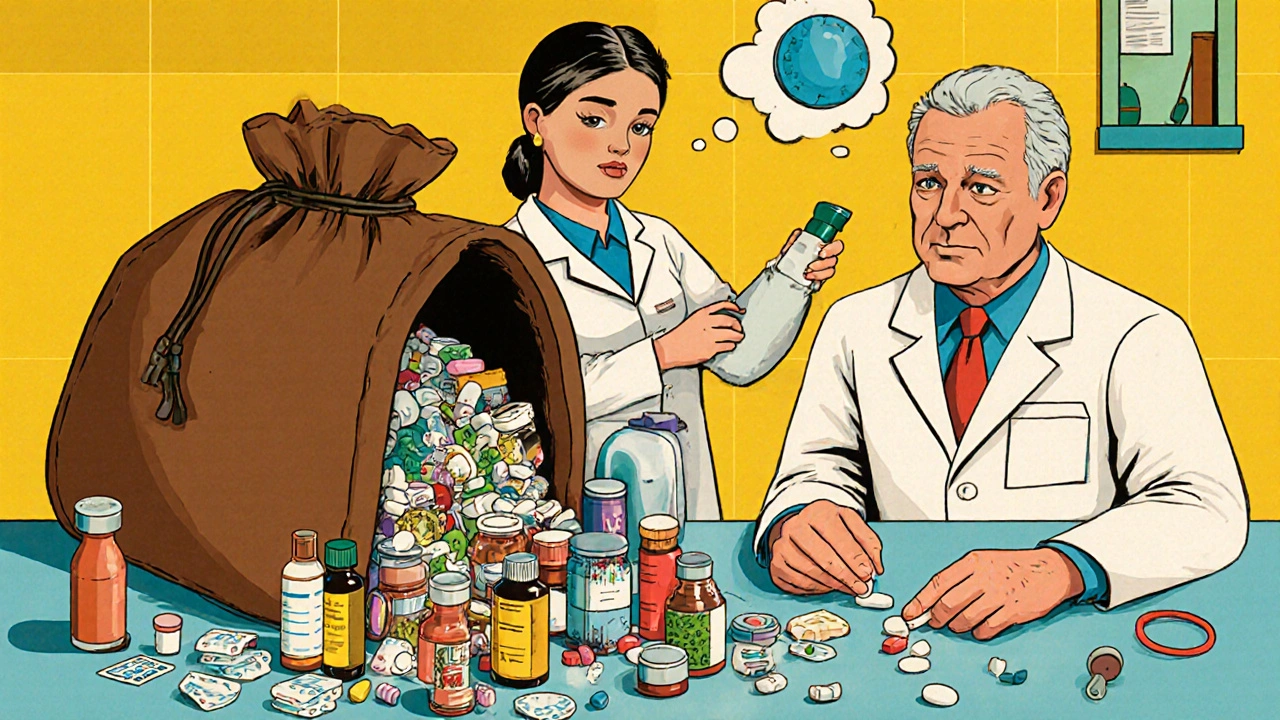
True reconciliation means gathering every pill, patch, inhaler, and liquid you’ve been using - from your bathroom cabinet, your purse, your car. This is called the Brown Bag Review. Bring everything to your discharge meeting. Let the pharmacist or nurse lay it all out on the table. Match each one to the hospital’s list. Cross out what you stopped. Add what you’re still taking. Make sure nothing’s missing.
Studies show this simple step cuts medication discrepancies by 67%. The American Society of Health-System Pharmacists says pharmacist-led reconciliation is the most powerful tool we have. And it’s not just for the elderly. Anyone on five or more medications - especially those with kidney problems or memory issues - needs this.
Teach-Back: The Secret to Making Sure You Understand
Doctors say, "Take one pill twice a day." You nod. You think you got it. But do you really? What does "twice a day" mean? Morning and bedtime? After breakfast and dinner? With food or on an empty stomach?
That’s where the Teach-Back method comes in. It’s not about testing you. It’s about making sure you can explain it back in your own words.
Instead of asking, "Do you understand?" - which almost everyone says yes to - the nurse says: "Can you show me how you’ll take your new blood pressure pill?" You say, "I’ll take it when I wake up." Then they ask: "And what if you sleep in?" You say, "I’ll take it when I get up, even if it’s late." That’s correct. Now they know you get it.
For insulin? They ask: "How do you know when to give yourself a shot?" You say: "When my blood sugar is over 180, or before meals if my doctor told me to." That’s the right answer. If you say, "I think it’s when I feel dizzy," that’s a red flag.
This method improves medication adherence by 32%. It’s not magic. It’s just conversation. And it works best when done slowly, calmly, and with patience - especially for seniors with hearing loss or memory challenges.
Who Should Be on Your Transition Team
You can’t do this alone. And hospitals shouldn’t expect you to. A strong transition team includes three key people:
- A pharmacist - They’re the medication experts. They spot interactions, check doses, and catch errors the doctor missed. In high-performing programs, pharmacists are at the bedside during discharge.
- A nurse or care coordinator - They make sure you have follow-up appointments scheduled, your prescriptions are filled, and someone checks in on you within 48 hours.
- A family member or caregiver - Someone who lives with you or visits often. They’re the ones who’ll see if you’re skipping pills or looking confused. They need to be included in every discussion.
Some hospitals have transition coaches - trained staff who call you for 30 days after you leave. They ask: "Did you fill your new meds?" "Are you having side effects?" "Did you see your doctor?" This model, called the Care Transitions Intervention, cuts readmissions by 38%.
If your hospital doesn’t offer this, ask. You have the right to a clear discharge plan. If they say no, call your primary care doctor or a local senior advocacy group. You’re not asking for a favor - you’re asking for standard care.
What Happens After You Get Home
Leaving the hospital is just the start. The real danger zone is the first week at home.
Here’s what needs to happen:
- Within 24 hours: Someone - a home health nurse, family member, or even a telehealth visit - reviews your meds again. Did you get all your prescriptions? Are the labels clear? Is the insulin pen working?
- Within 7 days: You see your primary care doctor or a specialist. Bring your Brown Bag. They’ll compare your hospital discharge list to your pre-hospital list. If you’re on warfarin, your INR should be checked within 72 hours. If you’re on insulin, your blood sugar logs should be reviewed.
- Within 14 days: If you’re high-risk - heart failure, COPD, dementia, or on 4+ meds - you should have another check-in. Even if you feel fine.
Home health agencies are required to do medication reconciliation within 24 hours of starting care. If they don’t, report it. You’re paying for this service - whether through Medicare, Medicaid, or private insurance.
And don’t forget: if you’re using a new pill organizer, make sure it matches your schedule. A 7-day box with morning/afternoon/evening slots works best. Label it clearly. Set phone alarms. Write notes on the box: "For blood pressure," "Take with food."
Technology That Actually Helps
Not all tech is helpful. But some tools are changing the game.
Apps like Medisafe or MyTherapy let you set reminders, scan pill bottles, and share your schedule with family. One 2023 study found elderly patients using visual medication apps had 41% fewer errors. These apps show pictures of pills, not just names. That matters if you can’t read small print.
Some hospitals use AI tools like MedAware to catch mistakes before discharge. These systems flag dangerous combos - like giving an elderly patient both an NSAID and a diuretic, which can crash kidney function. But these are still rare outside big medical centers.
Telehealth follow-ups are another win. A 2021 study showed patients who had a video visit within 7 days were 22% more likely to take their meds correctly. No car ride. No waiting room. Just a quick check-in on your phone.
But tech doesn’t replace human conversation. It just supports it. A reminder on your phone won’t help if you don’t know why you’re taking the pill.
What to Do If Your Hospital Doesn’t Help
Not every hospital does this well. Rural hospitals, in particular, often lack pharmacists or care coordinators. If you’re being discharged and no one’s talking about meds - speak up.
Ask these five questions before you leave:
- "Can I see my complete medication list in writing?"
- "Can you explain what each pill is for?"
- "Can I bring all my meds here so you can check them?"
- "Who will call me after I get home? When?"
- "What should I do if I feel worse or have side effects?"
If they say "We don’t do that," ask for the patient advocate or social worker. They’re there to help you navigate the system.
Also, check your discharge papers. Do they list your meds with dosages, frequency, and purpose? If not, demand a corrected copy. You have a right to this information.
And if you’re on Medicare, you’re eligible for Transition Care Management (TCM) services - paid visits within 14 days of discharge. Your doctor can bill for this. If they’re not offering it, ask why.
Real Stories, Real Mistakes
Martha, 78, from Salem, was discharged after a heart attack. She got home and started taking her new blood thinner. But she also kept taking her old aspirin - she didn’t know she was supposed to stop. Two days later, she bruised all over. Her daughter found the old bottle in the drawer. She’d been taking both for a week.
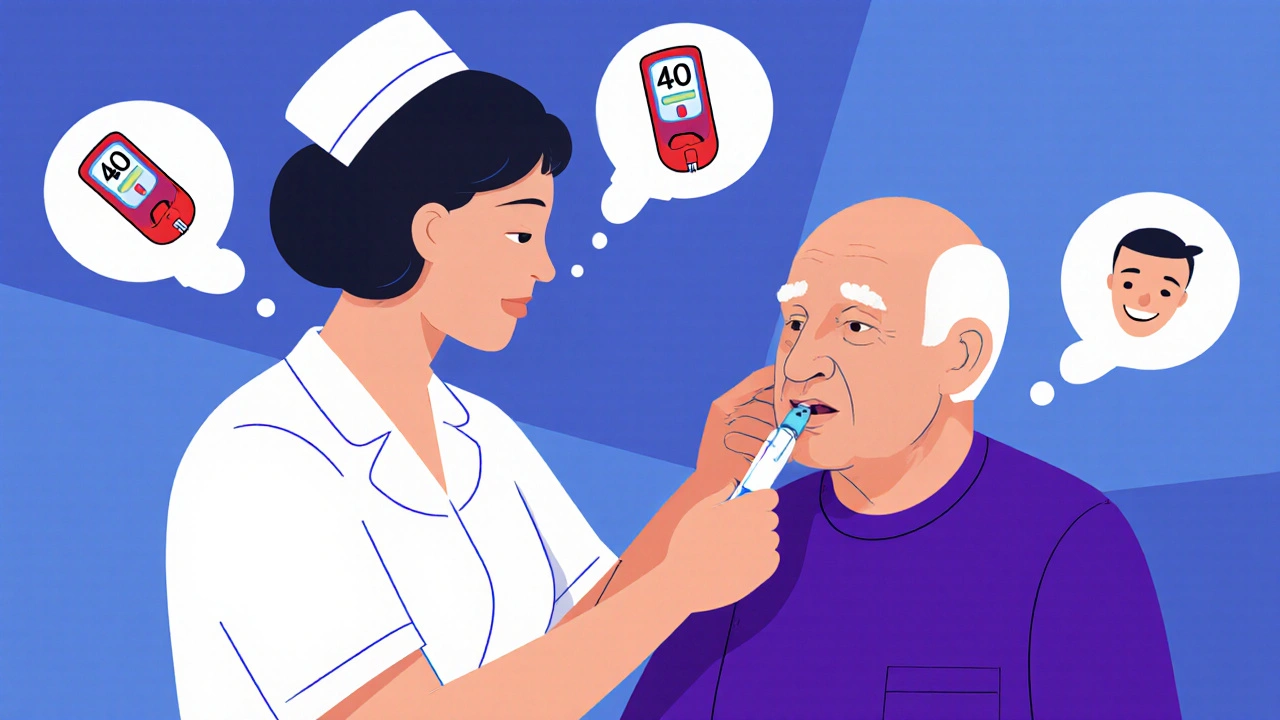
Carl, 82, had diabetes and high blood pressure. His discharge list said "insulin 10 units at bedtime." But it didn’t say whether it was long-acting or fast-acting. He used the wrong pen. His blood sugar dropped to 40. He passed out. He survived - but barely.
These aren’t rare. They’re predictable. And they’re preventable.
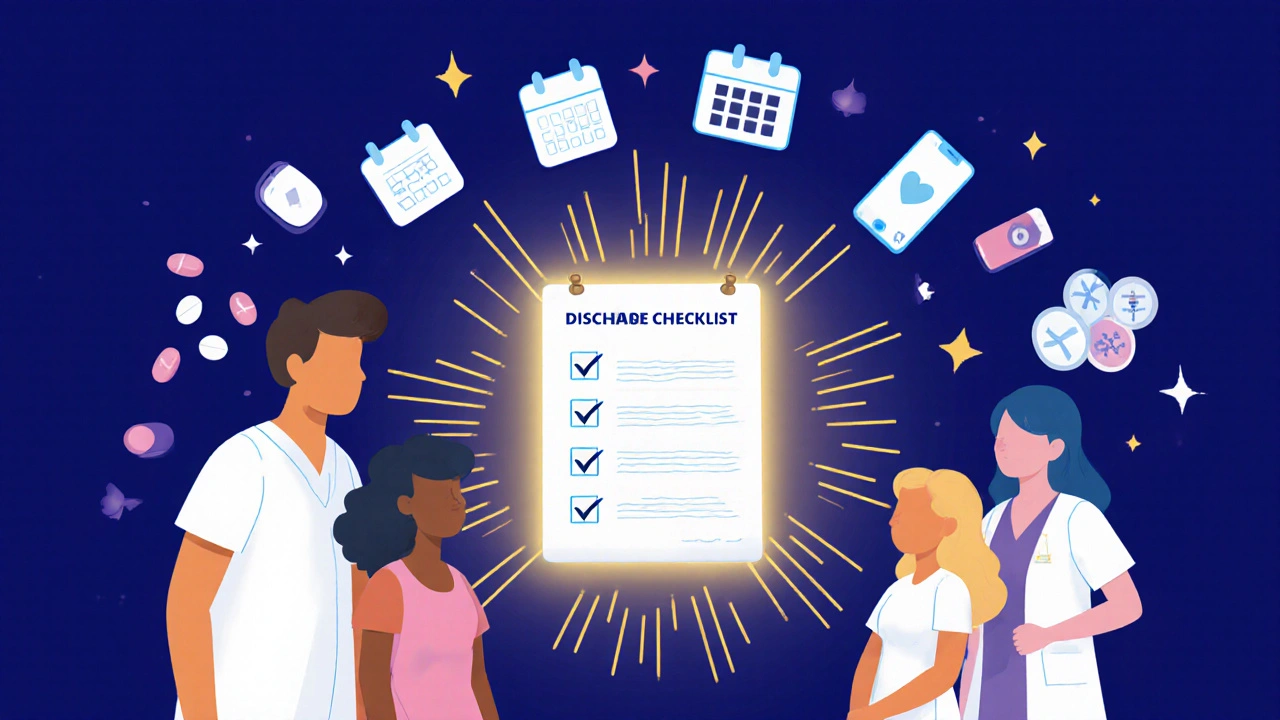
Final Checklist Before You Leave the Hospital
Use this before you sign your discharge papers:
- ✅ I have a written list of all my meds - including doses, times, and why I take them.
- ✅ I brought my Brown Bag of all medications (prescription, OTC, supplements).
- ✅ I can explain each medication in my own words using the Teach-Back method.
- ✅ I know who to call if I have side effects or questions.
- ✅ My follow-up appointment is scheduled within 7 days.
- ✅ My pharmacy has my new prescriptions - and they’ve reviewed them with me.
- ✅ Someone in my home will help me take my meds for the first week.
If you can check all these boxes, you’re far safer than 80% of patients leaving the hospital. You’re not just avoiding errors - you’re taking control of your health.


