
Did you know that for every serious side effect reported to the U.S. Food and Drug Administration (FDA), thousands more likely go unreported? If you or someone you care about experienced a bad reaction to a medication, your voice matters. Reporting adverse events is not just a bureaucratic step; it is a critical part of keeping medicines safe for everyone. Whether you are a patient, a nurse, or a doctor, knowing exactly how to submit this information can trigger investigations that lead to label changes or even product recalls.
The system designed to catch these issues is called FAERS (the FDA Adverse Event Reporting System). It holds over 30 million reports dating back to 1968. But getting your data into that database requires using the right tools and providing specific details. This guide breaks down exactly who needs to report, what counts as an adverse event, and the precise steps to file a report that actually gets reviewed.
What Counts as an Adverse Event?
Before you start filling out forms, you need to know if your experience qualifies. The FDA defines an adverse event broadly. It is any unanticipated experience or side effect associated with the use of a drug in humans. This definition covers a lot of ground. It includes obvious things like rashes or nausea, but also less direct issues like lack of expected effectiveness, accidental overdose, or withdrawal symptoms.
You do not need to prove the drug caused the problem. That is the job of the regulators and epidemiologists later on. Your job is simply to report the association. Even if you think it might be something else, if it happened while you were taking the medication, it belongs in the system. The key distinction here is between 'serious' and 'non-serious' events. Serious events result in death, hospitalization, disability, or life-threatening situations. These get priority processing. Non-serious events are still important for spotting trends, but they move through the pipeline differently.
Who Is Required to Report?
Reporting rules change depending on your role. For most people reading this-patients and consumers-reporting is voluntary. You are encouraged to speak up, but you cannot be fined for staying silent. However, healthcare professionals and pharmaceutical manufacturers operate under different rules.
Healthcare Professionals: While generally voluntary, there are exceptions. Federal law requires physicians to report serious adverse events for certain products, specifically vaccines, under the National Childhood Vaccine Injury Act. For other drugs, professional ethics and liability protection often drive doctors to report. When a doctor submits a report, it carries more weight because they can access medical records and lab results that patients don't have.
Pharmaceutical Manufacturers: Companies holding New Drug Applications (NDAs) or Biologics License Applications (BLAs) face strict mandatory reporting. Under regulation 21 CFR 314.80, they must report each serious and unexpected adverse drug experience within 15 calendar days of first learning about it. Missing this window can lead to massive fines. In 2022, companies faced average penalties of $2.3 million per violation for compliance failures. They submit these electronically via specialized gateways, not through the standard consumer portal.
Step-by-Step: How Consumers Can Report
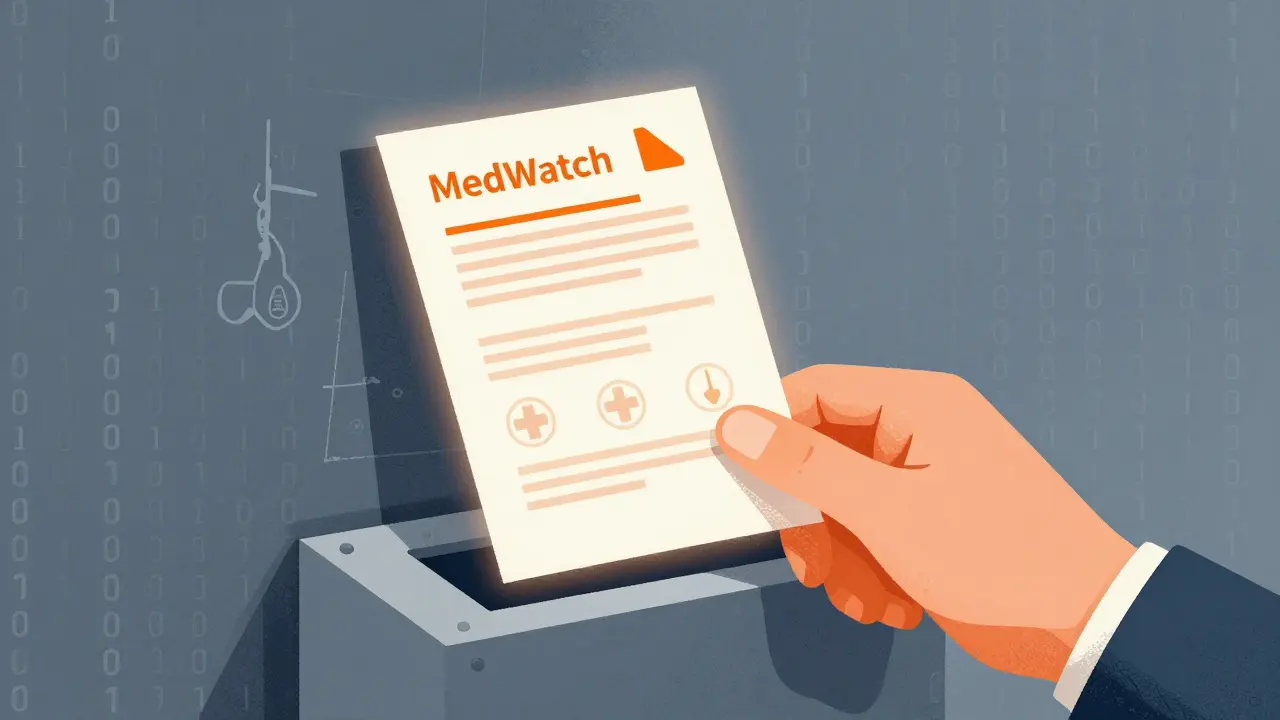
If you are a patient or caregiver, the primary tool is MedWatch (the FDA's safety information and adverse event program). Here is how to navigate it without getting frustrated.
- Talk to Your Provider First: Before logging online, call your doctor. They can help determine if the reaction is known or new. More importantly, they can submit the report for you using Form 3500A, which is designed for professionals. Their clinical notes add significant value to the case.
- Access the Online Form: If you prefer to do it yourself, go to the FDA’s MedWatch website. Look for the "Online Voluntary Reporting" section. You will want Form 3500 for consumers. Do not use the paper form unless absolutely necessary; electronic submissions are processed faster and allow for easier updates.
- Gather Your Evidence: Have the prescription bottle handy. You will need the exact drug name, dosage strength, and lot number if available. Note the date you started the medication and the date the side effect began. Did you stop taking it? When? These timelines are crucial for signal detection algorithms.
- Fill Out the Details: Be specific. Instead of writing "felt sick," write "experienced severe dizziness and vomiting two hours after taking 500mg of Drug X." Include any relevant medical history, such as allergies or other conditions. The form has a character limit for descriptions, so prioritize clarity over length.
- Submit and Save: Once submitted, you will receive a confirmation ID. Save this. If the FDA needs more information, they may contact you. Keep all original documents, including photos of the packaging or lab results, in a safe place.
What Healthcare Providers Should Know
For clinicians, the process is similar but demands higher granularity. Use Form 3500A. The biggest mistake providers make is omitting context. A report stating "Patient developed rash" is hard to act upon. A report stating "Patient developed maculopapular rash 5 days after initiating antibiotic therapy, resolved upon discontinuation" is actionable.
Data shows that reports containing complete laboratory values are 68% more likely to trigger safety signal investigations. Reports with detailed timeline information are 82% more likely to support causal assessment. Take the extra five minutes to copy relevant vitals, lab codes, and previous treatments. This detail helps the FDA distinguish between a coincidence and a genuine safety risk.
Understanding the Data: FAERS and Signal Detection
Once your report hits the server, it enters the FAERS database. This isn't just a filing cabinet; it is an active surveillance engine. The FDA uses statistical algorithms, such as the Proportional Reporting Ratio (PRR), to scan for patterns. If a specific drug starts appearing disproportionately often with a specific symptom compared to historical baselines, a "signal" is raised.
| Metric | Value / Detail |
|---|---|
| Total Historical Reports | Over 30 million (since 1968) |
| New Annual Reports | Approximately 2 million |
| Primary Terminology | MedDRA (Medical Dictionary for Regulatory Activities) |
| Detection Rate | 85% of significant safety issues detected within 2 years of approval |
| Underreporting Estimate | Only 1-10% of actual adverse events are reported |
A famous success story involves fluoroquinolone antibiotics. Signals from FAERS helped identify a link to aortic aneurysms, leading to a "Black Box" warning-the strongest alert the FDA can issue. This proves the system works when fed quality data. However, the system has a major limitation: it cannot prove causation. It only shows association. Confirming that Drug A causes Effect B requires expensive epidemiological studies or clinical trials, which take time.
Common Pitfalls and How to Avoid Them
Many reports get stuck or dismissed due to poor quality. Here are the top errors to avoid:
- Vague Descriptions: Avoid terms like "side effects" or "reaction." Name the specific symptom. Was it a headache? Nausea? Liver enzyme elevation? Specificity allows the FDA to code the event correctly using MedDRA terminology.
- Missing Patient Identifiers: You don't need to give your full Social Security Number, but you do need enough info to contact you if needed. An alias or initials plus age, gender, and location is sufficient. Anonymous reports are harder to follow up on.
- Ignoring Concomitant Medications: Drug interactions are a huge source of adverse events. List every supplement, over-the-counter pill, and prescription you are taking. The culprit might not be the new drug, but the combination.
- Technical Timeouts: Some users report the MedWatch website timing out during long submissions. If this happens, save your progress locally if possible, or break the description into shorter segments. Alternatively, faxing Form 3500 to the FDA hotline is a reliable backup, though slower.
Why Your Report Matters Now
The landscape of drug safety is changing. The FDA launched FAERS Public Dashboard 2.0 in 2023, allowing researchers and the public to visualize safety data in real-time. By 2025, the integration of AI-assisted signal detection aims to speed up the identification of risks. But AI is only as good as the data it trains on. Garbage in, garbage out.
Currently, there is roughly one safety reviewer for every 18,000 reports. They are overwhelmed. When you submit a clean, detailed report, you reduce their workload and increase the chance that a real danger gets spotted quickly. If you experienced a severe reaction, do not assume someone else has already reported it. Statistics suggest they haven't. Your report could be the missing piece that protects thousands of future patients.
How long does it take for the FDA to review an adverse event report?
There is no fixed timeline for individual reviews. Initial triage happens quickly, but comprehensive signal assessment can take months. According to a 2023 GAO report, the average lag between submission and initial signal assessment is around 217 days due to staffing constraints. However, serious cases involving life-threatening events may be flagged for immediate attention by safety evaluators.
Can I report an adverse event anonymously?
Yes, you can submit a report without providing your real name. However, the FDA strongly encourages providing contact information or an alias. Without a way to reach you, investigators cannot ask for clarifying details, which significantly reduces the usefulness of the report for safety analysis.
What is the difference between MedWatch and FAERS?
MedWatch is the program and interface used by consumers and healthcare professionals to submit reports. FAERS is the underlying database where these reports are stored and analyzed. Think of MedWatch as the mailbox and FAERS as the filing system inside the post office.
Do I need to report mild side effects?
You should report any unanticipated side effect, even if mild. While serious events get priority, clusters of mild reports can reveal broader safety trends. For example, widespread reports of mild fatigue might indicate a metabolic issue that becomes severe in vulnerable populations.
Can reporting an adverse event affect my legal rights?
No. Submitting an adverse event report to the FDA is not considered an admission of fault by the manufacturer, nor does it waive your right to seek legal counsel. The FDA explicitly states that reports are for safety monitoring purposes only and are confidential regarding patient identity.
What happens if the FDA confirms a drug is unsafe?
The FDA has several options. They may update the drug's labeling with new warnings, restrict its use to specific patient groups, require the manufacturer to conduct further studies, or in rare cases, withdraw the drug from the market entirely. These actions are based on a comprehensive review of all available evidence, not just single reports.