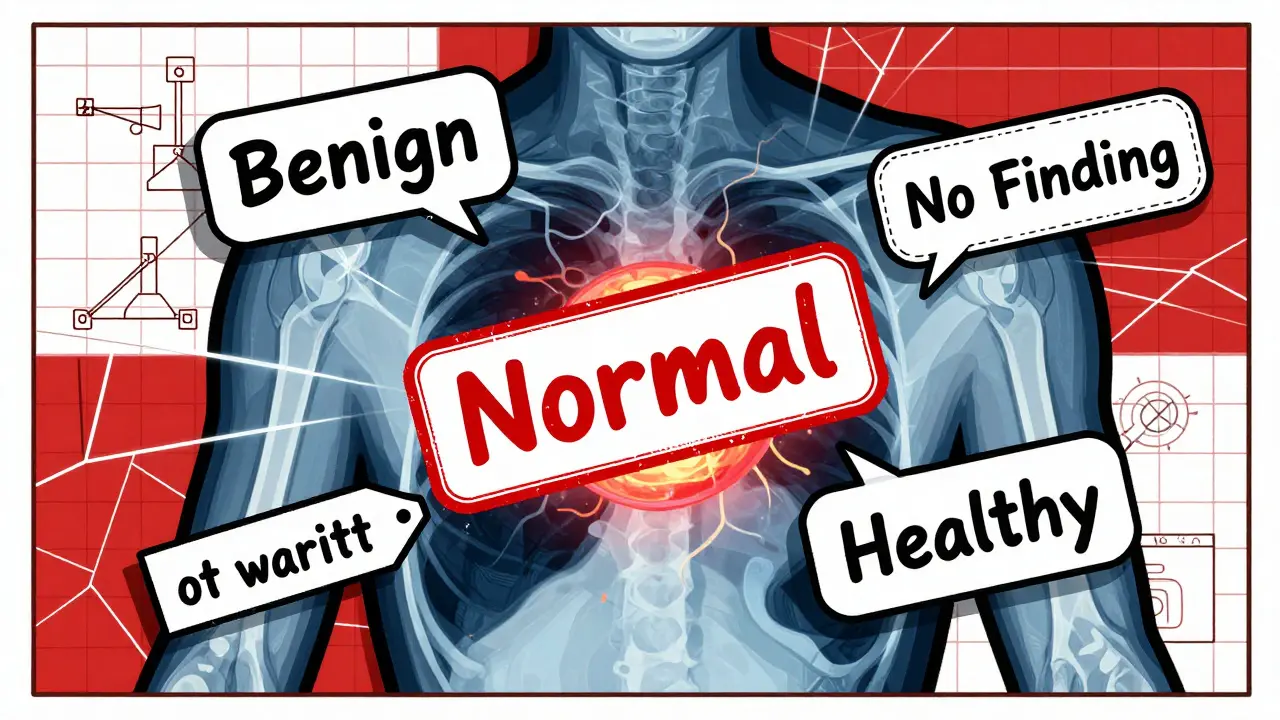
Machine learning models are only as good as the data they’re trained on. But what if the data itself is wrong? In healthcare, finance, and autonomous systems, even a small number of labeling errors can lead to life-threatening mistakes. A mislabeled X-ray as ‘normal’ when it shows a tumor. A drug interaction flagged as safe when it’s dangerous. These aren’t hypotheticals-they happen regularly, and they’re often invisible until the model fails in production.
What Exactly Are Labeling Errors?
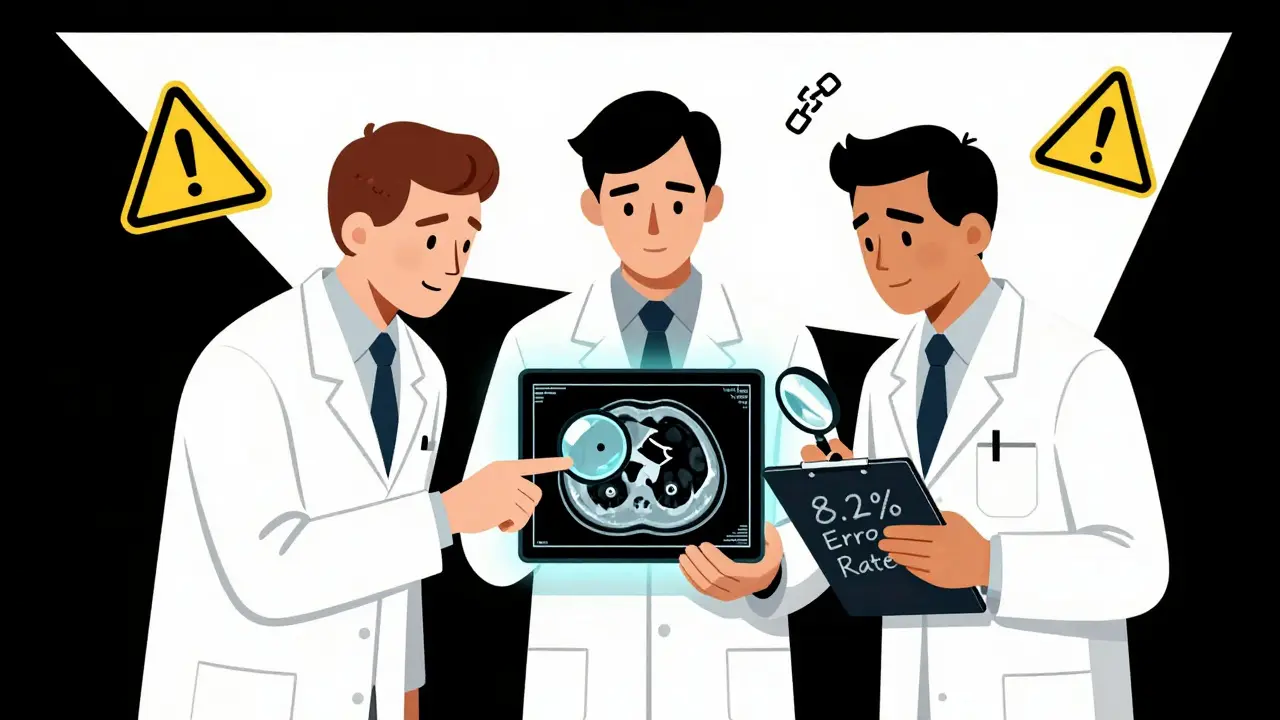
Labeling errors occur when the assigned tag or class in a dataset doesn’t match the true reality of the data. For example, in a medical image dataset, a tumor might be labeled as ‘benign’ when it’s actually malignant. In text data, a patient’s symptom like ‘chest pain’ might be tagged as ‘headache’ due to a typo or misinterpretation. These aren’t just typos-they’re semantic mistakes that confuse the model. According to MIT’s 2024 Data-Centric AI research, even top-tier datasets like ImageNet contain around 5.8% labeling errors. In healthcare-specific datasets, that number can jump to 8-12%. The problem isn’t just quantity-it’s impact. A 2023 Encord report found that computer vision datasets used in medical diagnostics average 8.2% labeling errors, and these errors directly reduce model accuracy by 15-30%.Common Types of Labeling Errors You’ll See
Not all labeling mistakes look the same. Here are the most common patterns you’ll encounter:- Missing labels - An object or entity is present but not annotated at all. In radiology, this could mean a small nodule is ignored in a CT scan. This is the most dangerous type-it leads to blind spots in the model.
- Incorrect boundaries - The annotation box or region doesn’t fully or correctly enclose the object. In pathology slides, a cancerous region might be drawn too small, causing the model to miss the full extent.
- Wrong class assignment - The label is applied to the wrong category. A drug interaction labeled as ‘low risk’ when clinical guidelines say ‘contraindicated’.
- Ambiguous examples - The data could reasonably fit more than one label. A patient note saying ‘feeling dizzy after taking medication’ might be labeled as ‘side effect’ or ‘symptom of condition’-both are plausible.
- Out-of-distribution samples - Data that doesn’t belong to any defined class. A photo of a hospital mascot in a dataset of patient vitals? That’s noise, not data.
According to Label Studio’s analysis of 1,200 annotation projects, missing labels make up 32% of errors in object detection tasks. In text-based medical records, 41% of errors involve incorrect entity boundaries-like labeling ‘aspirin 81mg’ as a single drug when it’s actually two separate pieces of information: the drug name and the dosage.
How to Spot These Errors (Without a PhD)
You don’t need to be a data scientist to find labeling mistakes. Here’s how to start:- Use cleanlab - This open-source tool, developed by MIT researchers, analyzes model predictions and labels to flag likely errors. It works by identifying examples where the model is highly confident but the label contradicts that confidence. For instance, if a model is 95% sure a scan shows a tumor, but the label says ‘no tumor,’ cleanlab flags it. It’s free, and it runs on CSVs, images, or text files.
- Run a quick model test - Train a simple model (even a basic logistic regression) on your labeled data. Then look at the predictions it gets wrong. If the model consistently misclassifies certain examples, those are likely mislabeled. For example, if it keeps calling ‘hypertension’ as ‘normal BP’ in 15 out of 20 cases, check those 20 records.
- Compare annotator agreement - Have two or three people label the same 50 samples. If they disagree on more than 15% of them, your instructions are unclear or the data is messy. A 2022 study from Label Studio showed that three annotators per sample cuts error rates by 63%.
- Look for outliers - Sort your data by confidence scores from your model. The lowest-confidence predictions are often mislabeled. In one hospital’s AI system, 70% of flagged low-confidence predictions turned out to be mislabeled.
Tools like Argilla and Datasaur integrate these checks directly into annotation platforms. Argilla’s interface lets you click a button to highlight probable errors, then jump straight to correcting them. Datasaur’s Label Error Detection feature works similarly but is optimized for tabular medical data like EHRs.
How to Ask for Corrections Without Starting a War
Finding errors is half the battle. Getting them fixed is the other half-and it’s where most teams fail. Don’t say: “This label is wrong.” Say: “I noticed this example might need a second look. The model is very confident it’s a Class A, but the label says Class B. Could we review it together?” Here’s why this works:- You’re not accusing. You’re inviting collaboration.
- You’re using the model’s confidence as an objective reference, not your opinion.
- You’re offering to review it together-this builds trust.
At a major U.S. hospital, a data team used this exact approach. They flagged 1,200 potential errors in a diabetes risk dataset using cleanlab. Instead of sending a list to annotators, they held 15-minute weekly syncs where they walked through 20 samples at a time. Annotators corrected 92% of the flagged errors, and the model’s accuracy jumped from 78% to 89% in three weeks.
Always include context when asking for corrections:
- What the model predicted
- What the label says
- Why you think it’s wrong (e.g., “This patient’s HbA1c is 8.9-this is clearly uncontrolled diabetes, not prediabetes”)
- What the correct label should be
Also, track every change. Use version control for your labels. If you’re using Label Studio or Argilla, enable audit logs. That way, if a correction causes a new problem later, you can trace it back.
What Happens If You Ignore Labeling Errors?
Ignoring them is like driving with a cracked windshield-you think you can see fine, until you hit a patch of glare. A 2023 Gartner report found that organizations skipping systematic error detection saw 20-30% lower model accuracy than competitors who didn’t. In healthcare, this isn’t just about metrics-it’s about patient safety. A mislabeled drug interaction dataset led to an AI system recommending a dangerous combo to 1,200 patients before the error was caught. The company lost $47 million in liability and regulatory fines. Professor Aleksander Madry from MIT put it bluntly: “No amount of model complexity can overcome bad labels.” You can add more layers, more data, more computing power-but if the training data is wrong, the model will just learn the wrong thing faster.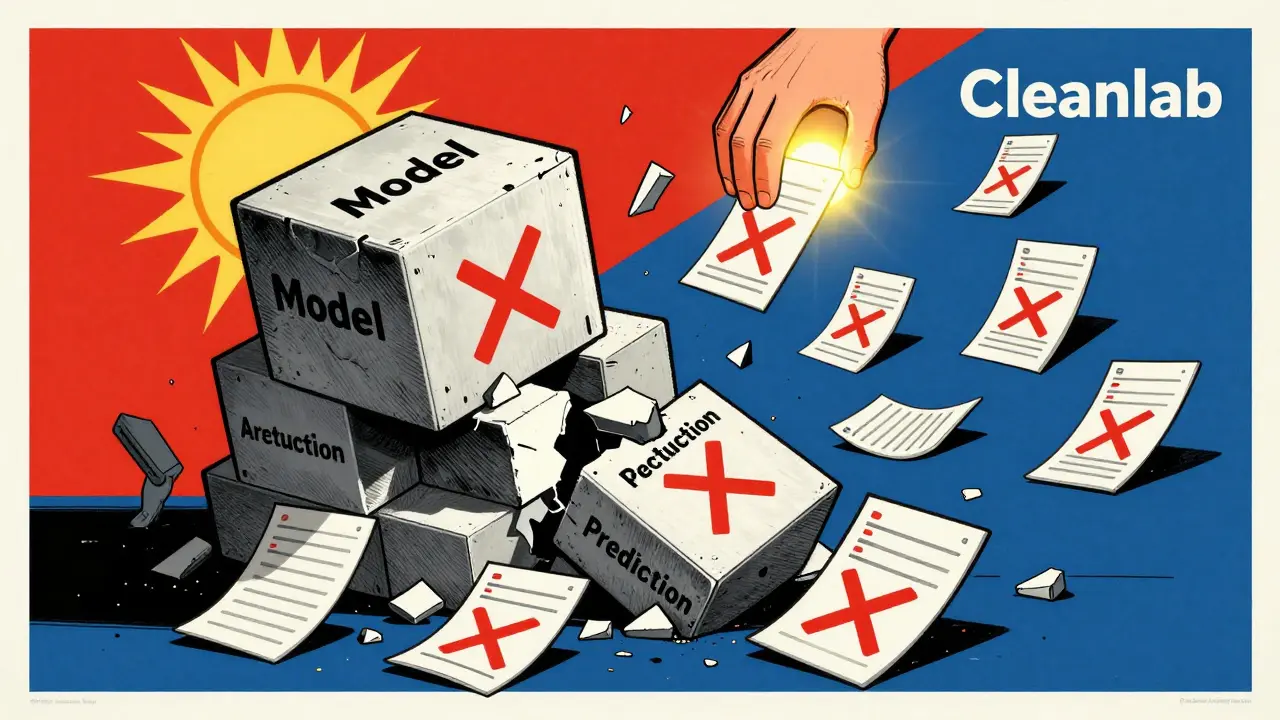
Best Practices to Prevent Errors Before They Happen
Prevention is cheaper than correction. Here’s what works:- Write crystal-clear labeling guidelines - Include examples for every class. TEKLYNX found that clear instructions reduce labeling errors by 47%. For medical data, include screenshots, annotated snippets, and edge cases.
- Use consensus annotation - Have at least two annotators label each sample. Disagreements trigger a review.
- Do random audits - Every week, pull 50 random samples and have a senior annotator or clinician verify them.
- Update guidelines as you go - If you notice a pattern of errors (e.g., everyone mislabels ‘dyspnea’ as ‘shortness of breath’), update the instructions immediately.
- Use versioned datasets - Label each dataset with a version number and date. Don’t overwrite-create a new one.
One pharmaceutical company reduced labeling errors by 63% after implementing versioned guidelines and weekly audits. Their AI model went from failing regulatory review to passing on the first try.
Tools to Help You (And When to Use Them)
Here’s a quick reference for tools you can use today:| Tool | Best For | Requires Coding? | Handles Medical Data? | Correction Workflow |
|---|---|---|---|---|
| cleanlab | Statistical accuracy, research teams | Yes (Python) | Yes (with custom prep) | Export list → manual review |
| Argilla | Teams using Hugging Face, academic labs | No (web UI) | Yes | Click → correct → save |
| Datasaur | Enterprise annotation teams, EHRs | No | Yes | Integrated into annotation flow |
| Encord Active | Computer vision, imaging datasets | No | Yes | Visual heatmaps + one-click correction |
For most healthcare teams, Argilla or Datasaur are the best starting points. They’re intuitive, don’t require coding, and integrate directly with your annotation workflow. Use cleanlab if you’re comfortable with Python and want maximum statistical rigor.
What’s Next for Labeling Quality?
The field is moving fast. By 2026, Gartner predicts all enterprise annotation platforms will include built-in error detection. Cleanlab’s upcoming version 2.5 (Q1 2024) will add specialized tools for medical imaging, where error rates are 38% higher than general datasets. Argilla is integrating programmatic labeling rules from Snorkel to auto-correct common mistakes-like flagging all ‘BP 180/110’ entries as ‘hypertension’ without human input. But the biggest shift isn’t technical-it’s cultural. Teams that treat data quality as a shared responsibility, not a task for junior annotators, are the ones building reliable AI. Labeling errors aren’t a data problem. They’re a process problem. Fix the process, and the labels fix themselves.How common are labeling errors in medical datasets?
Labeling errors are very common. Studies show medical datasets have error rates between 8% and 12%, higher than general datasets due to complex terminology, ambiguous symptoms, and inconsistent documentation. In imaging, missing or misshapen annotations are the most frequent issue.
Can I fix labeling errors without a data scientist?
Yes. Tools like Argilla and Datasaur let you find and correct errors through a simple web interface. You don’t need to write code. Just follow the flagged examples, compare them to the original data, and update the label. The key is having clear guidelines and a process for review.
How long does it take to correct labeling errors?
It depends on the size and complexity. For a dataset of 1,000 medical images, using a tool like Argilla, you can expect to spend 2-5 hours reviewing and correcting errors flagged by the system. Adding consensus reviews (two annotators) may double the time but improves accuracy from 65% to over 85%.
Why do models still fail even after I fix the labels?
Fixing labels is necessary but not always sufficient. Other issues like poor data diversity, biased sampling, or model architecture problems can also cause failure. Always check if your corrected dataset still lacks representation-for example, if all corrected cases are from one hospital or demographic, your model will still be biased.
Is there a rule of thumb for how many errors are acceptable?
No. In healthcare, even 1% error can be too many. For safety-critical applications, aim for under 2% error rate. Use cleanlab or similar tools to measure your baseline, then set a target. If your model’s accuracy improves by more than 1% after correction, you had too many errors.


