
What Is a Medicare Annual Medication Review?
A Medicare Annual Medication Review, officially called a Comprehensive Medication Review (CMR), is a free, one-on-one session with a pharmacist that’s part of your Medicare Part D prescription drug plan. It’s not just a quick check-in-it’s a full audit of every pill, supplement, and over-the-counter medicine you take. The goal? To make sure your medications are safe, working as they should, and not costing you more than they need to.
This review is required by law. Since the Medicare Modernization Act of 2003, every Part D plan must offer it at least once a year to people who qualify. And it’s not just about prescriptions. The pharmacist will ask about vitamins, herbal remedies, pain relievers like ibuprofen, even eye drops or patches. Anything you take regularly counts.
According to CMS guidelines, the review must be done live-either in person, over the phone, or via video call. No email summaries or automated calls count. You need to talk to someone who can listen, ask follow-up questions, and adjust your plan on the spot.
Who Qualifies for a Medicare Annual Medication Review?
You’re eligible if you meet these three criteria in 2025:
- You take at least eight Part D-covered medications (including maintenance drugs like blood pressure pills or diabetes meds).
- You have three or more chronic conditions-like diabetes, heart disease, COPD, arthritis, or kidney disease.
- You spent at least $1,623 out-of-pocket on your Part D drugs in the last year.
That last number is new for 2025. It’s lower than previous years, which means more people qualify now. If you’re taking multiple prescriptions and paying for them yourself, you’re likely eligible-even if you didn’t realize it.
There’s also a new exception: if you have two serious chronic conditions and are at high risk for hospitalization, you might qualify even if you’re taking fewer than eight drugs. This change started in early 2024 and is helping seniors with complex health needs who were previously left out.
Why This Review Matters More Than You Think
Most seniors take at least five medications. Some take 10 or more. And here’s the problem: the more pills you take, the higher the chance of dangerous interactions. A 2023 study found that nearly 1 in 4 seniors on eight or more medications had at least one potentially harmful drug overlap-like taking two blood thinners at once, or mixing NSAIDs with heart meds that raise kidney risk.
Pharmacists catch things doctors miss. Why? Because doctors see you for 10 minutes. Pharmacists spend 45 to 60 minutes with you. They look at every single thing you’re taking, even the fish oil capsules you forgot to mention.
Real example: A retired teacher in Oregon brought her full medication list to her CMR. The pharmacist spotted that her daily calcium supplement was interacting with her thyroid medication, making it less effective. That’s something her cardiologist and endocrinologist had never caught. After adjusting the timing, her thyroid levels normalized within six weeks.
Cost savings are real too. In 2022, Medicare beneficiaries saved an average of $420 per year after their CMR-mostly by switching to generic versions or eliminating duplicate prescriptions.
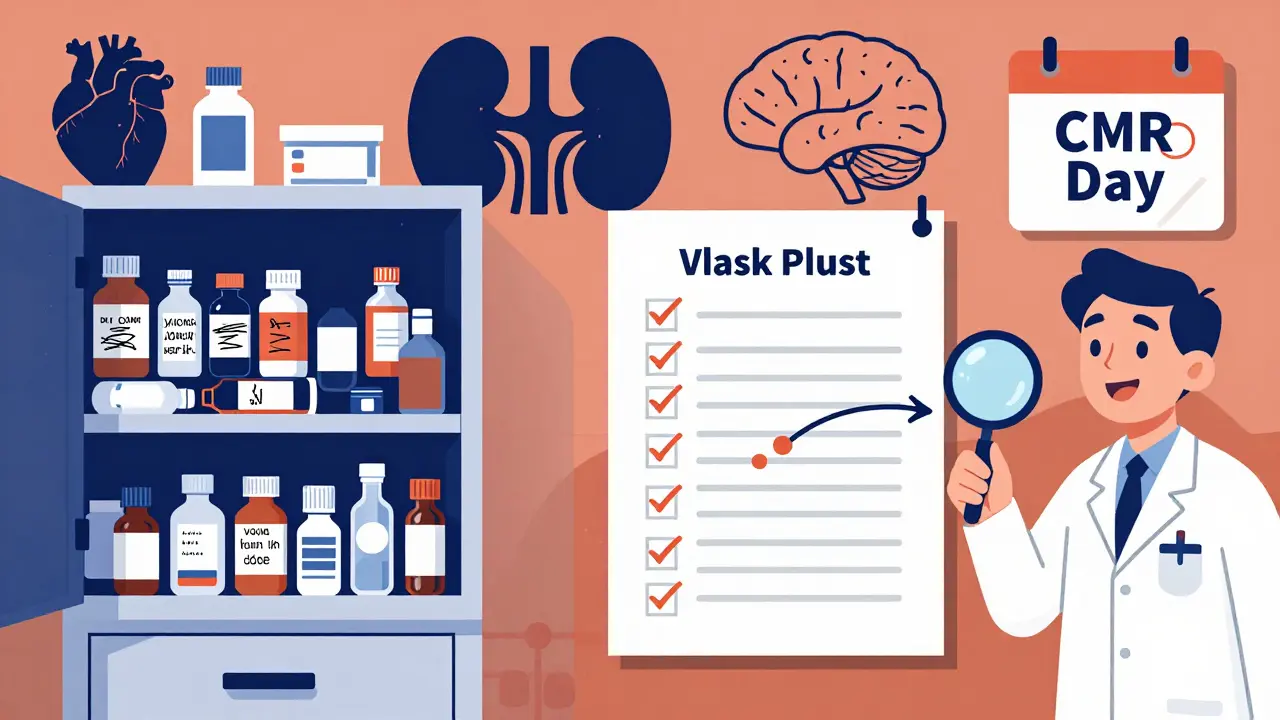
How to Prepare: The 5-Step Checklist
Preparing for your review is the biggest factor in whether it works. Studies show that beneficiaries who come prepared are 85% more likely to have a meaningful outcome. Here’s how to do it right.
- Gather every medication you take-in their original bottles. This includes prescription drugs, over-the-counter pain relievers, antacids, sleep aids, herbal supplements like turmeric or ginkgo, and even vitamins. Don’t rely on memory. Bring the bottles. If you use a pill organizer, bring that too, but still bring the original labels. Pharmacists need to see the exact dosage and manufacturer.
- Write down your questions. What side effects are you noticing? Are you skipping doses because it’s too expensive? Do you get dizzy after taking your blood pressure pill? Write them down. Don’t try to remember them in the moment. One senior in Portland brought a notebook with 12 specific questions. The pharmacist answered every one.
- Track your medication history. When did you start each drug? Have you had any hospital stays or ER visits related to your meds? Did your doctor change your dose recently? A simple timeline helps the pharmacist spot patterns. You don’t need to be perfect-just honest.
- Bring a helper. If you’re overwhelmed by your meds, bring a family member or friend. They can take notes, ask questions you forget, and remind you what you said later. Nearly 70% of successful CMRs include a second person.
- Check your medication list against your actual bottles. Most people forget 2 to 3 medications when they list them. One study found that seniors often leave out OTC meds like laxatives or allergy pills because they don’t think they count. They do.
What Happens During the Review?
The pharmacist will start by asking you to confirm each medication you’re taking. They’ll compare your list to what’s in your pharmacy’s records. If there’s a mismatch, they’ll ask why.
Then they’ll look for:
- Duplicates-like taking two different pills for the same condition.
- Interactions-like mixing blood thinners with certain supplements.
- Unnecessary meds-drugs you no longer need or that aren’t helping.
- Cost issues-can you switch to a cheaper generic? Is there a coupon or patient assistance program?
- Adherence problems-are you skipping doses? Do you have trouble opening bottles? Do you forget when to take them?
After the review, you’ll get three documents:
- Consultation Letter-a summary of what was discussed.
- Medication Action Plan-what you should do next, like switching a drug or scheduling a follow-up with your doctor.
- Personal Medication List-your updated, accurate list of everything you take, with dosages and times.
You’ll get these in writing, and you should keep them. Give a copy to your primary care doctor. Update your pill organizer with the new list. This isn’t just a one-time event-it’s your new baseline for managing your health.
What to Do After the Review
Don’t just file the papers and forget about it. Your CMR is a living document.
- Review your updated Personal Medication List every month. If you start a new drug, add it. If you stop one, cross it out.
- Follow up on any action items. If the pharmacist recommended switching to a cheaper drug, call your pharmacy. If they asked you to talk to your doctor about a side effect, schedule that appointment.
- Keep the Medication Action Plan in your wallet or phone. You might need to show it to a new doctor or ER staff.
- Set a calendar reminder for next year. Don’t wait for them to call you. Call your Part D plan and ask when your next CMR is due.
Many seniors don’t realize they can ask for a CMR even if they haven’t been contacted. If you think you qualify, call your plan’s member services and ask: “Am I eligible for a Comprehensive Medication Review this year?” If they say no, ask for the eligibility criteria in writing. You might be surprised.

Common Mistakes to Avoid
Here’s what most people do wrong-and how to fix it:
- Mistake: Bringing a list you wrote from memory. Fix: Bring the bottles. Always.
- Mistake: Not mentioning OTC meds or supplements. Fix: Even if you think it’s “just a vitamin,” tell them. Garlic supplements can thin your blood. St. John’s Wort interferes with antidepressants.
- Mistake: Thinking the pharmacist will fix everything. Fix: They can recommend changes, but only your doctor can prescribe them. Be ready to follow up with your provider.
- Mistake: Skipping the review because you’re “fine.” Fix: You might feel fine-but that doesn’t mean your meds aren’t causing hidden problems. One man in Florida had no symptoms until his CMR revealed he was taking two different statins. His muscle pain disappeared after he stopped the duplicate.
What If You Can’t Make the Appointment?
If you’re homebound, have mobility issues, or live in a rural area, you’re not out of luck. Most Part D plans now offer CMRs via telehealth. You can do it from your living room using your phone, tablet, or computer.
If you don’t have internet access, call your plan. They’ll schedule a phone call. If you have hearing or vision problems, ask for accommodations. They’re required to provide them.
And if you miss your appointment? Call back. Don’t wait. You can request another one anytime. You’re entitled to one per year-use it.
Final Thoughts: This Is Your Health, Not Just a Formality
A Medicare Annual Medication Review isn’t bureaucracy. It’s your chance to take control. You’re not just handing over a list-you’re having a conversation that could prevent a fall, a hospital stay, or even a heart attack.
It’s free. It’s confidential. And it’s one of the most powerful tools you have as a Medicare beneficiary. Don’t wait for them to call. Prepare. Show up. Ask questions. And keep that updated list close at hand.
One senior in Oregon put it best: “I thought I knew my meds. Turns out, I didn’t. Now I do-and I sleep better at night.”
Do I have to pay for a Medicare Annual Medication Review?
No, it’s completely free. It’s part of your Medicare Part D prescription drug plan benefits. You won’t be charged a copay or fee for the consultation, the written summary, or any follow-up advice. If someone tries to charge you, contact Medicare at 1-800-MEDICARE.
Can I get a medication review more than once a year?
The annual review is mandatory, but you can request additional reviews if your medications change significantly-like after a hospital stay, a new diagnosis, or if you start or stop several drugs. Your pharmacist can also do quarterly Targeted Medication Reviews (TMRs) if they spot issues between your annual reviews. Just call your plan and ask.
What if I don’t have all my pill bottles?
If you don’t have the original bottles, bring a written list with the drug name, dosage, and how often you take it. But be aware: pharmacists rely on bottle labels to confirm exact ingredients and strengths. Without them, they may not be able to verify everything, and you might need to reschedule. Taking photos of your labels ahead of time is a smart backup.
Do I need to see my doctor after the review?
Not always, but often. The pharmacist can recommend changes, but only your doctor can prescribe or stop medications. If your action plan includes switching drugs, reducing doses, or adding a new treatment, you’ll need to follow up with your provider. Bring your updated Personal Medication List to your next doctor visit.
Can I do the review over the phone instead of in person?
Yes. Medicare allows CMRs to be done over the phone or via video call. Many seniors prefer this, especially if they have trouble leaving home. Just make sure you’re in a quiet place with your medications nearby. You’ll still get the same written documents and follow-up support.
What if I disagree with the pharmacist’s recommendations?
You have the right to say no. The pharmacist’s job is to advise-not to force changes. If you’re unsure, ask for more information, get a second opinion from your doctor, or take the written plan home and think about it. You can always call back later to discuss it further. Your comfort and trust matter.


