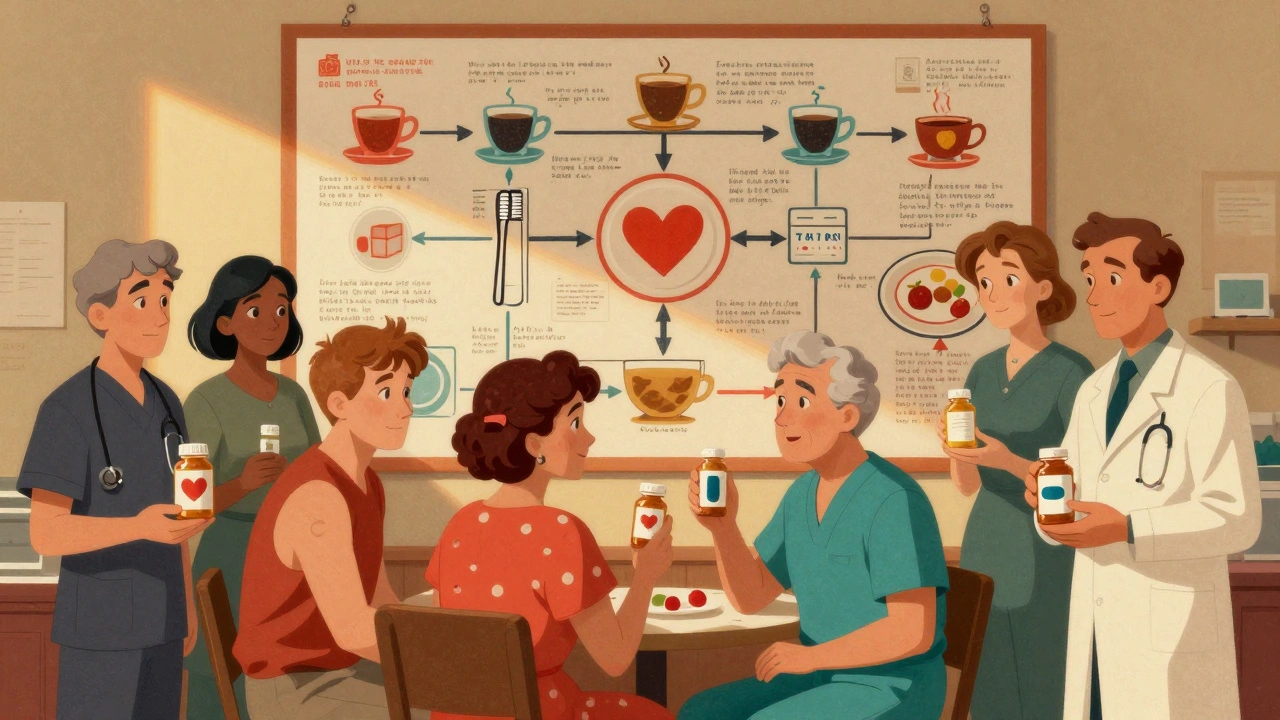
When you’re taking multiple medications, it’s easy to feel overwhelmed. When to take them? Why are you taking them? What if you miss a dose? What if you feel sick after taking one? These aren’t just small questions-they’re critical to your health. A medication action plan isn’t just a list of pills. It’s a personalized roadmap built with your care team to help you take your meds safely, correctly, and consistently. And when done right, it can cut your risk of hospital visits by more than a third.
What Exactly Is a Medication Action Plan?
A medication action plan (MAP) is a written, step-by-step guide created with your pharmacist, doctor, or care team that tells you exactly what to do with your medications. It’s not the same as a prescription label or a simple list of drugs. It answers your real-life questions: “What do I do if I forget my afternoon pill?” “Why am I taking this blood thinner when I feel fine?” “Can I take this new supplement with my heart medicine?” It’s built around your life-not the other way around. If you’re a morning person who forgets pills at night, your plan might say: “Place your evening pills next to your toothbrush.” If you’re worried about side effects, it might include: “If you feel dizzy after taking lisinopril, sit down and call your doctor.” The plan is updated as your health changes-new meds, new symptoms, new routines. These plans are backed by science. Studies show patients who use personalized MAPs improve adherence by 25-40%. For people on three or more chronic meds, that means fewer trips to the ER and better control of conditions like diabetes, high blood pressure, or heart failure.Who Should Have a Medication Action Plan?
You don’t need to be sick to benefit-but you’re more likely to need one if you:- Take 3 or more prescription medications daily
- Also take over-the-counter pills, vitamins, or herbal supplements
- Have two or more chronic conditions (like diabetes and arthritis)
- Have trouble remembering when to take your meds
- Have had a hospital stay or ER visit due to a medication issue
- See multiple doctors who each prescribe different drugs
How to Start Building Your Plan
The process begins with a conversation. Here’s how to prepare:- Collect everything. Bring every pill, capsule, patch, liquid, and supplement you take-even the ones you only use sometimes. Include OTC painkillers, antacids, sleep aids, fish oil, turmeric, and herbal teas. Many patients forget these-but they can interact dangerously with prescription drugs.
- Write down your concerns. What confuses you? What scares you? What do you skip? Jot down: “I skip my blood pressure pill when I feel fine.” “I don’t know what the green pill is for.” “I get dizzy after my diabetes med.” Don’t hold back.
- Choose your care team member. The best person to start with is your pharmacist. They’re trained in drug interactions, have access to your full history, and can spend 30-60 minutes with you. You can also ask your doctor or nurse during a checkup. Telehealth visits work too.
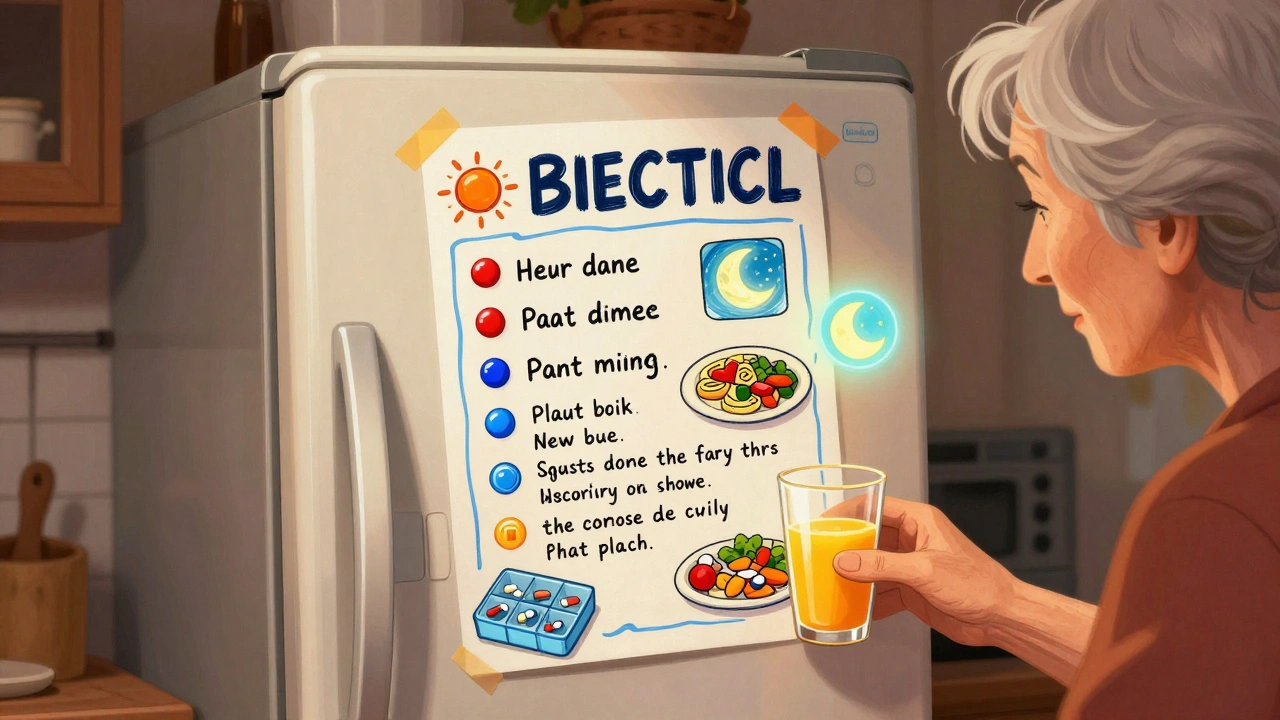
What Goes Into a Real Medication Action Plan?
A good MAP has five key parts:- Complete medication list-all prescriptions, OTCs, vitamins, herbs. No exceptions.
- Clear purpose for each drug-not “for blood pressure,” but “to lower your blood pressure so your heart doesn’t work too hard.”
- Specific action steps-“Take metformin with breakfast,” not just “Take metformin.”
- What to do if things go wrong-“If you feel faint after taking warfarin, stop taking it and call your doctor immediately.”
- Measurable goals-“Take all your morning meds correctly for 28 days straight.”
Why Generic Plans Don’t Work
A 2023 Johns Hopkins study found that patients given pre-printed, one-size-fits-all action plans showed no improvement in adherence at all. Why? Because they didn’t match the person’s life. If your plan says “Take your pill at 8 a.m.” but you don’t wake up until 10 a.m., you’ll fail. If it says “Call your doctor if you feel dizzy,” but you don’t know who to call or what to say, you’ll ignore it. The most effective plans are co-created. They use your words, your schedule, your fears. A pharmacist at a Michigan clinic once asked a patient, “What’s the hardest part about taking your meds?” The patient said, “I don’t like swallowing pills.” So they switched her to liquid form and added a reminder to take it with her morning orange juice. Her adherence went from 50% to 90% in two weeks.How to Keep Your Plan Alive
A MAP isn’t a one-time document. It’s a living tool. You need to update it when:- You start or stop a medication
- You get a new diagnosis
- You have a side effect
- Your routine changes (new job, travel, moving)
- You see a new doctor
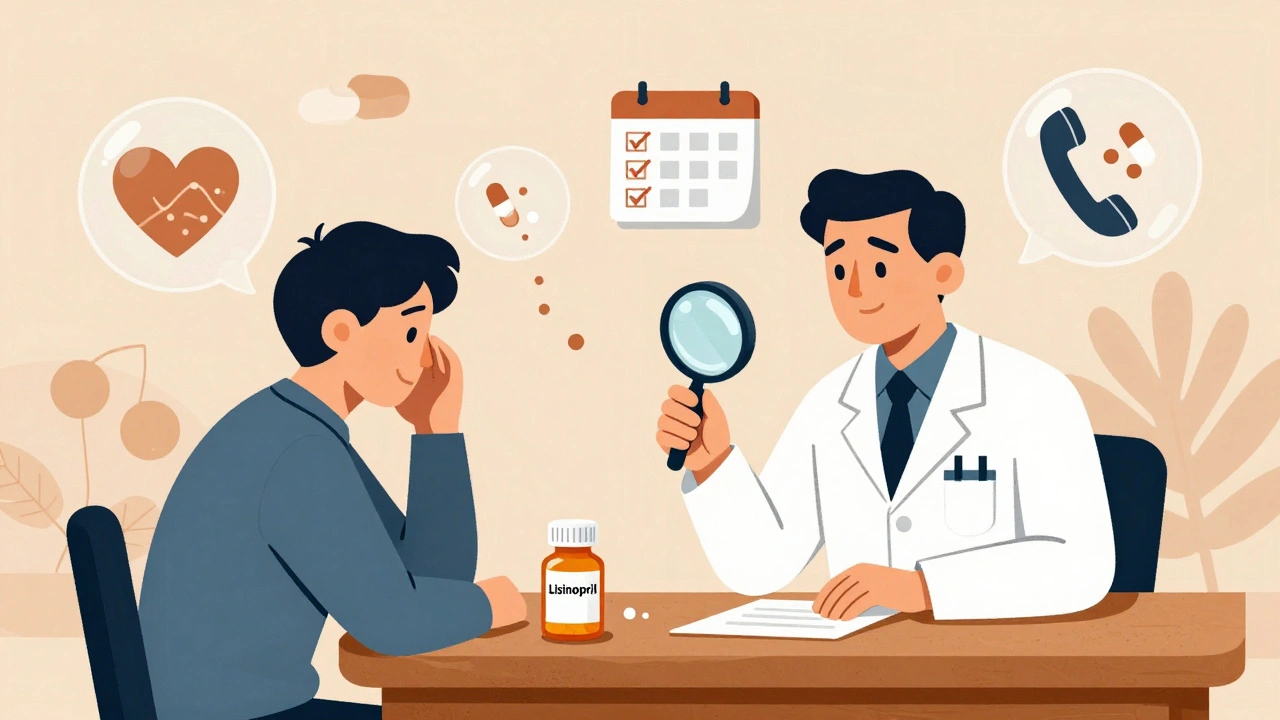
What If Your Care Team Doesn’t Offer This?
You’re not alone. A 2022 University of Michigan study found 43% of eligible patients never received a written action plan-even though they qualified. If your doctor or pharmacist doesn’t offer a MAP, ask directly: “Can we create a personalized medication action plan together?” If they say no, ask: “Can you refer me to a pharmacist who does medication therapy management?” Most community pharmacies now offer this service for free, especially if you’re on Medicare. You can also request a Personal Medication Record (PMR)-a full list of all your meds. From there, you can build your own action steps. Use free templates from the American Pharmacists Association or the CDC.Real Benefits, Real Numbers
The data doesn’t lie:- Patients with personalized MAPs have 32% fewer medication-related hospital stays in the first year.
- For every $1 spent on medication management, $12.30 is saved in avoided hospital care.
- Medicare beneficiaries who got a MAP reported a 70% drop in confusion about their meds.
- Adverse drug events-like dangerous interactions or overdoses-cause 280,000 hospitalizations in the U.S. every year. Most are preventable.
Next Steps: What to Do Today
You don’t need to wait for an appointment. Start now:- Grab a notebook or open a note on your phone.
- List every medication you take-name, dose, time, reason.
- Write down your top 3 concerns about your meds.
- Call your pharmacy. Ask: “Do you offer medication therapy management?”
- Book a 30-minute session. Bring your list.


