Walking out of a doctor's office with a new prescription and a head full of instructions is a recipe for a mistake. Between the stress of the diagnosis and the technical language used, it's incredibly easy to forget a crucial detail-like whether a pill should be taken with food or if you should avoid certain over-the-counter meds while on a new treatment. In the U.S., medication errors contribute to roughly 7,000 deaths every year, often because of simple communication gaps. The goal isn't just to remember what the doctor said; it's to create a reliable, written record that keeps you safe and ensures any other healthcare professional you see knows exactly what's happening with your treatment.
Document provider advice effectively by moving away from vague notes and toward a structured system that captures the "who, what, when, and why" of your medication regimen.
The Quick Start Guide to Medication Notes
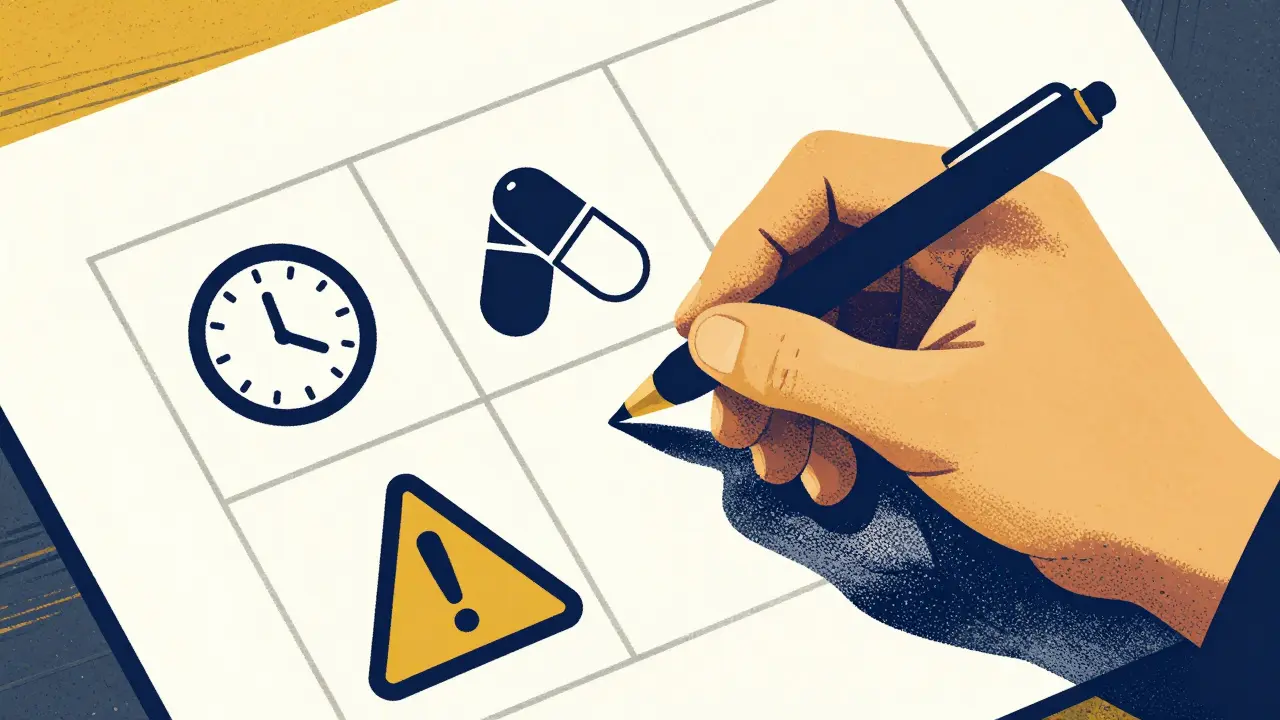
If you're in a rush or still in the exam room, focus on these five essentials. Don't leave the office until you have a clear answer for each of these points:
- The exact name: Generic and brand names (e.g., Lisinopril).
- The dosage: Exactly how much you take (e.g., 10mg).
- The timing: When to take it and for how long.
- The purpose: What specifically is this drug treating in your case?
- The "Red Flags": Which side effects are normal and which require an immediate call to the clinic?
Creating Your Personal Medication Log
A scrap of paper is easy to lose. Instead, build a dedicated medication log. Whether you use a physical notebook or a digital app, your log should be an active document that you update every time a provider changes your dose or adds a new drug. Think of this as your personal version of a Medication Administration Record (MAR), which is the gold standard used in hospitals to prevent errors.
When documenting, avoid using opinions or guesses. Instead of writing "Doctor thinks this will help my sleep," write "Provider prescribed X for insomnia; goal is to reduce nighttime awakenings to one per night." This factual approach mirrors the standards used by the General Medical Council (GMC), which requires records to be clear, accurate, and based on observed facts rather than judgments.
| Attribute | What to Record | Why it Matters |
|---|---|---|
| Dose & Amount | Milligrams (mg), Micrograms (mcg), or units. | Prevents accidental overdose or under-dosing. |
| Directions for Use | "Once daily at 8 AM with a full glass of water." | Ensures maximum efficacy and absorption. |
| Refill Count | How many refills are authorized. | Prevents gaps in treatment due to expired scripts. |
| Allergies | The drug name and the specific reaction (e.g., rash). | Critical for any new provider to see immediately. |
Capturing Verbal Advice and Telehealth Calls
Not all medication advice happens during a formal appointment. Often, the most critical tweaks happen over a quick phone call or a telehealth visit. The American Dental Association (ADA) emphasizes that recaps of conversations-including those happening outside the office-must be dated and initialed to be considered valid records. You should apply this same logic to your own notes.
After a phone call with your provider, immediately write a "call recap." Include the date, the time, and the specific instruction given. For example: "April 16, 2026, 2:15 PM: Dr. Smith told me to increase dose from 5mg to 10mg starting tomorrow because blood pressure is still high." This level of detail protects you if there's ever a dispute about what was advised and helps you stay consistent with your treatment.
Managing Side Effects and Patient Education
When a provider explains how a drug works or warns you about side effects, they are providing "patient education." This is often the first thing patients forget. Instead of just nodding along, ask the provider for a written summary or a Patient Medication Information (PMI) sheet. The FDA has pushed for a standardized, one-page document that outlines basic directions and essential warnings to make this process easier.
In your log, create a section for "Observed Effects." If you start feeling dizzy two hours after taking a new medication, note the time and the symptom. When you return to the clinic, you aren't relying on a vague memory of "feeling weird last week," but providing the doctor with hard data. This is the same principle pharmacists use when documenting pharmaceutical care through the American Society of Health-System Pharmacists (ASHP) guidelines to ensure a patient's medication history is accurately tracked upon admission to a facility.
Using Technology for Better Accuracy
While a notebook is great, Electronic Health Records (EHR) and patient portals have revolutionized how we track health data. Most modern clinics use certified EHR technology, allowing you to log in and see exactly what the doctor typed into your chart. This is your best tool for verifying that what you heard in the room matches what was actually prescribed.
Cross-reference your personal log with the patient portal. If the doctor told you to take a pill twice a day, but the portal says once a day, you've found a critical discrepancy that needs to be resolved immediately. This process, known as "medication reconciliation," is a core safety goal of The Joint Commission to ensure that as you move between different doctors-say, from a primary care physician to a specialist-your medication list remains consistent and error-free.
Common Pitfalls to Avoid
Many people make the mistake of only recording the "start" of a medication and ignoring the "stop" or the "change." In a legal or medical emergency, a provider needs to know what you are *currently* taking, not what you took three years ago. Regularly purge your active list or move old medications to an "Archive" section.
Another common error is relying on the pharmacy label as the sole source of truth. While pharmacy labels are helpful, they don't capture the *why* behind the medication or the specific lifestyle advice the provider gave (e.g., "Avoid grapefruit juice while taking this"). Your documentation should bridge the gap between the label on the bottle and the conversation in the clinic.
What is the most important thing to document first?
The most critical information is the medication name, the exact dose, and the frequency of use. Without these three, the record is essentially useless for safety checks or emergency care.
Should I record my own opinions about the medication?
Keep your factual record (what the provider said) separate from your personal observations (how you feel). When documenting the provider's advice, stick to the facts to ensure the record is accurate and clear for other health professionals.
How do I handle changes made over the phone?
Create a dated "call recap" immediately after the conversation. Include the time of the call, the provider's name, and the specific change requested. This prevents confusion and provides a paper trail for your care.
What if the patient portal doesn't match what the doctor said?
Contact the provider's office immediately to clarify. Discrepancies between verbal advice and the electronic record are a common source of medication errors and should be resolved before taking the next dose.
Do I need to document allergies every time?
Yes. National quality standards, such as those from the NCQA, identify medication allergies as a core component that requires prominent notation. Always ensure your current allergy list is visible and up-to-date in your log.
Next Steps for Different Users
For those with chronic conditions: Start a digital spreadsheet or use a dedicated health app. Since you likely deal with multiple providers, creating a "Master Medication List" that you can email to new doctors will save time and reduce the risk of drug interactions.
For those managing meds for a parent: Use a shared digital document (like Google Docs) so all family caregivers are seeing the same updated instructions. This prevents the "double-dosing" that can happen when multiple people are helping with care.
For those with occasional prescriptions: A simple dedicated page in a health planner is sufficient. Just make sure to record the date the medication was started and the date it is supposed to end.


