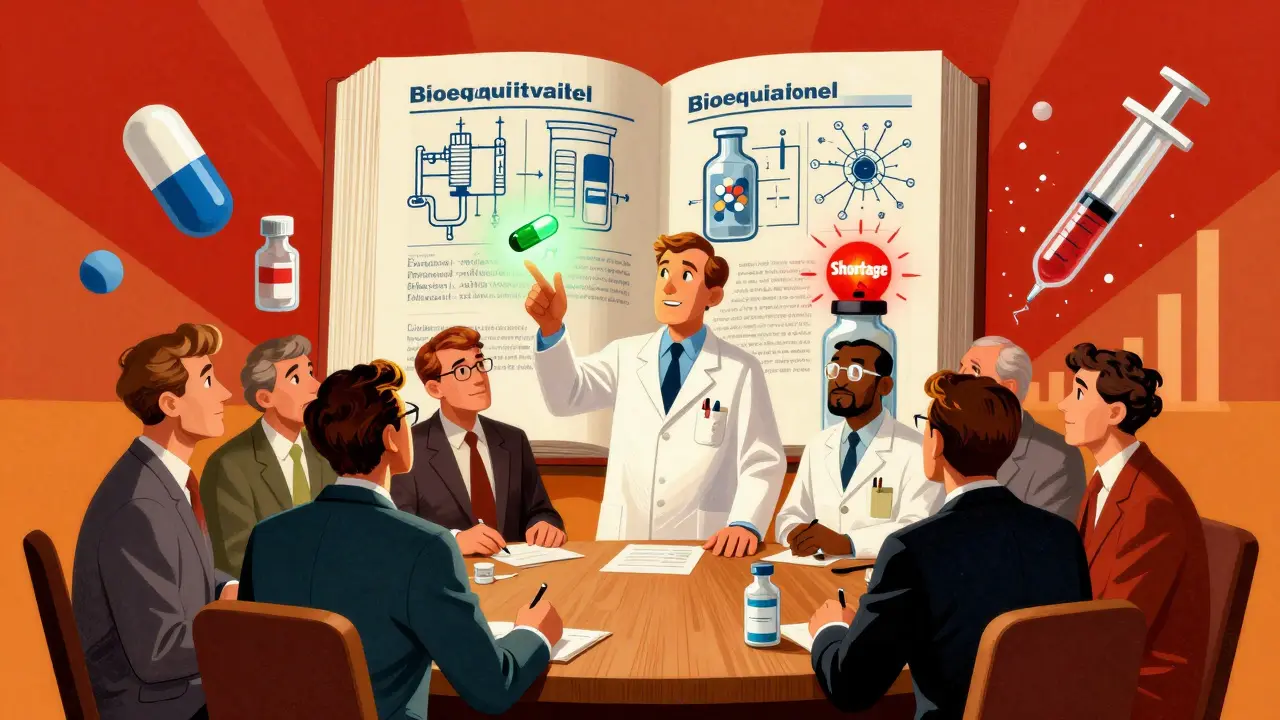
When a hospital decides to switch from a brand-name drug to a generic, it’s not just a simple price swap. Behind that decision is a complex system of clinical reviews, economic modeling, supply chain risks, and regulatory hurdles-all managed by a small group of pharmacists and physicians known as the Pharmacy and Therapeutics (P&T) committee. In 2025, with generic drugs making up 89% of hospital drug purchases by volume, this process has become one of the most critical levers for controlling costs without sacrificing patient safety.
What Exactly Is a Hospital Formulary?
A hospital formulary isn’t just a list of approved drugs. It’s a living, breathing system that decides which medications can be ordered, how they’re used, and who gets access to them. Unlike retail pharmacies that focus on outpatient prescriptions, hospital formularies are built for controlled environments: IV infusions in ICUs, injectables in emergency rooms, and complex dosing regimens managed by nurses, not patients. The modern formulary system traces back to the 1950s, when the American Society of Health-System Pharmacists (ASHP) began standardizing how hospitals select drugs. Today, most hospitals use a closed or partially closed formulary-meaning only pre-approved drugs are available unless a doctor requests an exception. About 78% of academic medical centers operate this way, compared to just 42% of commercial health plans. This tight control lets hospitals manage usage with tools like prior authorization, step therapy, and quantity limits-something retail formularies rarely do.How Generics Make It Onto the Formulary
Getting a generic drug approved isn’t just about showing FDA approval. P&T committees demand proof that the generic performs the same as the brand in real hospital settings. They look at three things: clinical effectiveness, safety, and cost. For simple pills like metformin or atorvastatin, this is straightforward. But for complex generics-like inhalers, injectables, or topical creams-the bar is much higher. The FDA’s 2022 report found only 62% of complex generic applications were approved on the first try, compared to 88% for standard ones. Why? Because delivery matters. A generic inhaler might have the same active ingredient, but if the particle size or propellant differs, it won’t reach the lungs the same way. That’s a real risk in asthma or COPD patients. Committees also dig into bioequivalence studies. They don’t just accept the manufacturer’s word. They check if the generic’s absorption rate, peak concentration, and half-life match the brand within strict FDA limits. And they look at real-world data: Has this generic been used in similar hospitals? Are there reports of unexpected side effects or monitoring issues?The Cost Game: List Price vs. Net Cost
It’s a myth that the lowest list price always wins. Many generic manufacturers offer rebates, discounts, or service agreements that make their drug cheaper in practice-even if the sticker price is higher. Dr. Emily Chen from Massachusetts General Hospital put it plainly: “The economic calculus has shifted.” A generic that costs $10 per dose might come with a $3 rebate and free inventory management. Another at $8 might have no rebate, no tech integration, and frequent shortages. The net cost? The $10 one wins. This is why 92% of academic hospitals now require formal AMCP dossiers for new generic submissions. These are detailed documents that include clinical studies, pharmacology data, economic models, and even supply chain reliability scores. The committee doesn’t just look at the drug-they look at the whole package.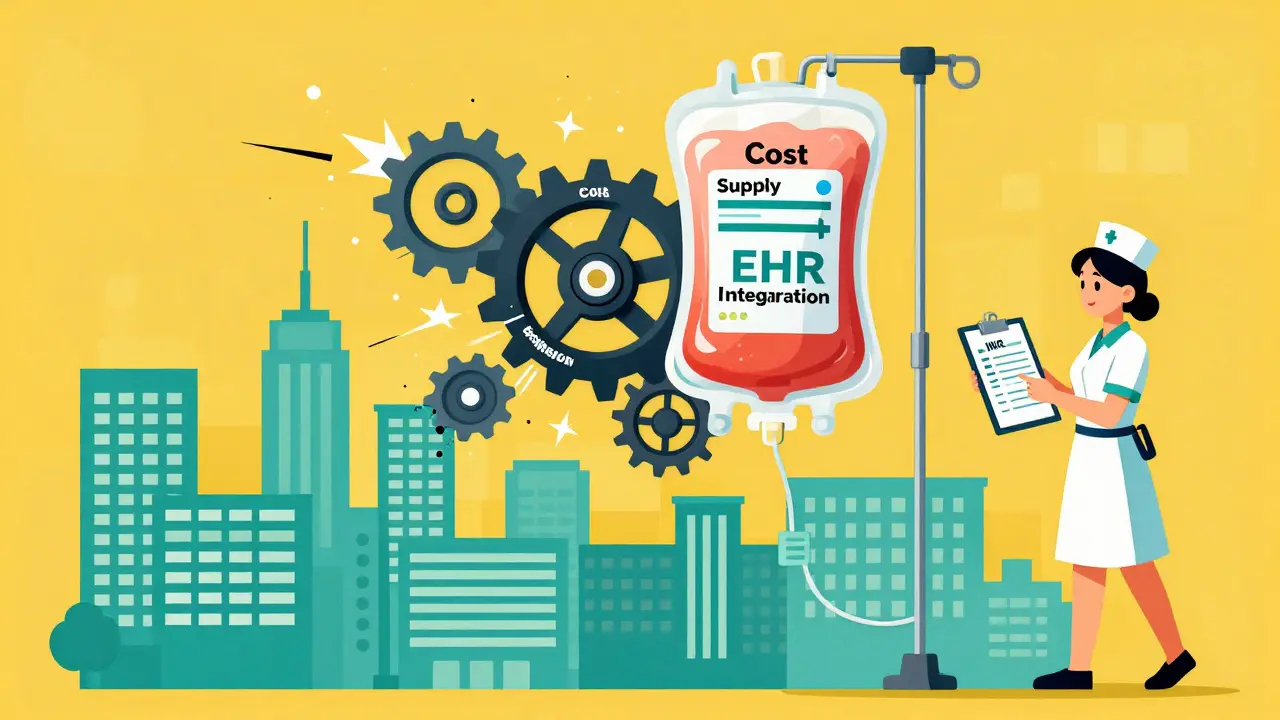
Why Some Generics Get Rejected
Not every generic that’s FDA-approved gets into the formulary. Here’s why:- Supply chain instability: In Q3 2023, 84% of hospital pharmacists reported at least one critical shortage of a generic drug. If a drug can’t be counted on, it doesn’t matter how cheap it is.
- Therapeutic equivalence gaps: A 2023 survey of 1,247 pharmacists found 68% struggled to assess equivalence for complex generics like anticoagulants or epilepsy drugs. One hospital switched to a generic anticoagulant and saw unexpected spikes in INR levels-requiring more frequent blood tests and nursing time, wiping out cost savings.
- Rebate-driven decisions: ASHP’s 2021 white paper warned that some formularies are being pushed toward drugs with the best rebates, not the best clinical fit. This is especially dangerous for narrow therapeutic index drugs, where small differences can cause harm.
- Lack of EHR integration: Only 37% of hospitals have automated formulary alerts in their electronic health records. Without them, doctors order non-formulary drugs by accident, leading to 15-20% non-adherence rates.
Success Stories: How Hospitals Got It Right
Mayo Clinic’s program for cardiovascular generics saved $1.2 million annually-23.7% in drug costs-by replacing brand-name statins and beta-blockers with generics, but only after setting up a monitoring protocol. Nurses were trained to watch for subtle changes in blood pressure and heart rate. Pharmacists checked lab values weekly for the first month. That’s the key: cost savings don’t come from switching drugs-they come from switching smart. Cleveland Clinic reduced generic acquisition costs by 18.3% by creating a “therapeutic interchange committee.” This team of pharmacists and clinicians developed standardized protocols for when and how to switch patients. They didn’t just replace drugs-they replaced processes.
The New Challenges: Shortages, Regulations, and Value-Based Contracts
In November 2023, the FDA recorded 298 active generic drug shortages-the highest number since tracking began in 2011. Hospitals are now forced to keep backup formularies, sometimes paying 3-5x more for non-formulary drugs just to keep patients covered. Regulatory pressure is rising, too. The FDA’s GDUFA III program, launched in 2022, is investing $4.3 million annually to speed up approval of complex generics. That’s good news for hospitals waiting for reliable alternatives to expensive injectables and inhalers. Meanwhile, value-based purchasing is creeping into formulary decisions. Nearly half of academic medical centers now tie generic drug contracts to patient outcomes. If a generic doesn’t reduce readmissions or improve lab markers, the hospital can renegotiate the price-or drop it.What’s Next for Hospital Formularies?
The future of formulary economics is getting smarter-and more complicated.- Transparency laws: Starting January 2025, the Consolidated Appropriations Act will force manufacturers to disclose rebate structures. Hospitals will finally see the real cost of “cheap” generics.
- Pharmacogenomics: 28% of academic hospitals now consider genetic testing data when choosing generics. For example, a patient with a CYP2C19 poor metabolizer variant might need a different antiplatelet drug, even if it’s more expensive.
- 340B Program impact: Hospitals that qualify for the 340B Drug Pricing Program can buy generics at steep discounts. This creates a two-tier system: some hospitals get generics for $2, others pay $10. That imbalance affects formulary decisions across the country.
Bottom Line: It’s Not About Cheapest-It’s About Smartest
Choosing generics in a hospital isn’t a procurement decision. It’s a clinical one. The goal isn’t to pick the lowest-cost drug. It’s to pick the one that works reliably, is available consistently, and doesn’t create hidden costs in nursing time, monitoring, or complications. The best formularies don’t just save money. They protect patients. They reduce errors. They make care more predictable. And they do it all while staying financially sustainable. That’s the real economics of hospital formularies.How do hospital formularies differ from retail pharmacy formularies?
Hospital formularies are closed or partially closed, meaning only approved drugs are available unless an exception is granted. They’re designed for controlled clinical environments where nurses administer drugs, so they don’t worry about patient storage or adherence. Retail formularies are open and incentivized, encouraging patients to choose lower-cost options through copays. Hospitals use tools like prior authorization and step therapy to control use; retail formularies rely on price tiers and patient cost-sharing.
Why can’t a hospital just pick the cheapest generic?
Because the lowest list price doesn’t mean the lowest net cost. Many generics come with rebates, service agreements, or supply guarantees that reduce the real price. A cheaper drug with frequent shortages or poor bioequivalence can lead to more nursing time, lab tests, or adverse events-costing far more than the savings. Hospitals also avoid drugs with unstable supply chains, even if they’re cheap.
What role does the P&T committee play in generic selection?
The Pharmacy and Therapeutics (P&T) committee is the clinical governance body that reviews and approves all drugs for the hospital formulary. They evaluate generics based on clinical evidence, safety data, cost, supply reliability, and ease of use. They don’t just accept FDA approval-they demand proof the generic performs the same in real hospital settings. The committee meets monthly or quarterly and includes pharmacists, physicians, and sometimes nurses.
Are all generic drugs created equal?
No. Simple generics like oral tablets are usually interchangeable. But complex generics-like inhalers, injectables, and topical products-can vary in delivery mechanisms, particle size, or excipients, which affect how the drug works in the body. For drugs with narrow therapeutic indices, like warfarin or phenytoin, even small differences can lead to toxicity or treatment failure. Hospitals are especially cautious with these.
How do drug shortages affect hospital formulary decisions?
Drug shortages force hospitals to use non-formulary alternatives, which are often much more expensive. In 2023, 84% of hospital pharmacists reported at least one critical generic shortage. This leads to unplanned spending, increased workload for pharmacists to find substitutes, and sometimes delays in patient care. As a result, many hospitals now prioritize generics with reliable supply chains-even if they’re slightly more expensive-because predictability matters more than marginal savings.


