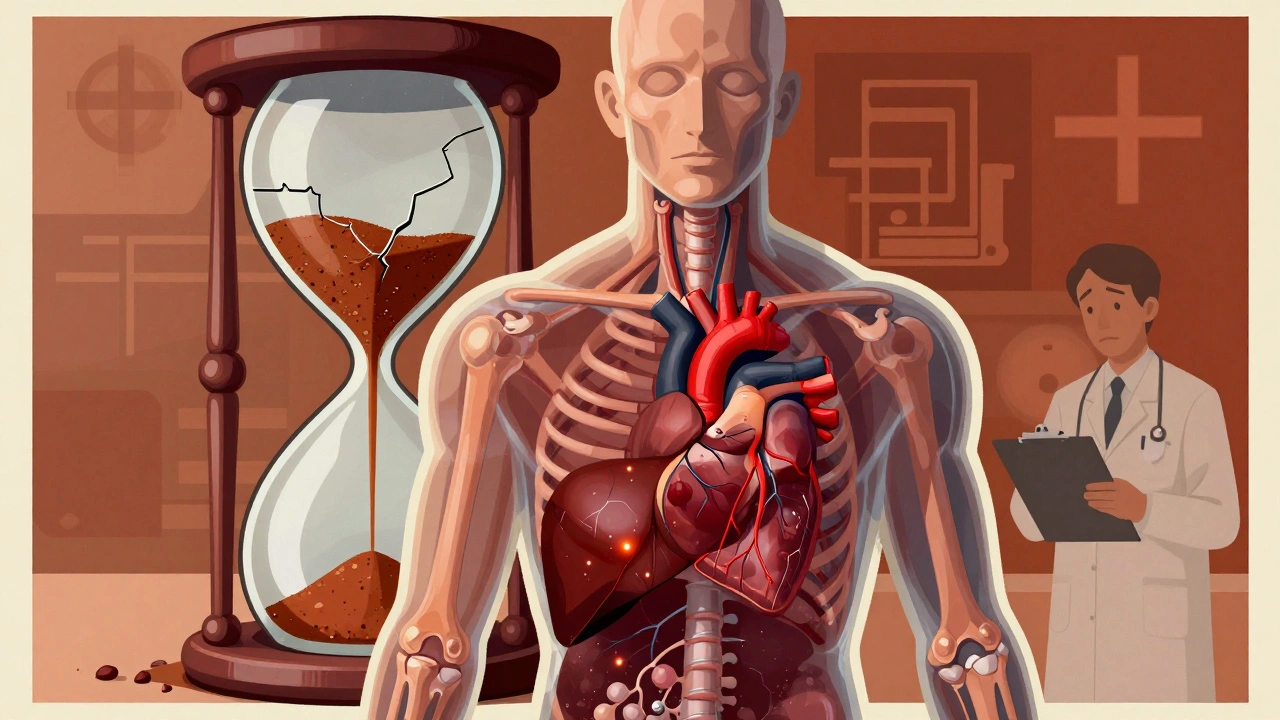
Imagine feeling exhausted all the time, your joints ache for no reason, and your skin looks oddly bronze. You go to the doctor, and they tell you it’s stress, aging, or maybe depression. But what if it’s something deeper - something your body can’t get rid of? That’s hemochromatosis. It’s not rare. In fact, about 1 in 200 people of Northern European descent have it. And most don’t know they have it until serious damage has already started.
What Is Hemochromatosis?
What Is Hemochromatosis?
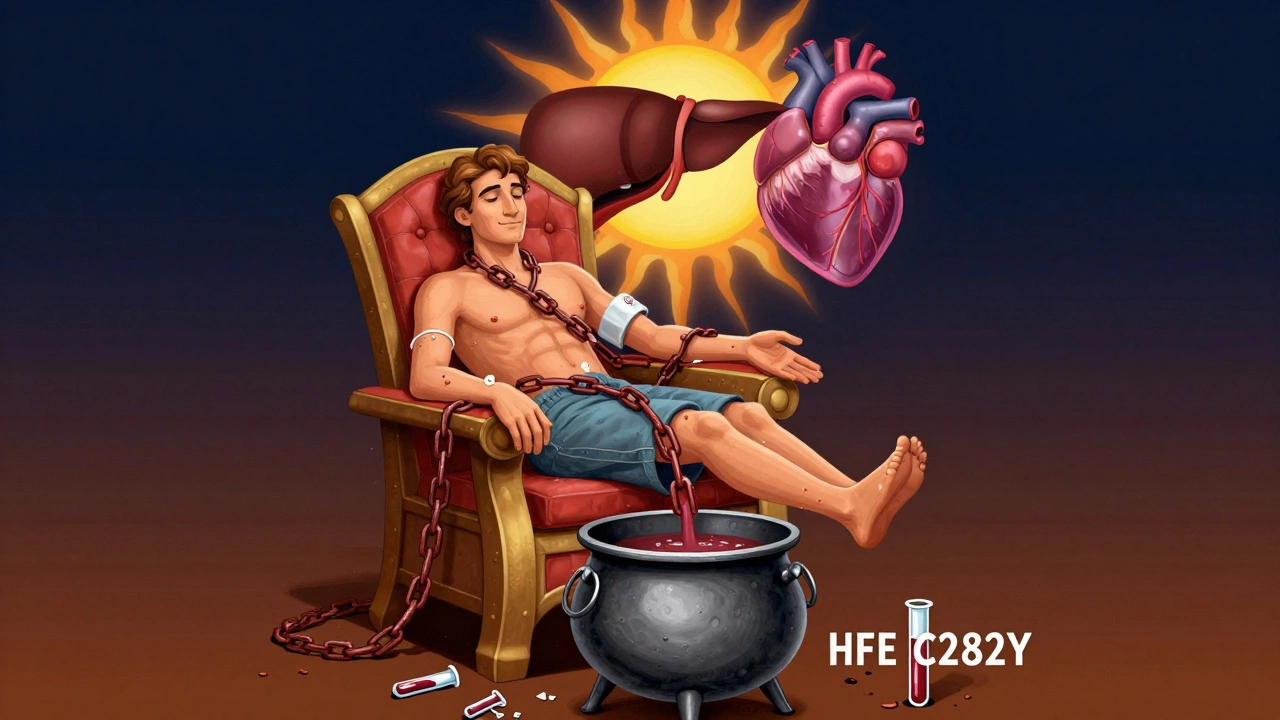
Hemochromatosis is a genetic condition where your body absorbs too much iron from food. Normally, your body keeps iron levels in check. But in hemochromatosis, a faulty gene - usually the HFE C282Y mutation - messes up the signal that tells your body to stop absorbing iron. So you keep taking it in, even when you don’t need it. Over time, that extra iron builds up in your liver, heart, pancreas, and joints. And unlike excess iron from supplements or diet, this isn’t something you can just stop eating. Your body can’t get rid of it on its own.This isn’t just about being tired. Left untreated, iron overload can lead to cirrhosis, liver cancer, heart failure, and diabetes. Men are more likely to show symptoms early - usually between 30 and 50 - because women lose iron naturally through menstruation. By the time women reach menopause, their risk catches up.
It’s not caused by eating too much red meat or iron supplements. Even people who eat a low-iron diet can develop severe overload. It’s all in the genes.
How Do You Know You Have It?
The symptoms are sneaky. They look like other common problems: fatigue, joint pain (especially in the knuckles), loss of sex drive, abdominal discomfort, and skin that looks gray or bronze. Many people are misdiagnosed for years. One patient on Reddit said it took him eight years and six doctors before someone checked his iron levels. His ferritin was over 2,800 ng/mL - way above the normal range of 30-400 ng/mL for men.The real clues are in the blood tests. Two numbers matter most:
- Transferrin saturation - this measures how much iron is floating in your blood, bound to transferrin. If it’s over 45%, that’s a red flag.
- Serum ferritin - this tells you how much stored iron you have. In men, levels above 300 ng/mL are suspicious. In women, above 200 ng/mL.
These tests are cheap and simple. Yet, only 12% of primary care doctors routinely order them for patients with unexplained fatigue or joint pain. That’s why so many cases go missed.
If those numbers are high, the next step is genetic testing. The HFE gene test looks for three mutations: C282Y, H63D, and S65C. C282Y homozygosity (two copies) causes about 90% of cases. If you have that, and your iron levels are up, you likely have hereditary hemochromatosis.
Why Phlebotomy Is the Gold Standard Treatment
The best treatment? Remove the excess iron. And the most effective, safe, and cheapest way to do that is therapeutic phlebotomy - basically, donating blood on a medical schedule.Each 500 mL of blood you donate removes about 200-250 mg of iron. Your body doesn’t replace that iron right away. It has to build new red blood cells, which pulls iron from your stores. Slowly, your iron levels drop.
The process has two phases:
- Induction phase: You get a phlebotomy every week until your ferritin drops to 50-100 ng/mL. For someone with ferritin over 1,000, that can take 30 to 60 sessions over 12 to 18 months.
- Maintenance phase: Once your iron is under control, you switch to less frequent sessions - usually every 2 to 4 months - just to keep ferritin in the safe range.
It sounds intense, but patients report feeling better within weeks. Energy returns. Joint pain eases. Skin color fades. One study found 89% of patients were satisfied with phlebotomy once they got into a routine.
And here’s the kicker: it’s almost free. Most insurance plans cover therapeutic phlebotomy. Each session costs $0 to $50. Compare that to iron-chelating drugs like deferasirox, which can cost $25,000 to $35,000 a year and come with nasty side effects like nausea, kidney damage, and rashes.
What Happens If You Don’t Treat It?
This isn’t a “maybe” situation. Iron overload is a silent killer.When ferritin exceeds 1,000 ng/mL, your risk of cirrhosis jumps to 50-75%. Once cirrhosis sets in, your chance of developing liver cancer rises sharply. Ten-year survival drops from 95% (if caught early) to under 60% if you already have advanced liver damage.
Iron doesn’t just sit in the liver. It can wreck your pancreas, leading to diabetes. It can stiffen your heart muscle, causing arrhythmias or heart failure. It can shut down your pituitary gland, leading to low testosterone or early menopause.
And here’s the worst part: none of this is reversible. Once your liver is scarred, or your pancreas is damaged, you can’t undo it - even if you start phlebotomy right away. That’s why early diagnosis is everything.
Who Should Get Tested?
You don’t need to be sick to get tested. If any of these apply to you, ask your doctor for a simple iron panel:- You’re of Northern European descent (Irish, Scottish, Welsh, Scandinavian)
- You have unexplained fatigue, joint pain, or erectile dysfunction
- You have elevated liver enzymes (AST, ALT) with no clear cause
- You have type 2 diabetes without obesity
- You have a family member diagnosed with hemochromatosis
Family screening is the most effective way to find cases. If one person is diagnosed, their siblings and children have a 25% chance of having two copies of the C282Y mutation. Testing them can prevent years of suffering.
And yes - genetic testing is affordable now. It used to cost over $1,000. Today, it’s $150-$300. Many labs offer it as part of a basic hereditary disease panel.
Challenges in Treatment
Phlebotomy works - but it’s not easy to stick with.Many patients quit after their symptoms improve. They think they’re “cured.” But iron keeps building up. Stopping treatment means it’s only a matter of time before damage returns.
Others struggle with access. Not every blood bank accepts therapeutic donations. Some doctors don’t know how to order it. Patients over 50 often have hard-to-find veins. Scheduling weekly visits for a year is a logistical nightmare.
And there’s a psychological toll. You’re doing something that looks like blood donation - but you’re not helping strangers. You’re saving your own life. That can feel isolating.
Still, the data is clear: those who stick with maintenance phlebotomy live normal lifespans. Their organs stay healthy. Their energy stays high. Their risk of cancer drops to near zero.
What’s Next? New Treatments on the Horizon
Phlebotomy is effective, but it’s not perfect. Researchers are working on alternatives.One promising drug, PTG-300, is a hepcidin mimetic. Hepcidin is the hormone your body normally uses to block iron absorption. In hemochromatosis, it’s missing. PTG-300 replaces it. In early trials, it lowered transferrin saturation by 53% in just 12 weeks. It’s not approved yet, but it could one day replace phlebotomy for some patients.
Another advance is MRI-based iron quantification. Instead of risky liver biopsies, doctors can now measure liver iron concentration with a simple MRI scan. It’s non-invasive, accurate, and becoming standard in major clinics.
And scientists are building better genetic risk scores. They’ve found 27 other genes that influence how severely iron overload affects someone - even if they have the same HFE mutation. That means in the future, we might predict who’s at highest risk before symptoms even start.
Final Thoughts
Hemochromatosis isn’t a death sentence. It’s a treatable condition - if you catch it early. The tools are simple: blood tests, genetic screening, and phlebotomy. The cost is low. The benefit is huge: a normal life.If you’ve been told you’re just tired, or your aches are “normal for your age,” ask for a transferrin saturation and ferritin test. It takes five minutes. It might save your liver. It might save your life.
Don’t wait for cirrhosis. Don’t wait for diabetes. Don’t wait for a heart attack. Iron doesn’t care if you feel fine. It’s still building up. And it doesn’t stop until you make it stop.
Can you get hemochromatosis from eating too much iron?
No. Hemochromatosis is genetic. You can’t get it from diet, supplements, or iron-rich foods. Even people who eat very little iron can develop severe overload because their bodies absorb too much automatically. The problem isn’t intake - it’s regulation.
Is phlebotomy safe?
Yes, when done properly. Therapeutic phlebotomy is as safe as donating blood. You might feel lightheaded afterward, but serious side effects are rare. The biggest risk is if you’re already anemic or have heart disease - your doctor will monitor you closely. Most patients tolerate it well.
Can women get hemochromatosis?
Yes. Women are less likely to show symptoms early because they lose iron through menstruation. But after menopause, their risk matches men’s. In fact, many women are diagnosed only after they stop having periods. Genetic testing is just as important for women.
Does hemochromatosis run in families?
Yes. It’s inherited in an autosomal recessive pattern. That means you need two faulty copies of the HFE gene - one from each parent - to develop the disease. If you have it, your siblings have a 25% chance of having it too. First-degree relatives should all be tested.
Can you reverse liver damage from hemochromatosis?
If the damage is early - like mild fibrosis - phlebotomy can stop progression and sometimes reverse it. But if you already have cirrhosis, the scarring is permanent. Treatment can prevent further damage and reduce cancer risk, but it won’t restore your liver to its original state. That’s why early detection is critical.
How often do you need phlebotomy after treatment starts?
After the initial iron depletion (which takes 1-2 years), most people need maintenance phlebotomy every 2 to 4 months. Some need it as often as every 6 weeks; others can go 6 months between sessions. It depends on how fast your body reabsorbs iron. Your doctor will adjust based on your ferritin levels.
Is genetic testing covered by insurance?
Usually, yes - especially if your iron levels are high or you have a family history. Many insurance plans cover HFE testing when ordered by a doctor for diagnostic purposes. Out-of-pocket costs are typically $150-$300, down from over $1,000 a decade ago.
If you’ve been told your symptoms are "just stress," ask for a blood test. Two simple numbers - transferrin saturation and serum ferritin - could change everything.


