Generic Drug Cost Calculator
See how much you could save by switching to generic medications. Based on FDA data showing generics cost 80-85% less than brand-name drugs.
Your Savings
Based on FDA-approved generic equivalent:
Important note: For drugs with a narrow therapeutic index (like warfarin, levothyroxine, or phenytoin), always consult your doctor before switching. These require careful monitoring due to small dosage differences.
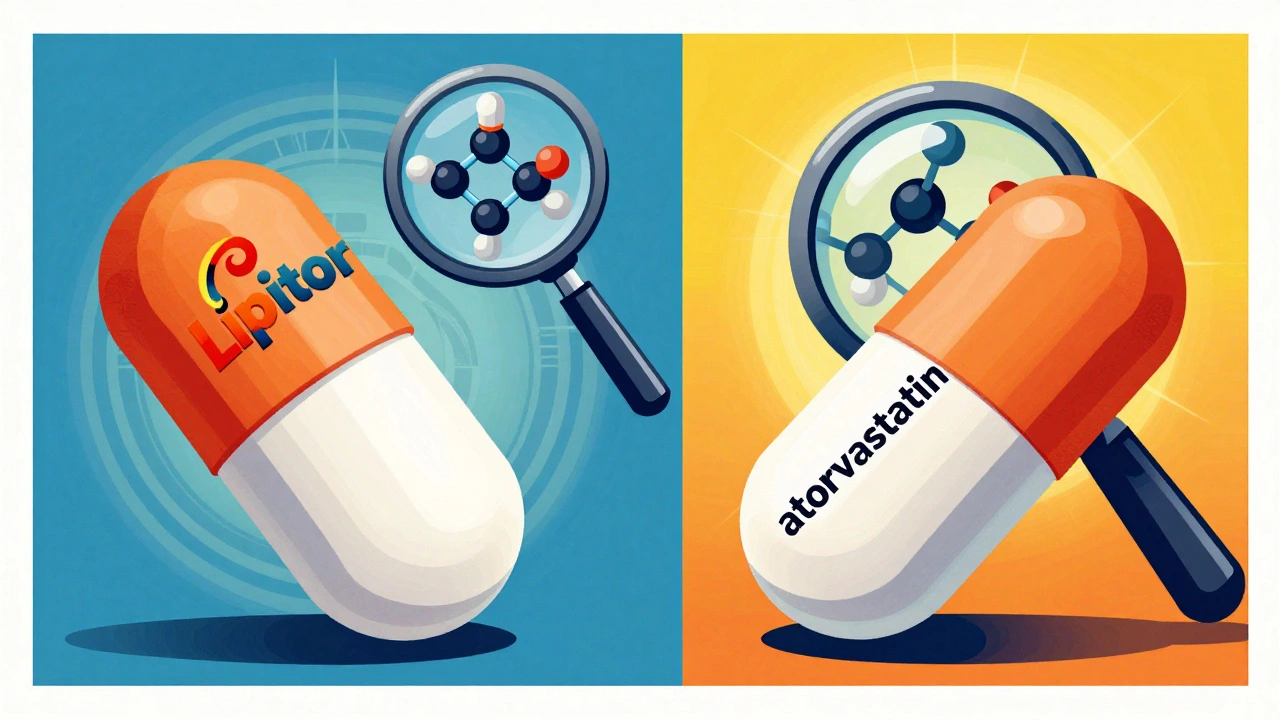
When you pick up a prescription, you might see two different pills on the counter: one with a flashy name like Lipitor, and another with a plain label saying atorvastatin. You might wonder - is the cheaper one just as good? Does the label difference mean something’s missing? The short answer is yes, they’re the same. But the details matter, and here’s what you need to know.
Same Active Ingredient, Different Look
Generic drugs aren’t knockoffs. They’re exact copies of brand-name drugs when it comes to the part that actually treats your condition. The FDA requires that every generic drug contain the same active ingredient, in the same strength, same dosage form (pill, injection, capsule), and same route of administration (taken by mouth, injected, etc.) as the original. If your brand-name drug is 20 mg of atorvastatin taken once daily, the generic must be identical in every way - except for what’s on the outside.The differences you see? Those are all about trademarks, not medicine. U.S. law says generic manufacturers can’t copy the shape, color, or logo of the brand-name drug. That’s why your blue, diamond-shaped Lipitor pill becomes a white, oval atorvastatin tablet. It’s not a different drug. It’s the same medicine in a different outfit.
Labeling: What’s Written on the Box
The label on a brand-name drug says the brand name first - like Prilosec - followed by the generic name, omeprazole. The generic label? It says only the generic name. That’s it. No marketing, no logos, no fancy fonts. But here’s the key: everything else on the label - warnings, side effects, dosing instructions, contraindications - must match the brand-name version exactly. The FDA mandates this under its 2021 guidance on prescription drug labeling. If the brand warns about liver damage, the generic must say the same thing. If the brand says to take it on an empty stomach, so does the generic.Some people get confused when they switch from brand to generic and see a completely different label. They think something changed. It didn’t. The drug inside is the same. The label just stopped being an advertisement.
Therapeutic Equivalence: How the FDA Makes Sure They Work the Same
The biggest concern people have is whether generics work as well. The FDA doesn’t just assume they do. They require proof.Every generic drug must pass a bioequivalence test. This means it must be absorbed into your bloodstream at the same rate and to the same extent as the brand-name drug. The FDA requires that the generic’s absorption falls within 80% to 125% of the brand’s levels - measured by two key numbers: Cmax (how fast it peaks) and AUC (how much total drug gets into your system over time). That’s a tight range. In fact, studies show that even different batches of the same brand-name drug can vary more than that.
These tests are done in healthy volunteers - usually 24 to 36 people - under controlled conditions. The FDA reviews every single study before approving a generic. As of 2023, over 90% of all prescriptions filled in the U.S. are for generic drugs. That’s not because they’re cheap. It’s because they’ve been proven safe and effective.
Cost Difference: Why Generics Are So Much Cheaper
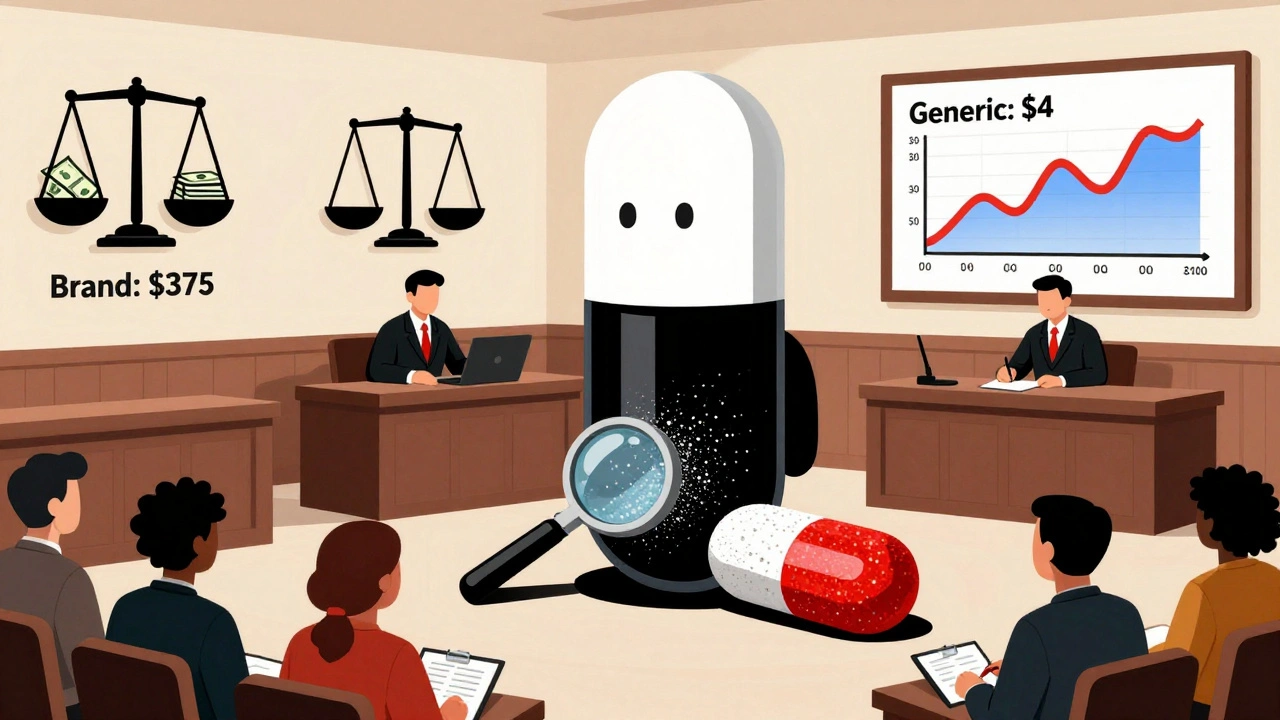
Brand-name drugs cost a lot because the company spent years and hundreds of millions developing them, running clinical trials, and marketing them. Once the patent expires, other companies can make the same drug without repeating those costs. They don’t need to run new safety trials. They don’t need to pay for TV ads. So they sell it for a fraction of the price.For example, in Q2 2023, a 30-day supply of brand-name Lipitor (atorvastatin 20 mg) cost around $375. The generic? $4 at Walmart. That’s not a typo. It’s 99% cheaper. Across the board, generics cost 80% to 85% less than their brand-name counterparts. The Congressional Budget Office found that from 2007 to 2016, generics saved the U.S. healthcare system $1.67 trillion. In 2023 alone, they saved $313 billion.
The FDA says 90% of generic drugs cost less than $10 per month. For people on fixed incomes, this isn’t a luxury - it’s the difference between taking their medicine and skipping doses.
When Generics Might Need Extra Care
Most of the time, switching from brand to generic is seamless. But there are exceptions. For drugs with a narrow therapeutic index (NTI), even tiny changes in blood levels can cause problems. These are drugs where the difference between a helpful dose and a dangerous one is very small.The FDA specifically calls out three: warfarin (a blood thinner), levothyroxine (for thyroid disease), and phenytoin (an anti-seizure drug). For these, doctors often monitor blood levels closely when switching between brands or even between different generic manufacturers. It’s not because generics are unsafe - it’s because these drugs are so sensitive. A 2021 study in JAMA Internal Medicine tracking over 2 million patients found no difference in outcomes between generic and brand-name versions of heart medications. But for NTI drugs, caution is standard practice.
Some complex drugs - like insulin, monoclonal antibodies, and auto-injectors like EpiPens - are harder to copy exactly. That’s why you don’t see as many generics for these. But that’s changing. In September 2023, the FDA approved the first generic version of semaglutide (the active ingredient in Ozempic). More complex generics are coming.
What Patients Actually Experience
Real people use generics every day. On Drugs.com, generic atorvastatin has a 6.6 out of 10 rating from nearly 2,000 reviews. Lipitor? 6.3 from under 900. That’s not a sign of inferior quality - it’s a sign of satisfaction. Over 60% of users say they saved “moderate to significant” money without noticing any difference in how the drug worked.Some patients report confusion when their pills change color or shape. A University of Michigan study found 12% of patients hesitated the first time they got a different-looking pill. That’s understandable. But no study has found that changing pill appearance leads to worse health outcomes. In fact, Kaiser Permanente found that 78% of patients who switched to generics were able to stick with their meds because they could finally afford them.
Pharmacists see it every day. One Reddit user, u/MedReviewExpert, wrote: “I’ve switched thousands of patients from brand to generic with zero therapeutic issues - except for a few cases with levothyroxine, where we watched TSH levels.” That’s the pattern: for most drugs, no problem. For a few sensitive ones, a little extra monitoring.
How Substitution Works in Practice
In 49 out of 50 U.S. states, pharmacists can automatically swap a brand-name drug for its generic unless the doctor writes “Dispense as Written” on the prescription. That’s the law. It’s not a trick. It’s designed to save money and improve access.Doctors are on board, too. The American Medical Association found that 94% of physicians feel comfortable prescribing generics. You don’t need to be a pharmacist to understand this: if two pills have the same active ingredient, same dose, and same effect - why pay more?
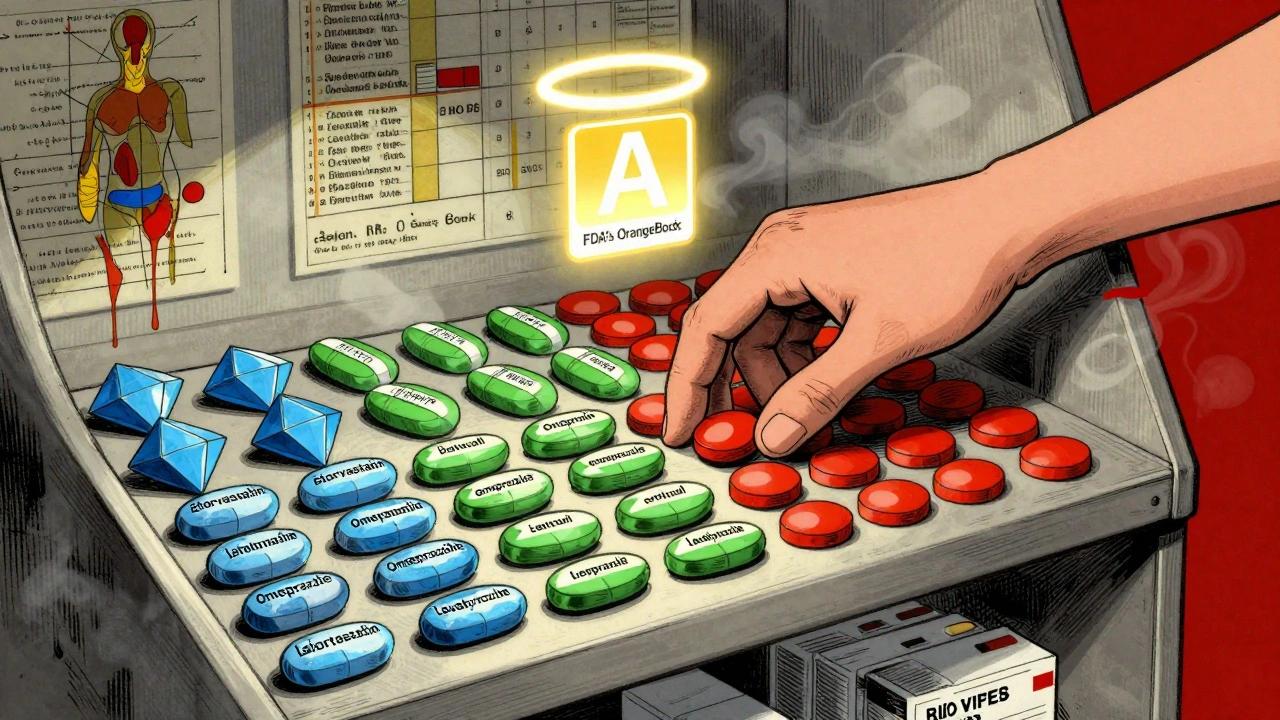
The FDA’s Orange Book is your go-to resource. It lists every approved drug and rates them for therapeutic equivalence. Look for an “A” rating - that means it’s interchangeable with the brand. Avoid drugs with “B” ratings - those aren’t considered equivalent and shouldn’t be swapped without a doctor’s approval.
What’s Next for Generic Drugs?
The future is getting more complex - and better. The FDA is prioritizing faster approval of complex generics like extended-release pills, inhalers, and topical creams. In 2022, they approved 79 complex generics - up 22% from the year before. The Generic Drug User Fee Amendments (GDUFA III), updated in 2022, cut review times to 10 months for priority applications.By 2028, over $268 billion in brand-name drug sales will lose patent protection. That means more generics will hit the market. The Generic Pharmaceutical Association projects that between 2023 and 2027, generics will save the U.S. healthcare system $3.35 trillion.
The FDA’s new Generic Drug Program Dashboard lets anyone track application status in real time. You can see exactly when a new generic is coming - and how close it is to approval. Transparency like this helps patients and providers plan ahead.
Bottom Line: Don’t Be Fooled by the Label
The pill you get from the pharmacy might look different. The box might say something different. But the medicine inside? It’s the same. The FDA doesn’t approve generics lightly. They require proof they work the same, absorb the same, and are just as safe.Cost savings are massive. Outcomes are the same. For the vast majority of drugs, choosing generic isn’t a compromise - it’s a smart, proven choice. If you’re worried about switching, talk to your pharmacist or doctor. But don’t let a different color or a plain label make you think you’re getting less.
You’re not. You’re getting exactly what you need - at a price you can afford.
Are generic drugs as effective as brand-name drugs?
Yes. The FDA requires that generic drugs contain the same active ingredient, strength, dosage form, and route of administration as the brand-name version. They must also prove bioequivalence - meaning they are absorbed into the body at the same rate and to the same extent. Studies involving millions of patients show no meaningful difference in effectiveness between generics and brand-name drugs for most conditions.
Why do generic drugs look different from brand-name drugs?
U.S. trademark laws prevent generic manufacturers from copying the shape, color, or markings of brand-name pills. This ensures patients and pharmacists can tell them apart. But these differences are only cosmetic. The active ingredient, dosage, and effectiveness are identical. The pill might look different, but it works the same.
Can I switch between different generic brands of the same drug?
For most drugs, yes. Different generic manufacturers make the same active ingredient, and they all meet FDA standards. But for drugs with a narrow therapeutic index - like warfarin, levothyroxine, or phenytoin - switching between generics can sometimes cause small changes in blood levels. In those cases, your doctor may recommend sticking with one manufacturer or monitoring your levels more closely.
Are there any drugs that don’t have generic versions?
Yes. Some complex drugs - like biologics (e.g., insulin, monoclonal antibodies), certain injectables, and drug-device combos like EpiPens - are harder to copy exactly. These require more advanced manufacturing and testing. But the FDA is approving more complex generics every year. In 2023, the first generic version of semaglutide (Ozempic) was approved, and more are expected.
How do I know if a generic is approved by the FDA?
Check the FDA’s Orange Book, which lists all approved drug products with therapeutic equivalence ratings. Look for an “A” rating - that means the generic is considered interchangeable with the brand. You can also ask your pharmacist or search the FDA’s online database. All approved generics must meet the same quality, safety, and efficacy standards as brand-name drugs.
Do generic drugs have the same side effects as brand-name drugs?
Yes. The FDA requires generic drug labels to include the same warnings, side effects, and contraindications as the brand-name version. Any side effects you might experience come from the active ingredient, not the inactive ingredients like fillers or dyes. While some people report feeling different after switching, studies show this is usually due to expectation or placebo effect - not actual differences in the drug’s effect.
Why do some people say generics don’t work for them?
Sometimes, it’s about perception. Changing pill color or size can make people think the drug is different, even when it isn’t. Other times, patients are switching from one generic to another, and small variations in inactive ingredients (like fillers) can cause minor stomach upset - but not reduced effectiveness. Rarely, for NTI drugs like levothyroxine, a switch between manufacturers might require a slight dose adjustment. If you feel different after switching, talk to your doctor - but don’t assume the generic is inferior.
Can pharmacists substitute generics without my doctor’s permission?
In 49 U.S. states, yes - unless your doctor writes “Dispense as Written” on the prescription. This is called automatic substitution and is designed to lower costs and increase access. Pharmacists are trained to know which substitutions are allowed and when they’re not appropriate. If you prefer to stay on the brand-name drug, you can always ask - but you may pay more.


