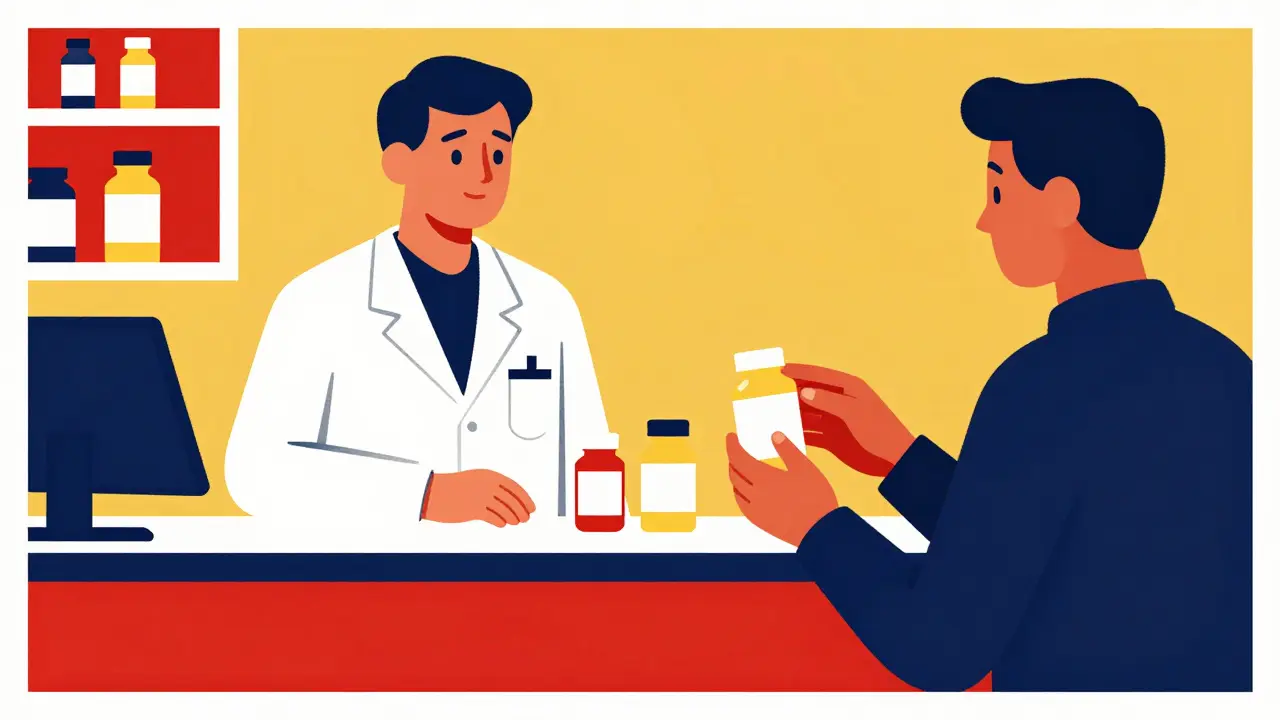
You've probably noticed it at the pharmacy counter more than once. The pharmacist hands you a pill that looks completely different from the one you took last month-maybe a different color, maybe a different shape-but the price tag is nearly ten times lower. You pause. Is your health worth saving that money? The reality is that Generic Drugspharmaceutical products containing identical active ingredients to brand-name counterparts, approved after patent expiration via the Abbreviated New Drug Application pathway. save Americans billions every year, yet concerns about their effectiveness persist. If you're worried whether swapping your medication puts you at risk, understanding how these approvals work can settle the debate.
The Regulatory Backbone Behind Generic Approval
It's easy to assume that because a company didn't invent the drug, they cut corners on safety. That isn't how the system works. The process is governed by strict federal laws, specifically the Hatch-Waxman Act of 1984, which created a specific pathway for companies to prove their version matches the original. The United States Food and Drug Administration (FDA) requires manufacturers to submit an Abbreviated New Drug Application (ANDA). This isn't just a formality. It demands rigorous proof that the generic performs identically to the Reference Listed Drug (RLD)-the original brand-name product.
To get approval, a generic manufacturer must demonstrate bioequivalence. This technical term means the body absorbs the generic medicine at roughly the same rate and to roughly the same extent as the brand version. They test this using pharmacokinetic studies involving healthy volunteers. For most drugs, the FDA accepts results where the 90% confidence interval for key measures-like maximum concentration (Cmax) and total exposure (AUC)-falls within an 80-125% range. You might hear people say this means the generic is "less than 80% as effective," but that is a fundamental misunderstanding. The range allows for natural biological variability between humans. The goal isn't exact precision down to the decimal point, but therapeutic equivalence.
Active Ingredients vs. Inactive Additives
Where confusion often lies is in what makes up the pill itself. A generic drug must contain the exact same active pharmaceutical ingredient (API) as the brand-name version, in the exact same strength. However, the FDA does allow differences in what are called "inactive ingredients." These include fillers, binders, dyes, and flavorings. Manufacturers change these to distinguish their product or because the original formula relied on a proprietary dye that hasn't been patented for decades.
While usually harmless, these differences matter for specific groups. Someone with a severe allergy to red dye 40, for example, might react to a generic formulation that contains it, even if the brand version does not. Similarly, variations in preservatives can impact patients with compromised immune systems. Documentation here used to be spotty, but recent transparency initiatives have improved label readability. Despite this variation in the delivery vehicle, the active ingredient remains chemically identical, ensuring the therapeutic effect stays consistent for the vast majority of users.
| Feature | Generic Drug | Brand-Name Drug |
|---|---|---|
| Active Ingredient | Identical | Original Standard |
| Bioavailability | Within 80-125% Range | Established Baseline |
| Color/Shape | Different allowed | Proprietary Design |
| Price | Typically 80-85% less | Market Rate |
| Manufacturing Standards | CGMP Compliance Required | CGMP Compliance Required |
Evidence of Safety and Clinical Outcomes
Does the science back up the regulations? Data suggests the answer is overwhelmingly yes. According to FDA 2021 statistics, generic drugs accounted for approximately 90.2% of all prescriptions filled in the U.S. During that period, they represented only 19.3% of total drug spending. This massive utilization wouldn't be possible if catastrophic failures were common. Facilities manufacturing these drugs undergo Current Good Manufacturing Practices (cGMP) inspections. In 2022, 98.7% of generic manufacturing sites passed FDA inspections, a slightly higher pass rate than brand-name facilities (97.3%).
Clinical evidence generally supports therapeutic equivalence. A major study published in Nature analyzed 17 cardiovascular drugs and found that generics were often comparable or superior to branded versions regarding mortality rates. Another large-scale analysis showed fewer major adverse cardiac events in patients taking generic versions of certain heart medications. However, science is rarely black and white. Some smaller studies have flagged specific discrepancies. For instance, a Harvard Health study examined older adults switched to generic blood pressure meds and noted a short-term increase in hospitalization rates immediately following the switch. While controversial, this highlights that for some individuals, the transition itself-or subtle differences in absorption-can trigger instability.
The Narrow Therapeutic Index Exception
There is a specific category of medication where the margin for error is razor-thin. These are Narrow Therapeutic Index (NTID) drugs. With standard medications, a slight variance in dosage rarely changes how well the drug works. With NTIDs, even a small deviation-outside the strict limits of standard bioequivalence-can lead to toxicity or treatment failure. Common examples include warfarin (a blood thinner), levothyroxine (for thyroid conditions), and phenytoin (an anticonvulsant).
Recognizing this risk, the FDA applies stricter controls for these products. Instead of the standard 80-125% acceptance range, NTIDs must meet a tighter limit of 90-112%. Even then, medical consensus often suggests keeping patients on the same manufacturer's product to avoid any fluctuation. If you take warfarin or thyroid medication, the safest approach is usually to ensure your insurance or pharmacy consistently stocks one specific brand or manufacturer of the generic. Switching brands repeatedly can cause blood levels to drift, mimicking a disease flare-up even if the underlying condition is stable.

Managing the Switch: What Patients Should Know
Transitioning from brand to generic shouldn't feel risky, but preparation helps. First, check your medication's active ingredient on the label. If you're unsure, ask the pharmacist to verify the equivalence code, often listed in the FDA's "Orange Book." This resource lists approved therapeutic equivalences. Second, monitor your own response. Adherence often drops during transitions simply due to psychological factors-if you doubt the pill works, you might forget to take it. A 2021 study found a 5.3% reduction in adherence during the first 90 days after substitution.
If you experience unusual symptoms-breakthrough pain, mood swings, or erratic lab values-don't blame yourself immediately. Document the timeline and report it to your doctor. In some documented cases, patients with epilepsy reported seizures returning after switching to a generic version of levetiracetam. While rare, these instances validate that individual physiology plays a role. Your healthcare provider can request a "dispense as written" override if a specific brand is medically necessary for you, allowing your insurance to cover the brand rather than forcing the swap.
Are generic drugs exactly the same as brand-name drugs?
Generics must have the exact same active ingredient, strength, and dosage form. However, inactive ingredients like fillers and colors can differ. They also follow the same manufacturing safety standards under FDA oversight.
Is it safe to switch between generic manufacturers?
For most drugs, yes. However, for narrow therapeutic index drugs like thyroid medication or seizure meds, consistency is key. Ask your pharmacist to try to dispense the same manufacturer whenever possible.
Why are generic drugs so much cheaper?
Brand-name companies spend billions developing new drugs and marketing them. Generic manufacturers skip the initial R&D costs since the patent has expired, allowing them to sell the same therapy at 80-85% less.
Can I trust the FDA approval of generics?
Yes. The FDA conducts rigorous inspections and requires bioequivalence studies. As of 2022, over 98% of generic manufacturing facilities passed FDA inspections, meeting the same GMP standards as brand-name facilities.
What should I do if my generic doesn't seem to work?
Contact your doctor immediately. Sometimes the difference is inactive ingredients affecting absorption. Your provider may order blood tests to confirm drug levels or prescribe a brand-name alternative if clinically indicated.
Moving Forward with Confidence
The global market for generic pharmaceuticals is projected to reach over $700 billion by 2028, reflecting a reliance on these medicines for affordable care. By 2027, it is estimated that nearly 94% of all U.S. prescriptions will be for generic versions. This shift is essential for the sustainability of healthcare. While skepticism is natural when it comes to your own biology, the data confirms that generic drugs are a cornerstone of modern medicine safety. Understanding the nuances-especially regarding narrow therapeutic index drugs-allows you to use this cost-saving tool effectively without unnecessary worry.


