
Most people know fiber is good for digestion, but few realize soluble fiber and insoluble fiber do completely different jobs in your gut. One softens stools and steadies blood sugar. The other adds bulk and speeds things along. Getting the right mix isn’t just about avoiding constipation-it’s about calming inflammation, balancing your microbiome, and even improving your mood.
What soluble fiber actually does in your gut
Soluble fiber doesn’t just pass through your system. It absorbs water and turns into a thick, gel-like substance-like oatmeal turning into mush when you add hot water. That gel slows down digestion, which means sugar from your meal enters your bloodstream more gradually. Studies show this can cut post-meal blood sugar spikes by 20-30%. That’s why people with prediabetes or type 2 diabetes often feel better when they eat more oats, beans, or chia seeds.
But here’s the real magic: your gut bacteria eat soluble fiber. They ferment it and produce short-chain fatty acids-especially butyrate. Butyrate is like fertilizer for the cells lining your colon. It reduces inflammation, strengthens your gut barrier, and even sends signals to your brain that help regulate appetite and stress. Research from UCLA and the University of Michigan confirms this process supports the gut-brain axis. People who eat more soluble fiber report better mood and less brain fog over time.
Good sources? Oats (1-2 grams per 100g), lentils (2-3g per 100g), apples (1.4g per medium apple), chia seeds (5.6g per 30g serving), and psyllium husk. These aren’t just fiber supplements-they’re whole foods packed with antioxidants, vitamins, and polyphenols that work together with the fiber.
What insoluble fiber actually does in your gut
Insoluble fiber doesn’t dissolve. It’s like a sponge that soaks up water and pushes everything along. Think of it as nature’s broom. It adds bulk to stool, increases its weight by 30-50%, and speeds up transit time by 24-48 hours. That’s why whole wheat bread, bran, nuts, and vegetable skins are so effective for chronic constipation.
It’s also linked to lower rates of diverticular disease-a condition where small pouches form in the colon wall. Long-term studies show people who eat more insoluble fiber reduce their risk by up to 40%. That’s not a small number. It’s one of the strongest protective effects any single nutrient has.
But here’s the catch: insoluble fiber can make things worse if your gut is already inflamed. During flare-ups of Crohn’s disease or ulcerative colitis, rough, fibrous foods like raw broccoli, bran cereal, or whole nuts can irritate the lining. Experts recommend limiting insoluble fiber to 10-15 grams per day during active flares, then slowly increasing it as symptoms improve.
Best sources? Whole-wheat flour (7.9g per 100g), wheat bran (12g per 100g), almonds (3.5g per 30g), kiwi (2.5g per fruit, especially with the skin), and the skins of potatoes and cucumbers. Don’t peel your veggies unless you have to.
Why you need both-not just one
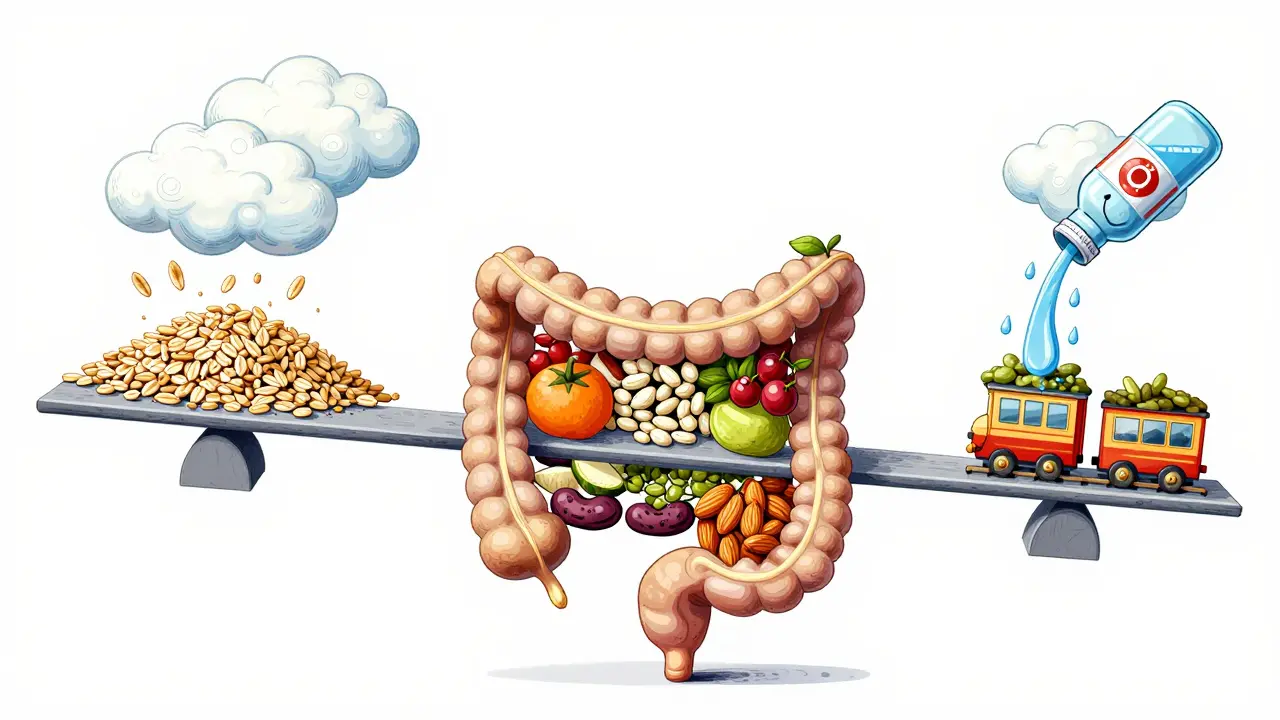
It’s not a competition. Your gut needs both types working together. Soluble fiber calms and feeds. Insoluble fiber clears and moves. Together, they create balance.
Take the Mediterranean Diet. It’s not just about olive oil and fish. It’s loaded with legumes, whole grains, nuts, fruits, and vegetables-delivering about 30-50 grams of total fiber daily, with a rough 3:1 ratio of insoluble to soluble. That’s the sweet spot. It’s why people on this diet have lower rates of heart disease, diabetes, and colon cancer.
Studies show soluble fiber lowers LDL cholesterol by 5-10% when you eat 5-10 grams daily. Insoluble fiber improves insulin sensitivity by 10-15%. Neither works as well alone. You need the combo.
And here’s something most people miss: fiber works best when it’s varied. Eating only oats for soluble fiber and only bran for insoluble? That’s not diversity. Your gut bacteria thrive on variety. Try a bowl of lentil soup with chopped carrots and a sprinkle of flaxseed. Add an apple with the skin. Snack on almonds. That’s how you get the full range of benefits.

How much do you really need?
The Institute of Medicine recommends 25 grams per day for women under 50 and 38 grams for men. But the average American eats only 15 grams. That’s less than half.
Trying to jump from 15 to 35 grams overnight? You’ll bloat. You’ll gas. You might even feel worse. That’s why experts say: go slow. Add 5 grams per week. That’s one extra serving of beans, or half an avocado, or a tablespoon of chia seeds soaked overnight.
And don’t forget water. Every 25 grams of fiber needs at least 1.5 to 2 liters of water. Otherwise, insoluble fiber can turn into a cement-like mass in your colon. That’s not a joke. People end up in the ER because they ate a big bowl of bran cereal and drank nothing but coffee.
What about fiber supplements?
Psyllium husk (Metamucil) is the most studied soluble fiber supplement. It works. But it’s not better than whole foods. In fact, research shows isolated fiber supplements can’t replicate the complex mix of nutrients, antioxidants, and phytochemicals found in plants.
A 2024 review in PMC concluded: “Isolated fiber supplements cannot replicate the complex matrix of whole plant foods.” That means even the best fiber pill is missing the team. You’re not just getting fiber-you’re getting vitamin C, magnesium, polyphenols, and anti-inflammatory compounds that work together.
Supplements might help short-term if you’re severely deficient or have a medical condition. But long-term? Stick to food. Beans, berries, oats, broccoli, flaxseeds, and nuts are cheaper, tastier, and far more powerful.
Special cases: IBS, IBD, and gut sensitivity
If you have IBS, soluble fiber is your friend. Oats, bananas, and psyllium often reduce both diarrhea and constipation. One Reddit survey of 147 people with IBS found 68% felt better within two weeks of adding soluble fiber daily.
If you have IBD-Crohn’s or ulcerative colitis-during a flare-up, dial back insoluble fiber. Skip raw veggies, nuts, seeds, and whole grains. Stick to peeled fruits, cooked carrots, white rice, and oatmeal. Once symptoms calm, slowly reintroduce insoluble fiber. The goal is 25-30 grams total fiber per day, not zero.
And if you’re unsure? Keep a food journal. Note what you eat and how you feel 12-24 hours later. You’ll start seeing patterns. Maybe chia seeds make you feel great. Maybe broccoli triggers bloating. That’s your personal data. Use it.
Real food, real results
You don’t need fancy supplements or expensive gut tests. Start simple:
- Swap white bread for whole grain or rye.
- Add a half-cup of lentils or black beans to your lunch 3 times a week.
- Snack on an apple or pear with the skin on.
- Stir a tablespoon of ground flaxseed into your yogurt or smoothie.
- Keep a water bottle handy-sip all day.
Do this for four weeks. Then check in. Are you going to the bathroom more regularly? Less bloated? Fewer sugar crashes after meals? Better mood? That’s the fiber effect.
It’s not magic. It’s biology. Your gut bacteria are alive. They need fuel. And the best fuel? Whole plants. Not pills. Not powders. Real food.
Can soluble fiber help with diarrhea?
Yes. Soluble fiber forms a gel that thickens loose stools and slows down rapid transit. People with IBS or traveler’s diarrhea often find relief with oats, psyllium, or bananas. It doesn’t stop diarrhea by blocking it-it regulates it.
Does insoluble fiber cause bloating?
It can, especially if you increase intake too fast or don’t drink enough water. Insoluble fiber absorbs water and expands. Without enough fluid, it can cause gas and discomfort. The fix? Add fiber slowly and drink at least 1.5-2 liters of water daily.
Which fiber is better for weight loss?
Both help, but in different ways. Soluble fiber slows digestion and boosts satiety hormones like GLP-1 and peptide YY, reducing hunger by 20-25%. Insoluble fiber adds bulk and helps you feel full faster. Together, they make it easier to eat less without feeling deprived.
Is fiber good for your liver?
Indirectly, yes. Soluble fiber lowers LDL cholesterol and reduces fat buildup in the liver. It also helps regulate blood sugar, which reduces insulin resistance-a major driver of fatty liver disease. Studies link high-fiber diets to lower rates of NAFLD (non-alcoholic fatty liver disease).
Can you get too much fiber?
It’s rare, but possible. More than 70 grams per day can interfere with mineral absorption (like zinc and iron) and cause cramping or diarrhea. Most people don’t come close. The real issue is not enough fiber-not too much. Stick to the 25-38 gram range unless advised otherwise by a doctor.


