Acne Treatment Finder
Find Your Best Acne Treatment
Answer these 3 questions to get a personalized recommendation based on your acne type and skin concerns
Acne doesn’t just show up on your face-it shows up in your confidence. If you’ve tried cleansers, toners, and over-the-counter spot treatments with little to no results, you’re probably considering prescription options. Differin (adapalene) is one of the most popular choices, but it’s not the only one. So how does it stack up against other acne treatments? And more importantly, which one actually works for your skin type, budget, and lifestyle?
What is Differin (Adapalene)?
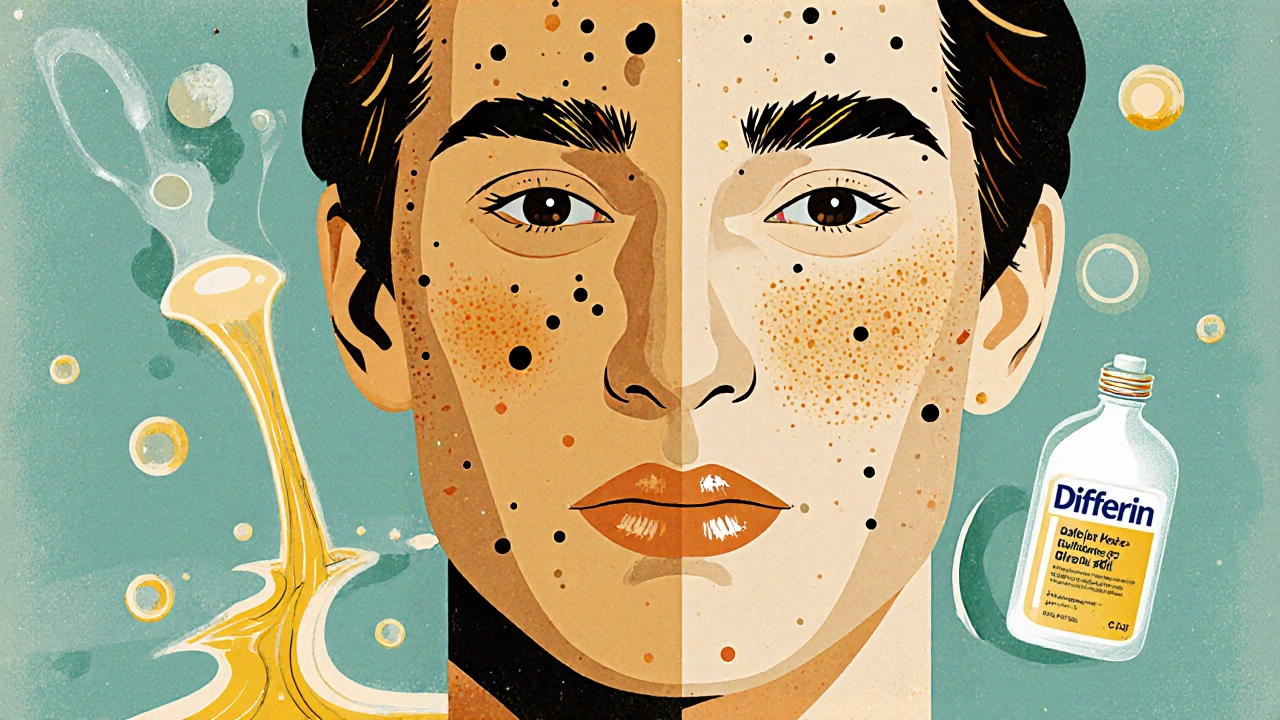
Differin is a topical retinoid containing adapalene, a third-generation retinoid approved by the FDA for treating acne vulgaris. Also known as adapalene gel, it was first introduced in the U.S. in 1996 and became available over-the-counter in 2016.
Unlike older retinoids like tretinoin, adapalene is more stable and less irritating. It works by unclogging pores, reducing inflammation, and preventing new breakouts from forming. It doesn’t kill bacteria-it reprograms how your skin cells behave. That’s why it’s often recommended for mild to moderate acne, especially blackheads and whiteheads.
Most people see results in 8 to 12 weeks. It’s not a quick fix. But if you stick with it, studies show up to 85% of users experience significant improvement. It’s also one of the few acne treatments safe to use long-term without losing effectiveness.
How Differin Compares to Tretinoin
Tretinoin (Retin-A) has been the gold standard for decades. It’s stronger, faster, and more effective for severe acne and anti-aging-but also more irritating.
Here’s the real difference:
- Differin is gentler. You can usually use it every night from day one without redness or peeling.
- Tretinoin often causes flaking, burning, and sensitivity. Many people need to start with every other night just to tolerate it.
- Effectiveness: Tretinoin clears acne slightly faster in clinical trials-about 20% more effective after 12 weeks. But Differin catches up by week 24.
- Cost: Generic tretinoin is cheaper than Differin, but Differin is now available without a prescription, making it more accessible.
If you have sensitive skin or are new to retinoids, Differin is the safer starting point. If you’ve tried Differin and still have stubborn cystic acne, tretinoin might be your next step.
Benzoyl Peroxide: The Bacterial Killer
Benzoyl peroxide (BP) works completely differently. It kills acne-causing bacteria (Cutibacterium acnes) and reduces inflammation. It’s also great at preventing antibiotic resistance.
Where Differin is a long-term skin regenerator, benzoyl peroxide is a frontline fighter.
- Speed: BP can reduce redness and swelling in days, not weeks.
- Irritation: It can bleach towels, pillowcases, and hair. It also dries out skin more than Differin.
- Combination use: Many dermatologists prescribe Differin and BP together. One targets pores, the other targets bacteria. A 2023 study in the Journal of the American Academy of Dermatology showed this combo cleared acne 30% faster than either alone.
But if your acne is mostly clogged pores (blackheads), BP won’t help much. That’s where Differin shines.

Clindamycin: The Antibiotic Option
Clindamycin is a topical antibiotic often paired with benzoyl peroxide. It’s prescribed for inflammatory acne-red, swollen pimples and pustules.
Here’s the catch: antibiotics like clindamycin are not meant for long-term use. Overuse leads to resistant bacteria, which makes future treatments less effective.
- Use case: Best for short-term flare-ups, not maintenance.
- Effectiveness: Good for reducing redness quickly, but doesn’t prevent new breakouts like Differin does.
- Risk: The FDA warns that topical antibiotics should never be used alone for acne. Always combine with BP or retinoids.
Differin is the better long-term solution. Clindamycin is a band-aid. Use it to calm down a bad breakout, then switch to Differin to keep your skin clear.
Other Alternatives: Salicylic Acid, Azelaic Acid, and More
Salicylic acid is a beta-hydroxy acid found in many OTC products. It’s great for exfoliating and unclogging pores, but it’s weaker than adapalene. You’ll need to use it daily for months to see results.
Azelaic acid (Finacea, Azelex) is another prescription option. It reduces redness, kills bacteria, and fades post-acne marks. It’s gentler than Differin and safe during pregnancy. But it’s more expensive and takes longer to work.
Niacinamide (vitamin B3) is trending in skincare. It helps regulate oil and calm inflammation. But it’s not strong enough on its own for moderate to severe acne. Think of it as a helper, not a replacement.
Isotretinoin (Accutane) is the nuclear option-oral, powerful, and reserved for severe, treatment-resistant acne. It’s not a direct alternative to Differin. It’s a different league entirely.
Which One Should You Choose?
There’s no one-size-fits-all. Your skin type, acne severity, budget, and tolerance matter.
| Treatment | Best For | Time to See Results | Side Effects | Prescription Needed? |
|---|---|---|---|---|
| Differin (Adapalene) | Clogged pores, blackheads, mild-moderate acne | 8-12 weeks | Mild dryness, peeling | No |
| Tretinoin | Severe acne, anti-aging, stubborn breakouts | 6-10 weeks | Redness, peeling, sun sensitivity | Yes |
| Benzoyl Peroxide | Inflammatory pimples, bacterial acne | 2-4 weeks | Dryness, bleaching, irritation | No |
| Clindamycin | Red, swollen pimples (short-term) | 4-6 weeks | Minor irritation, antibiotic resistance risk | Yes |
| Azelaic Acid | Redness, post-acne marks, sensitive skin | 8-16 weeks | Mild stinging, dryness | Yes |
Here’s a simple guide:
- Blackheads and clogged pores? Start with Differin.
- Red, angry pimples? Add benzoyl peroxide.
- Already tried Differin and nothing changed? Talk to a dermatologist about tretinoin or azelaic acid.
- Want something gentle and safe during pregnancy? Azelaic acid or niacinamide.
- Just want to kill bacteria fast? Benzoyl peroxide for 4-6 weeks, then switch to Differin.

Common Mistakes People Make
Even when people pick the right treatment, they mess up the routine.
- Using too much. A pea-sized amount for your whole face is enough. More doesn’t mean faster results.
- Applying to wet skin. Always wait 15-20 minutes after washing your face. Wet skin increases irritation.
- Skipping sunscreen. All retinoids make your skin sun-sensitive. You need SPF 30+ every day, even in winter.
- Stopping too soon. Most people quit at week 6 because their skin looks worse before it gets better. That’s normal. Stick with it.
- Layering too many actives. Don’t use Differin with physical scrubs, AHA/BHA peels, or vitamin C all at once. You’ll irritate your skin barrier.
What to Do If Differin Doesn’t Work
If you’ve used Differin daily for 12 weeks with no improvement, it’s time to reassess.
First, check your routine. Are you using it correctly? Are you moisturizing? Are you wearing sunscreen? Sometimes the issue isn’t the product-it’s how you’re using it.
If your routine is solid and you’re still breaking out, you might have hormonal acne, cystic acne, or a different skin condition like rosacea. A dermatologist can test for this.
They might switch you to tretinoin, prescribe a combination product like Epiduo (adapalene + benzoyl peroxide), or consider oral medications like spironolactone or low-dose antibiotics.
Final Thoughts
Differin isn’t the strongest acne treatment out there-but it’s one of the most balanced. It’s effective, affordable, accessible, and gentle enough for daily use. That’s why it’s the #1 recommended retinoid by dermatologists for beginners.
But acne is personal. What works for your friend might do nothing for you. The key is to match the treatment to your acne type-not your Instagram feed.
If you’re just starting out, Differin is the smartest first step. If you’ve been stuck for months, don’t keep cycling through products. Talk to a professional. Your skin deserves more than trial and error.
Is Differin better than benzoyl peroxide?
It depends on your acne. Differin targets clogged pores and prevents new breakouts. Benzoyl peroxide kills bacteria and reduces redness fast. For blackheads and whiteheads, Differin wins. For red, inflamed pimples, benzoyl peroxide works quicker. Many people use both together for best results.
Can I use Differin with vitamin C or niacinamide?
Yes, but not at the same time. Use vitamin C or niacinamide in the morning and Differin at night. Mixing them can irritate your skin. Niacinamide can actually help reduce the redness caused by Differin, so it’s a good partner when used correctly.
Does Differin cause purging?
Yes, it can. Purging means your skin is clearing out clogged pores faster than usual. You might see more breakouts in the first 4-6 weeks. This is normal and different from an allergic reaction. If breakouts get worse after 8 weeks, stop and consult a dermatologist.
Is Differin safe during pregnancy?
Adapalene is classified as Category C by the FDA, meaning animal studies showed risk but human data is limited. Most dermatologists consider it low-risk for topical use during pregnancy, especially compared to oral retinoids. Still, talk to your doctor. Azelaic acid is often recommended as a safer alternative.
How long should I use Differin before seeing results?
Most people see improvement between 8 and 12 weeks. Some notice changes as early as 4 weeks, especially in redness. But full results take time. Don’t give up before week 12. Acne treatments work slowly because they’re changing how your skin behaves, not just covering up blemishes.
Can I use Differin with retinol?
No, not at the same time. Both are retinoids. Using them together increases irritation without adding benefit. If you want anti-aging results, stick with Differin at night and add a gentle peptide moisturizer. Retinol is not stronger than adapalene-it’s just older and less stable.
If you’re unsure where to start, begin with Differin. It’s the most balanced, evidence-backed option for most people. Track your progress for 12 weeks. If nothing changes, it’s time to see a dermatologist-not just buy another product.


