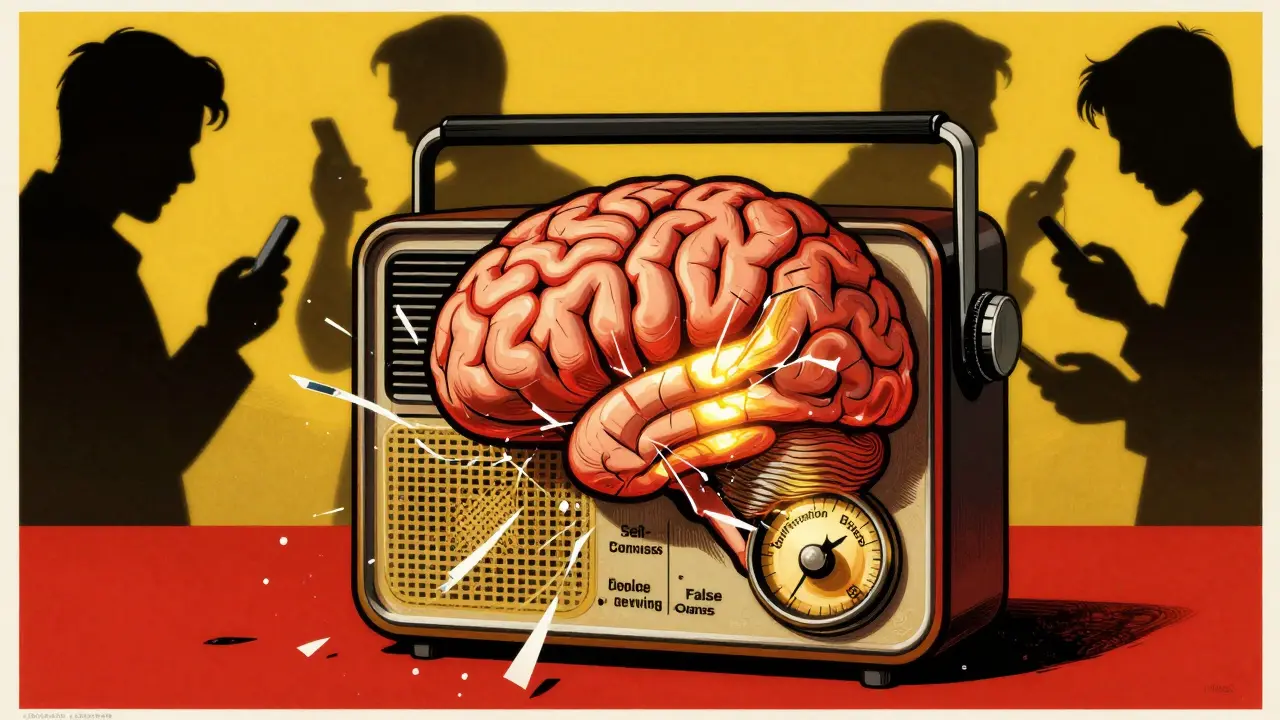
Every time you scroll through social media, make a quick decision at work, or react to someone else’s opinion, your brain is running on autopilot. It’s not laziness-it’s biology. Your mind uses mental shortcuts called cognitive biases to process information fast. But these shortcuts don’t just save time-they twist how you see the world. And they do it without you even noticing.
Here’s the uncomfortable truth: if you believe something strongly, your brain will filter out anything that contradicts it. That’s not a personality flaw. It’s a hardwired feature. Studies show that 97.3% of human decisions are influenced by these unconscious patterns. You think you’re being rational? You’re not. You’re just following a script your brain wrote long ago.
How Your Beliefs Rewrite Reality
Take confirmation bias-the most powerful of all cognitive biases. It’s the tendency to notice, remember, and believe information that matches what you already think. A 2021 meta-analysis found it has the strongest effect size (d=0.87) of any bias in shaping responses. In one study, people who believed climate change was a hoax dismissed scientific reports even when those reports came from trusted sources. Meanwhile, those who believed in it accepted the same data without question. The facts didn’t change. Their beliefs did.
Neuroscience confirms this. fMRI scans show that when people encounter information that supports their beliefs, the ventromedial prefrontal cortex lights up-this is the brain’s reward center. But when they face opposing views, the dorsolateral prefrontal cortex, which handles logic and critical thinking, shuts down. Your brain literally stops thinking when challenged. It doesn’t argue. It ignores.
The Hidden Cost of Belief-Driven Responses
This isn’t just about opinions. It’s about life-and-death consequences.
In healthcare, diagnostic errors caused by cognitive bias account for 12-15% of adverse events, according to Johns Hopkins Medicine. A doctor who believes a patient is “just anxious” might overlook signs of a heart attack. A nurse who assumes an elderly patient is “just confused” might miss a stroke. These aren’t rare mistakes. They’re predictable outcomes of belief-driven thinking.
Legal systems aren’t immune either. A 2021 University of Virginia study found that confirmation bias increases wrongful conviction rates by 34%. Eyewitnesses, jurors, even judges-all of them filter evidence through their existing beliefs. The Innocence Project found that 69% of DNA-exonerated cases involved eyewitness misidentification, mostly because the witness “knew” what they saw, even when they didn’t.
And then there’s money. Dalbar’s 2023 report shows that overconfidence bias leads to 25-30% of investment errors. People think they “know the market” and hold onto losing stocks too long, or sell winning ones too early. The result? Investors with the strongest optimism bias earn 4.7 percentage points less annually than those who stay grounded in data.
Why You Think You’re Fair (But You’re Not)
Here’s the kicker: you think you’re less biased than everyone else.
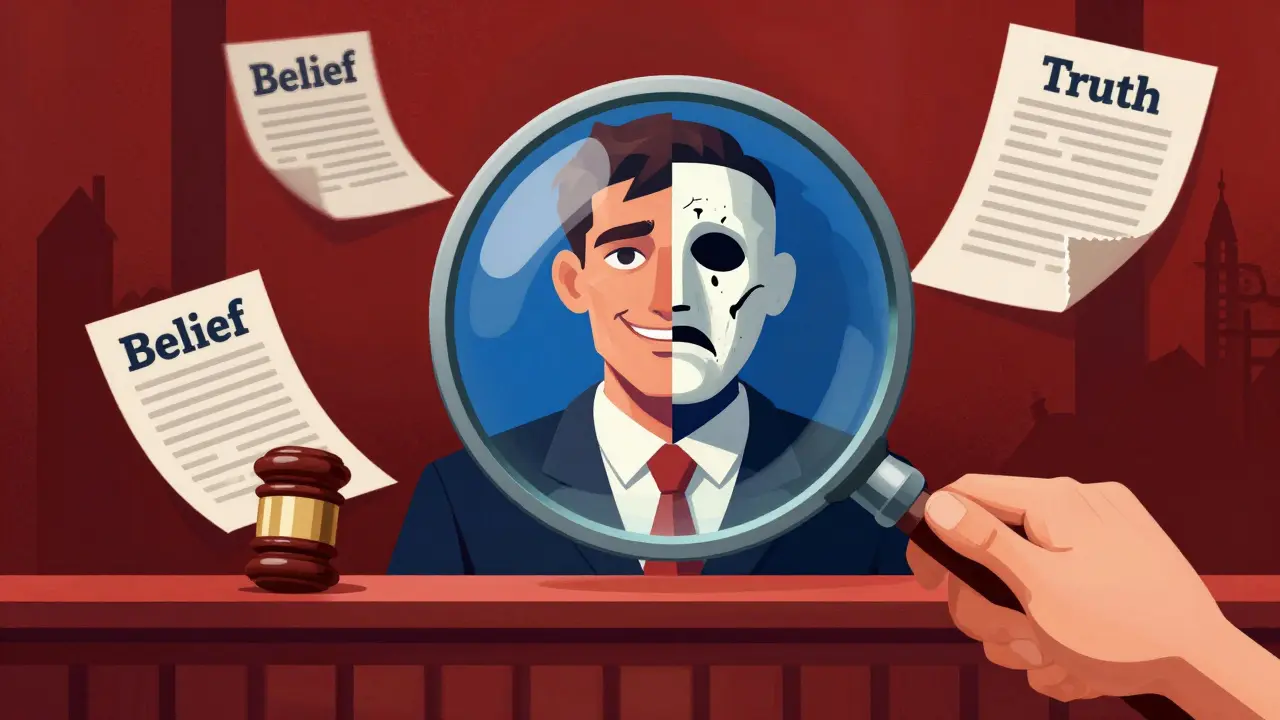
A 2002 Princeton study found that 85.7% of people rated themselves as less biased than their peers. This is called the “bias blind spot.” You’ll admit that others are irrational, but you? You’re the exception. You’re the one who sees clearly.
Even worse, you assume others think like you. That’s the false consensus effect. In a 1987 study across 12 countries, people overestimated how much others agreed with them by an average of 32.4 percentage points. If you think your political views are mainstream, you’re wrong. If you believe your parenting style is “normal,” you’re probably not. Your brain assumes your beliefs are universal-because it’s easier than admitting they’re personal.
And then there’s self-serving bias. You take credit when things go well. Blame traffic, bad luck, or your team when they don’t. A 2023 Harvard Business Review study tracked 2,400 managers and found those with strong self-serving bias had 34.7% higher team turnover. Why? Because their employees felt like they were never good enough-until something went wrong, then it was everyone else’s fault.
How to Break the Pattern
You can’t stop your brain from using biases. But you can stop letting them run the show.
One proven method is called “consider-the-opposite.” Before you react to something, force yourself to argue against your own position. University of Chicago researchers found this reduces confirmation bias by 37.8%. It’s not about changing your mind. It’s about slowing your reaction.
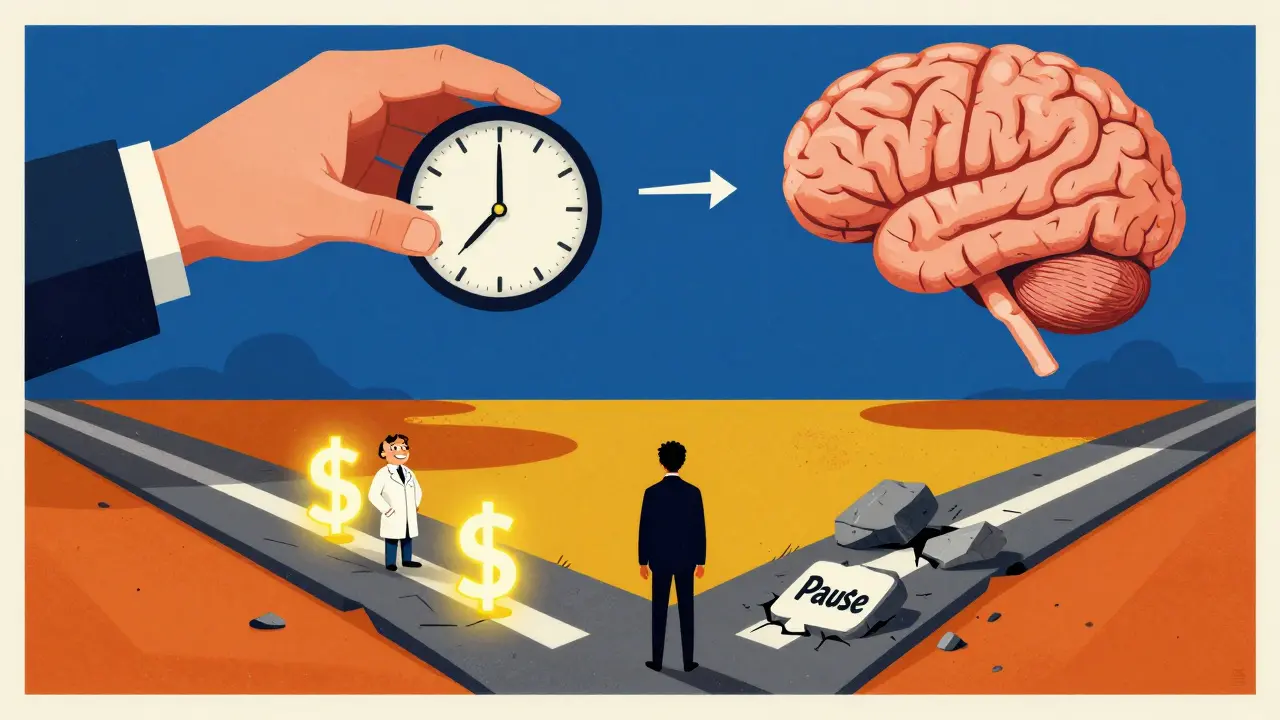
In medicine, hospitals using a simple protocol-requiring doctors to list three alternative diagnoses before finalizing one-cut diagnostic errors by 28.3%. That’s not rocket science. It’s just structure. You don’t need to be a genius. You just need to pause.
Another tool? Real-time feedback. IBM’s Watson OpenScale monitors AI decision-making for bias patterns and flags when responses are shaped by belief rather than data. The system cuts bias in automated decisions by 34.2%. Humans can do the same. Write down your initial reaction. Then wait 24 hours. Re-read it. Ask: “Did I respond because it was true-or because it felt right?”
Training works. Cognitive Bias Modification (CBM) programs, tested in 17 randomized trials, reduce belief-driven responses by 32.4% after just 8-12 sessions. But here’s the catch: you have to stick with it. Stanford’s 2023 study found that 63.7% of bias-mitigation apps fail after three months. Why? Because change isn’t a one-time fix. It’s a daily practice.
What’s Changing Now
This isn’t just psychology-it’s policy.
In 2024, the FDA approved the first digital therapeutic for cognitive bias modification, developed by Pear Therapeutics. It’s not a drug. It’s an app that trains your brain to spot its own distortions. The European Union’s AI Act, effective February 2025, requires all high-risk AI systems to undergo bias assessments. Non-compliance? Fines up to 6% of global revenue.
Google’s “Bias Scanner” API now analyzes over 2.4 billion queries monthly, flagging language that reflects belief-driven thinking. And 28 U.S. states have made cognitive bias literacy part of high school curricula as of 2024. This isn’t niche anymore. It’s becoming foundational.
The global market for behavioral insights-tools designed to reduce these distortions-hit $1.27 billion in 2023. Healthcare leads adoption, with 72 of the top 100 U.S. hospitals now training staff. Financial services aren’t far behind, thanks to SEC rules requiring bias mitigation in investment advice since 2022.
Even Nobel laureate Daniel Kahneman, who helped start this field, says we’re stuck between two systems: the fast, automatic one (System 1) that believes everything it hears, and the slow, deliberate one (System 2) that rarely gets a chance to speak. Most of the time, System 1 wins. But it doesn’t have to.
What You Can Do Today
You don’t need a degree in psychology. You don’t need an app. You just need to ask yourself three questions before responding to anything:
- Did I believe this before I heard it-or did I believe it because it matched what I already thought?
- Am I reacting because it’s true-or because it feels safe?
- What would someone who disagrees with me say-and why might they have a point?
That’s it. No magic. No training. Just awareness. The moment you start asking those questions, you’re no longer just reacting. You’re choosing.
Beliefs shape responses. But responses shape reality. The question isn’t whether you’re biased. It’s whether you’re willing to see it-and change how you act because of it.


