
Antihistamine Safety Checker
Safety Result
How This Tool Works
Based on ACOG, AAFP, and CDC guidelines, this checker provides evidence-based recommendations for antihistamine use during pregnancy. Always consult your healthcare provider before taking any medication.
When you're pregnant and your nose is stuffed up, your eyes are itchy, and you can't sleep because of hives, the last thing you want is to suffer in silence. But popping an over-the-counter allergy pill? That’s not so simple. Many women wonder: are antihistamines safe during pregnancy? The answer isn’t yes or no-it’s more like, which one, when, and how much?
First-Generation vs. Second-Generation: Know the Difference
Not all antihistamines are the same. They fall into two main groups, and the difference matters a lot during pregnancy.First-generation antihistamines like chlorpheniramine (ChlorTrimeton), diphenhydramine (Benadryl), and dexchlorpheniramine have been around for decades. They work well, but they cross into your brain, making you drowsy. That’s why you’ll see warnings like “may cause drowsiness” on the bottle. For pregnant women, this isn’t just inconvenient-it can affect your ability to drive, care for other kids, or even stay alert during work.
But here’s the good news: decades of use mean we have a lot of data. Studies tracking thousands of pregnancies show no clear link between these older antihistamines and birth defects. The American College of Obstetricians and Gynecologists (ACOG) and the American Academy of Family Physicians (AAFP) both say chlorpheniramine and dexchlorpheniramine are among the safest options you can take.
Second-generation antihistamines like loratadine (Claritin), cetirizine (Zyrtec), and fexofenadine (Allegra) were designed to avoid the drowsiness. They don’t cross the blood-brain barrier as easily, so you stay alert. That’s a big plus when you’re already tired from pregnancy.
The catch? They haven’t been around as long. While early studies didn’t find harm, some researchers wanted more data. A 2022 CDC analysis of over 10,000 pregnancies looked at 14 different antihistamines and found mixed results. Most showed no increased risk. But for a few, like hydroxyzine, there were small signals-like a possible link to rare heart defects. However, those cases were extremely rare (only 6-7 exposed pregnancies in the whole study). So while the risk isn’t zero, it’s very low.
What Do Experts Actually Recommend?
Major medical groups don’t say “take this one.” They say: start here.The Mayo Clinic, ACOG, and the American College of Allergy, Asthma & Immunology (ACAAI) all agree: for mild allergy symptoms, loratadine and cetirizine are the top choices. Why? Because they’re non-sedating, easy to find, and the safety data, while not perfect, is the strongest among newer options.
For women who can’t tolerate the drowsiness of chlorpheniramine but need something stronger than a nasal spray, cetirizine and loratadine are often the next step. ACOG’s March 2025 guidance says they “may also be safe”-which sounds cautious, but in medicine, that’s actually a green light.
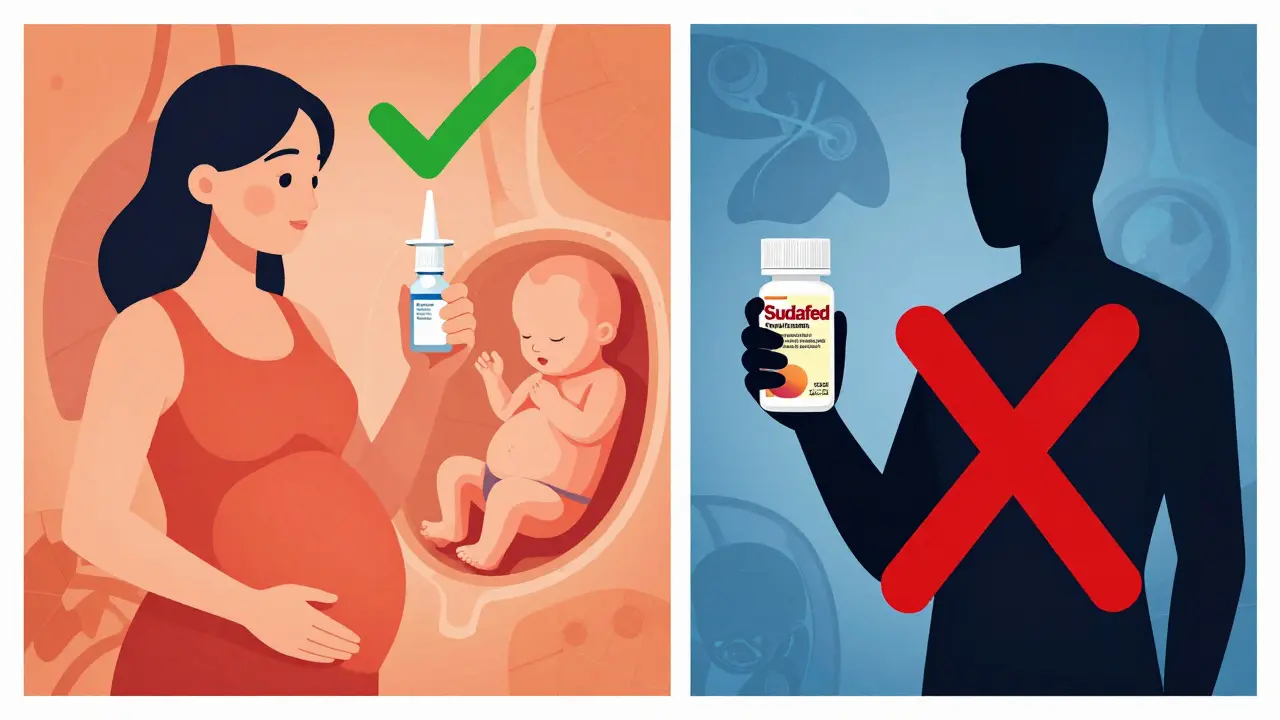
If your symptoms are worse-think constant sneezing, blocked sinuses, or trouble breathing-then nasal steroid sprays like budesonide (Rhinocort), fluticasone (Flonase), or mometasone (Nasonex) are even better. These sprays act locally in your nose. Very little enters your bloodstream, so the baby gets almost none. AAFP gives them a “B” rating for safety-same as chlorpheniramine.
What to Avoid Completely
Not all allergy meds are safe. Some are outright risky.Pseudoephedrine (Sudafed) is the big one. It’s a decongestant, not an antihistamine, but it’s often combined with antihistamines in products like Claritin-D or Zyrtec-D. Studies show it can increase the risk of a rare birth defect called gastroschisis-a hole in the abdominal wall-when taken during the first trimester. ACOG says: don’t use it in the first 3 months. Some doctors might consider it in the second or third trimester for women without high blood pressure, but only after careful discussion.
Hydroxyzine (Atarax, Vistaril) is another red flag. It’s sometimes prescribed for severe itching or anxiety in pregnancy, but the CDC data suggests a possible link to heart defects. It’s not banned, but most doctors avoid it unless absolutely necessary.
And never assume “natural” means safe. Some herbal remedies or homeopathic allergy products contain unknown ingredients. There’s no regulation, no safety data, and no way to know what’s really in them. Stick to FDA-approved medications with proven tracks.
When Is It Worth Taking a Risk?
You don’t take medication just because you can. You take it because you need to.Untreated allergies can hurt you-and your baby. Constant sneezing and congestion? That can lead to sinus infections. Poor sleep? That raises your risk of preeclampsia and low birth weight. Severe itching from hives or eczema? That can make you anxious, depressed, or even stop eating properly.
So if your allergies are keeping you awake, making you cry, or stopping you from breathing well, then the benefit of taking a safe antihistamine outweighs the tiny risk. The goal isn’t to be 100% symptom-free. It’s to be functional. To sleep. To eat. To breathe.
That’s why doctors don’t say “avoid all meds.” They say: “Use the lowest effective dose for the shortest time.” One tablet of loratadine a day is better than three. A nasal spray once a day is better than taking a pill every 4 hours.
What About Newer Antihistamines Like Desloratadine or Levocetirizine?
You might see these on shelves. Desloratadine (Clarinex) and levocetirizine (Xyzal) are newer versions of loratadine and cetirizine. They’re more potent, sometimes with fewer side effects.But here’s the problem: there’s almost no pregnancy data on them. No large studies. No long-term follow-ups. So even though they’re chemically similar to the safer options, doctors can’t say they’re safe in pregnancy. Until more data comes out, stick with loratadine or cetirizine.
Same goes for prescription antihistamines like olopatadine (Patanase) nasal spray. It’s great for allergies, but pregnancy safety data is limited. If you’re already using it before pregnancy, talk to your doctor. Don’t start it cold during pregnancy.

Real-Life Scenarios: What Would a Doctor Do?
Let’s say you’re 14 weeks pregnant and your pollen allergies are terrible. You sneeze 20 times a day. Your eyes water. You’re exhausted.Your doctor would likely say: Start with a nasal steroid spray like Flonase. Use it once a day. If that’s not enough, add one tablet of loratadine. If you’re still struggling, switch to cetirizine. If you’re really tired and need something stronger, try chlorpheniramine at night-just one dose, so the drowsiness helps you sleep.
Now imagine you’re 8 weeks pregnant and you’ve had hives for two weeks. You’re scratching so hard your skin is raw. You can’t sleep. You’re crying.
Your doctor might still recommend cetirizine or loratadine. But if those don’t help, they might consider hydroxyzine-only if the itching is severe and no other option works. They’d explain the tiny risk, but also the real risk of sleep loss and stress.
There’s no one-size-fits-all. It’s always personalized.
What to Do Before You Take Anything
Don’t guess. Don’t rely on what your friend did. Don’t assume OTC means “safe for pregnancy.”Before you take any antihistamine, check with your OB-GYN or allergist. Bring the bottle. Ask: “Is this safe in my trimester?” Even if it’s just a one-time use.
Keep a symptom diary. Note when your allergies flare up. What triggers them? What helps? That info helps your doctor pick the right tool.
And if you’re using multiple products-like a nasal spray, an antihistamine, and a vitamin-tell your doctor. Some combinations aren’t dangerous, but they can add up.
Bottom Line: You Can Take These Safely
- Best first-line oral options: Loratadine (Claritin), Cetirizine (Zyrtec) - Best nasal option: Budesonide (Rhinocort), Fluticasone (Flonase), Mometasone (Nasonex) - Safe older option (if you can handle drowsiness): Chlorpheniramine (ChlorTrimeton) - Avoid: Pseudoephedrine (Sudafed) in first trimester, Hydroxyzine unless no other choiceRemember: allergies aren’t just annoying-they can affect your health and your baby’s. But you don’t have to suffer. With the right info and the right medication, you can breathe easier, sleep better, and feel like yourself again.
Always start with the lowest dose. Always check with your provider. And know this: you’re not being reckless if you take a safe antihistamine when you need it. You’re being smart.


