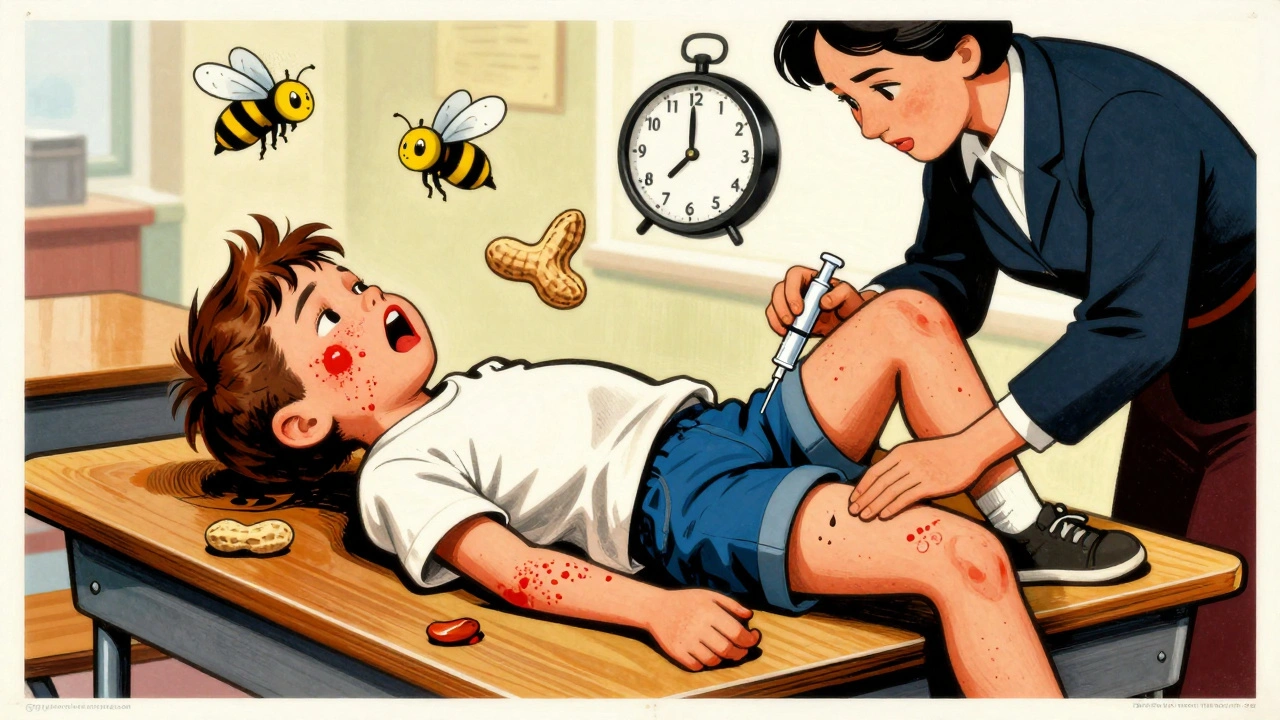
When someone suddenly struggles to breathe, their skin breaks out in hives, and their throat starts to swell, time isn’t just tight-it’s running out. This isn’t a panic attack. It’s anaphylaxis, a life-threatening allergic reaction that can kill in minutes if not treated immediately. Every year, tens of thousands of people in the U.S. experience this emergency. Many survive because someone acted fast. Others don’t, because help came too late-or didn’t come at all.
What Anaphylaxis Really Looks Like
Anaphylaxis doesn’t start with a sneeze or a runny nose. It hits hard and fast, usually within minutes of exposure to an allergen. You might notice a combination of symptoms: a red, itchy rash spreading across the body, lips or tongue swelling, wheezing or trouble breathing, dizziness, nausea, or a sudden drop in blood pressure that makes someone feel like they’re going to pass out. The key signs are simple: skin or mucosal changes plus breathing or circulation problems. That’s the medical definition. In real life, it looks like a child turning pale after eating a peanut butter sandwich, or an adult collapsing after a bee sting. Eighty to ninety percent of cases involve skin symptoms like hives or swelling. Seventy percent involve breathing trouble. One in three have dangerously low blood pressure. It’s not always obvious. Some people think, “It’s just a rash-I’ll take an antihistamine.” That’s dangerous. Antihistamines don’t stop anaphylaxis. They might ease itching, but they won’t open a swollen airway or raise a collapsing blood pressure. Waiting to see if symptoms get worse is the biggest mistake people make.What Triggers Anaphylaxis?
Food is the most common cause, especially peanuts, tree nuts, shellfish, milk, and eggs. In fact, these four account for about 90% of food-related anaphylaxis cases. Insect stings-like from bees, wasps, or fire ants-are the second leading cause. Medications, especially penicillin and other antibiotics, cause about 15% of cases. Latex, found in gloves and medical devices, is a rarer but serious trigger. Even if you’ve had a mild reaction before, the next one could be deadly. Allergies don’t always get worse with each exposure-but they can. That’s why anyone who’s had even a small allergic reaction to food, insects, or medicine should be evaluated by an allergist.Why Epinephrine Is the Only Treatment That Saves Lives
Epinephrine is not just the first treatment for anaphylaxis. It’s the only treatment that can stop the reaction from killing you. It works in two ways: it tightens blood vessels to raise blood pressure and reduce swelling, and it opens up the airways so you can breathe. This isn’t guesswork-it’s science. Studies show that when epinephrine is given within the first few minutes, 85% of patients improve significantly within five minutes. Delay it by even 15 minutes, and survival rates drop sharply. Other treatments? They’re not enough. Antihistamines like Benadryl do nothing to stop airway closure or shock. Steroids might help prevent a second wave of symptoms hours later, but they don’t help in the moment. Oxygen, IV fluids, and breathing machines are supportive-they help after epinephrine has already done its job. The American Academy of Allergy, Asthma & Immunology says it plainly: “There is no substitute for epinephrine.”How to Use an Epinephrine Auto-Injector
Epinephrine auto-injectors are designed to be simple: remove the cap, jab it into the outer thigh, hold for three seconds. That’s it. The needle goes through clothing, so you don’t need to pull down pants. The injection should go into the anterolateral thigh-the front outer side of the leg. That’s where the muscle is thickest and blood flow is fastest, letting the drug reach your system in about eight minutes. Injecting in the arm or buttocks is slower and less reliable. Two doses are often needed. If symptoms don’t improve-or get worse-after five minutes, give a second shot. Many people hesitate, fearing they’re overdosing. But epinephrine is safe. Giving two doses is better than giving none. You must call 911 after using it-even if you feel better. Anaphylaxis can come back hours later in what’s called a biphasic reaction. That’s why patients are often monitored for 12 hours in the hospital after an episode.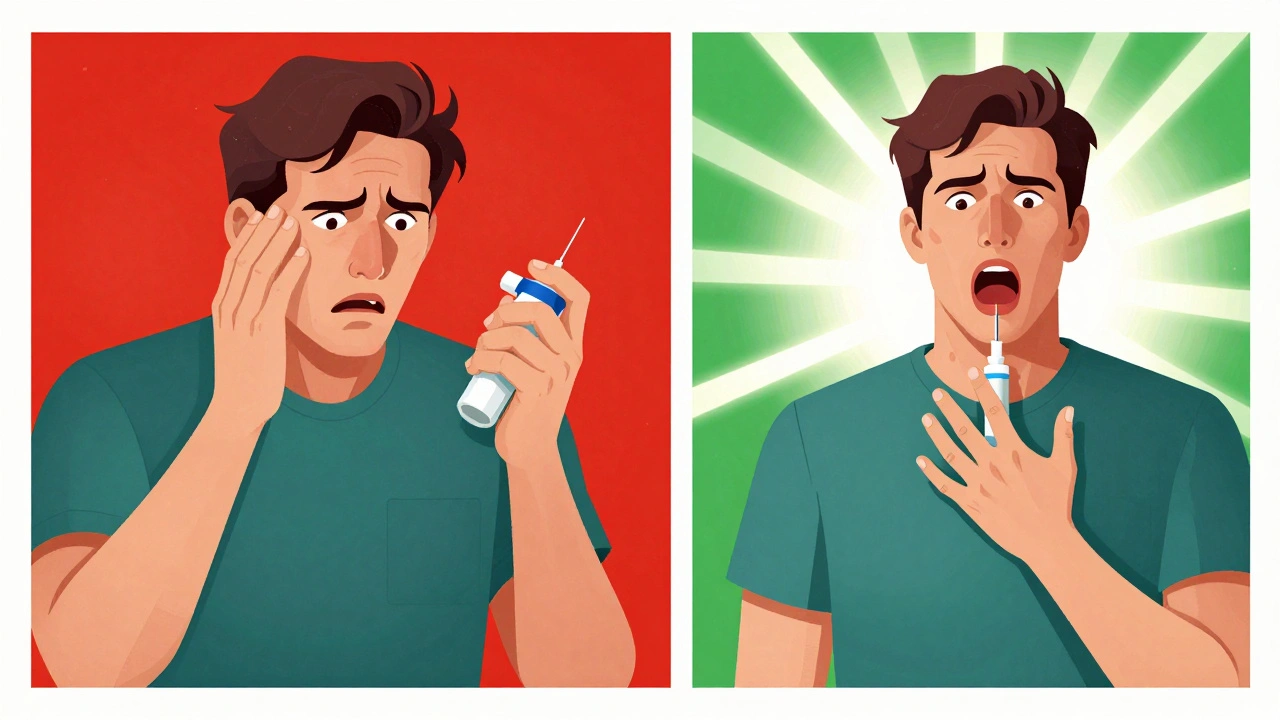
Common Auto-Injector Brands and Costs
The most well-known brands are EpiPen, Auvi-Q, and Adrenaclick. All deliver the same medicine: epinephrine. But they work differently. - EpiPen: The most common. Requires two steps: remove blue safety cap, then jab. Some users report confusion during stress. - Auvi-Q: Gives voice instructions during use. Tells you when to inject and when to remove. Rated higher for ease of use. - Adrenaclick: A generic version. Works like EpiPen but costs less. Prices vary wildly. The list price is $375-$650 for a two-pack. But with insurance or pharmacy coupons, many pay under $200. Generic versions now cover 70% of prescriptions, making access better than in 2016, when one EpiPen cost over $600 out-of-pocket.Why People Don’t Use Epinephrine When They Should
Forty-three percent of people delay using epinephrine because they think the reaction isn’t “bad enough yet.” Others are afraid of the needle. Twenty-two percent admit to needle phobia. Some don’t know how to use the device. Training matters. Studies show 68% of people who’ve been prescribed an auto-injector can’t use it correctly during a simulated emergency. That’s why every person with a prescription should practice monthly with a trainer device-those plastic, non-injecting copies that come with the real one. Parents of food-allergic kids do better than adults with insect allergies. Eighty-two percent of parents carry their child’s injector at all times. Only 54% of adults with bee sting allergies do the same.What You Can Do to Stay Safe
If you or someone you love has a history of severe allergies:- Carry two epinephrine auto-injectors at all times. One might not be enough.
- Check expiration dates every month. Most last 12-18 months.
- Store them at room temperature. Don’t leave them in a hot car or freezing glovebox.
- Teach family, teachers, coworkers how to use it. Don’t assume they know.
- Wear a medical alert bracelet.
- Have a written action plan from your doctor. Show it to school nurses, camp staff, or airline personnel.
New Developments: What’s Changing in 2025
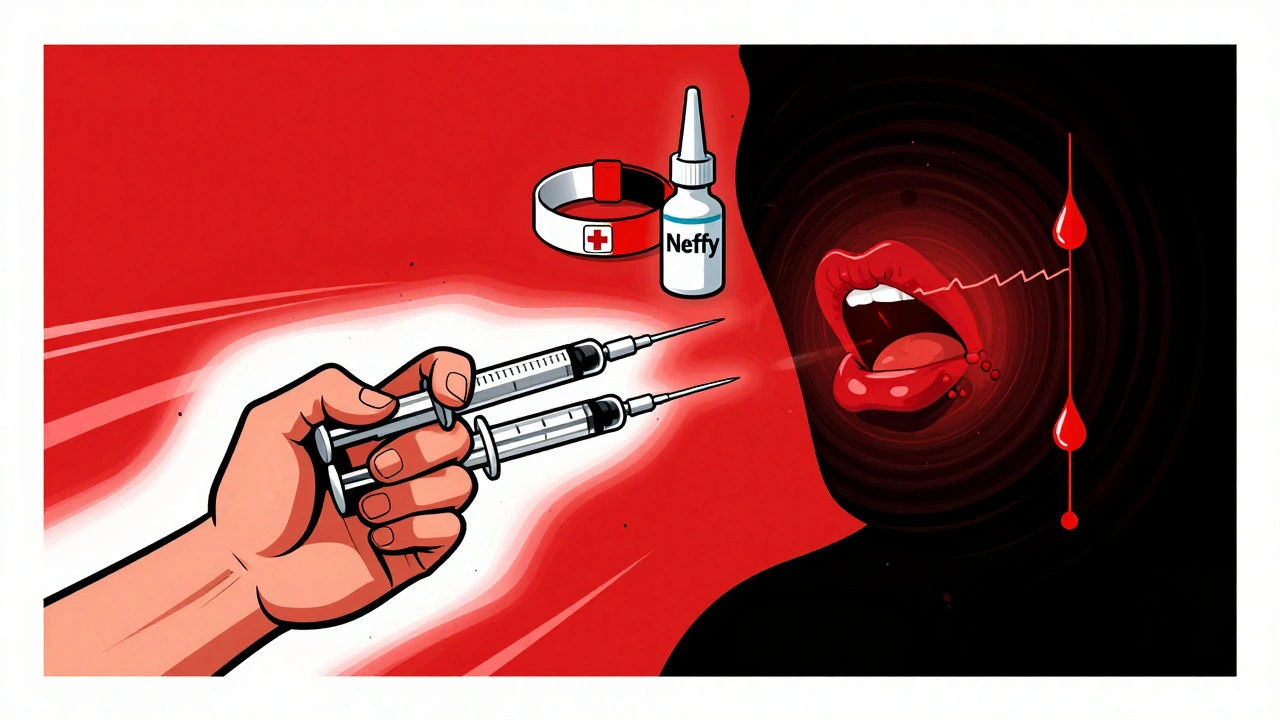
In August 2023, the FDA approved Neffy, the first nasal spray form of epinephrine. It’s needle-free and works in about 10 minutes-slower than injection but faster than pills. It’s a game-changer for people who fear needles. Smart injectors are in testing. One prototype connects to your phone via Bluetooth and sends a text to emergency contacts when used. Schools in 34 U.S. states now require staff to be trained in anaphylaxis response by 2025. Stock epinephrine is mandatory in all 50 states for schools, and 92% of schools keep at least two doses on hand. New long-lasting formulations are in clinical trials. One company is testing injectors that last up to three years instead of 12-18 months. That could cut costs and reduce waste.What’s Still Broken
Despite all the progress, big gaps remain. In emergency rooms, more than half of patients with clear anaphylaxis don’t get epinephrine. Only 37% of patients discharged after an episode get a written action plan. And 58% of adults can’t name even one symptom of anaphylaxis. Low-income patients are hit hardest. Forty-five percent can’t afford to refill their epinephrine when it expires. That’s not just a cost issue-it’s a death sentence waiting to happen.Final Thought: Speed Saves Lives
Anaphylaxis doesn’t care if you’re busy, scared, or unsure. It moves fast. And the only thing that can stop it is epinephrine-given early, given correctly, given without hesitation. If you’ve been prescribed an auto-injector, carry it. Know how to use it. Teach others. Don’t wait for the worst to happen. Because when it does, you won’t have time to look up instructions.What are the first signs of anaphylaxis?
The earliest signs often include skin symptoms like hives, itching, or swelling of the lips, tongue, or throat. These are usually followed by breathing trouble (wheezing, tightness in the chest), dizziness, nausea, or a sudden drop in blood pressure. If you see any of these after exposure to a known allergen, treat it as an emergency.
Can antihistamines stop anaphylaxis?
No. Antihistamines like Benadryl may help with mild itching or hives, but they do nothing to reverse airway swelling or low blood pressure-the two main causes of death in anaphylaxis. Using them instead of epinephrine delays life-saving treatment and increases the risk of death.
How do I know when to use my epinephrine auto-injector?
Use it at the first sign of trouble-don’t wait for symptoms to get worse. If you’re experiencing any combination of skin rash, trouble breathing, swelling, dizziness, or vomiting after exposure to a known allergen, inject immediately. It’s better to use it unnecessarily than to wait too long.
Can I use someone else’s epinephrine auto-injector?
Yes. If someone is having an anaphylactic reaction and doesn’t have their own injector, using someone else’s is safe and lifesaving. Epinephrine doses are standardized: 0.3 mg for adults and teens over 66 pounds, 0.15 mg for children between 33-66 pounds. Giving the wrong dose is far less dangerous than giving none.
Do I still need to go to the hospital after using epinephrine?
Absolutely. Even if you feel better, you must call 911 and go to the ER. Anaphylaxis can return hours later in what’s called a biphasic reaction. Hospital monitoring for 12 hours is standard for high-risk cases to ensure you’re safe.
Are there alternatives to epinephrine injections?
As of 2025, the only FDA-approved acute treatment for anaphylaxis is epinephrine. A nasal spray called Neffy was approved in 2023 and offers a needle-free option, but it’s not faster or more effective than injection-it’s an alternative for those who fear needles. Other treatments like inhalers or pills are not approved or effective for anaphylaxis.


