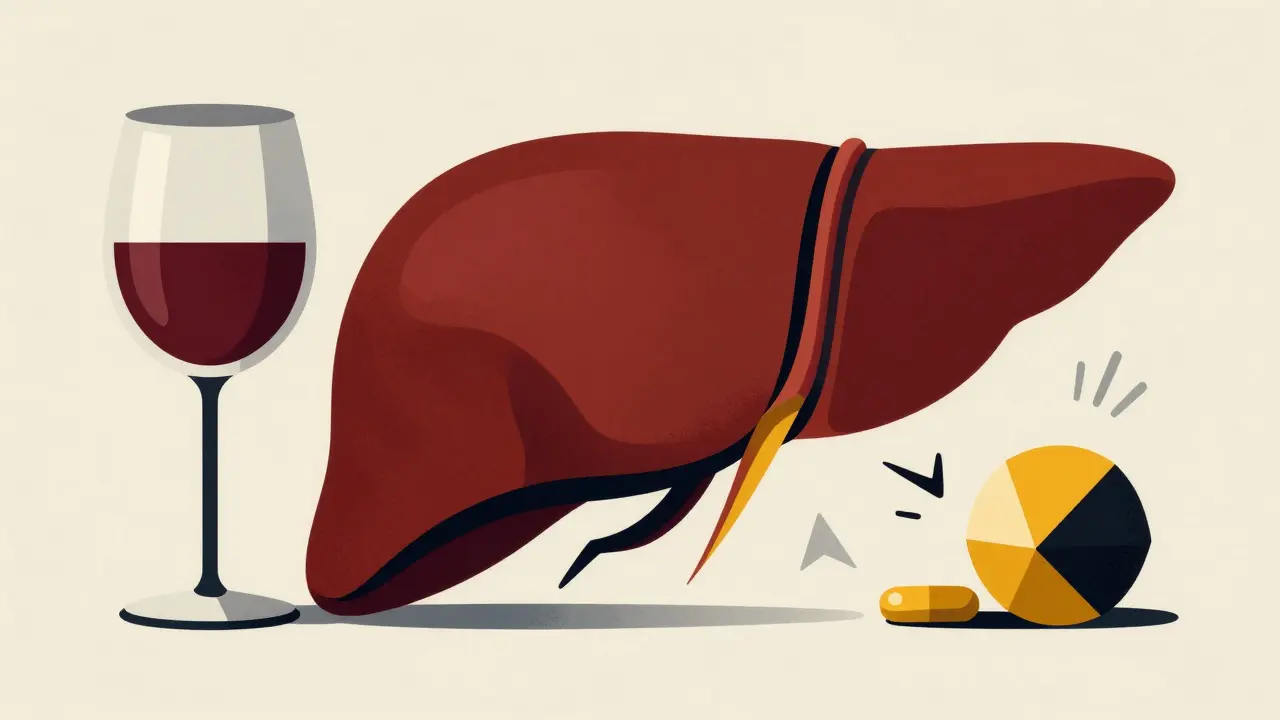
You might think a single glass of wine with your evening pill is harmless, but for about 40% of adults, mixing alcohol with medication can trigger a dangerous physiological chain reaction. Whether it's a sudden spike in heart rate or a gradual decline in how well your medicine works, these interactions aren't just "side effects"-they are often the result of your liver struggling to process two different substances at once. Understanding how these chemicals clash can be the difference between a successful recovery and a trip to the emergency room.
Quick Safety Summary
- High Risk: Avoid alcohol entirely with benzodiazepines, opioids, and specific antibiotics like metronidazole.
- Liver Strain: Common OTC meds like acetaminophen and ibuprofen can cause severe liver or stomach damage when paired with alcohol.
- Timing Matters: Alcohol can either block your medication from working or make it dangerously potent depending on whether you drink occasionally or chronically.
- Red Flags: Watch for extreme drowsiness, sudden nausea, or flushing of the skin.
How Alcohol Changes Your Meds
To understand why this happens, you have to look at the liver. When you take a pill, your liver uses specific tools called cytochrome P450 enzymes a group of enzymes responsible for metabolizing a wide range of medications and toxins in the liver to break the drug down. Ethanol the type of alcohol found in alcoholic beverages uses these same enzymes. When you have both in your system, they compete for the same "parking spot."
This creates two main types of problems. First, there are pharmacokinetic interactions. This is essentially a chemistry battle. If you drink acutely, alcohol can block the enzymes, leaving the medication in your bloodstream longer than intended. This can spike medication levels by up to 75% in an hour, potentially leading to an overdose. On the flip side, if you drink heavily over a long period, your liver actually produces more enzymes to keep up. This means your body clears the medication too quickly, reducing its effectiveness by 30% to 50%.
Then there are pharmacodynamic interactions. Here, the substances don't fight for the liver; they team up to attack the same system. For example, if you take a sedative and drink alcohol, both tell your brain to slow down. This "double-down" effect can increase GABA receptor activity by 400%, which can cause your breathing to slow to dangerous levels even if you aren't "drunk" by standard measures.
The Danger Zones: Medication Classes to Watch
Not all interactions are equal. Some cause mild dizziness, while others are absolute contraindications-meaning you should never mix them. Here is how the most common categories stack up.
| Medication Type | Risk Level | Primary Effect | Example Drug |
|---|---|---|---|
| Certain Antibiotics | Extreme | Acetaldehyde syndrome (vomiting, racing heart) | Metronidazole |
| Benzodiazepines | Very High | Severe respiratory depression, coma | Alprazolam |
| Opioids | Very High | Extreme sedation, breathing failure | Morphine |
| SSRIs | Moderate | Increased intoxication, prolonged drowsiness | Fluoxetine |
| NSAIDs / Acetaminophen | Moderate | Liver failure or GI bleeding | Ibuprofen |
If you are taking Metronidazole an antibiotic used to treat anaerobic bacterial infections, the risk is immediate. About 92% of people who drink even one standard drink while on this med experience a "disulfiram-like reaction." This isn't just a mild stomach ache; it involves intense flushing, nausea, and heart palpitations that often end in the ER.
For those on Benzodiazepines a class of psychoactive drugs used to treat anxiety and insomnia, the risk is more silent but more deadly. These drugs account for roughly 32% of alcohol-related medication fatalities because they suppress the central nervous system so effectively that a person may simply stop breathing in their sleep.
The Hidden Risks of Over-the-Counter Meds
Many people assume that if they bought it without a prescription, it's safe. That's a dangerous misconception. Take Acetaminophen a common over-the-counter pain reliever and fever reducer (Tylenol). Both alcohol and acetaminophen are processed by the liver. When you exceed three drinks a day, the combined stress can lead to acute liver failure in nearly 18% of cases. Even moderate drinking can increase ALT levels-a key marker of liver stress-in nearly half of patients.
Then there are NSAIDs like ibuprofen. While they don't hit the liver as hard as acetaminophen, they irritate the stomach lining. Alcohol does the same. Combining the two increases your risk of gastrointestinal bleeding by 300% to 500%. If you notice dark, tarry stools or severe stomach pain after a few drinks and some Advil, you're seeing this interaction in real-time.
Age and Individual Factors
Your risk profile changes as you get older. If you're over 65, your liver doesn't get as much blood flow as it used to-usually a drop of about 35% compared to when you were 25. This means alcohol and medication linger in your system much longer. A dose that was safe in your 30s could become toxic in your 70s because your body can't clear the substances fast enough.
Polypharmacy-the medical term for taking five or more medications daily-further complicates things. With every new pill, you add another potential conflict for those P450 enzymes. This is why seniors have a 50% higher hospitalization risk when mixing alcohol with their regimens compared to younger adults.
Practical Steps for Staying Safe
The goal isn't necessarily to live in total abstinence, but to manage your risk. If you are starting a high-risk medication, a 72-hour alcohol-free window before your first dose can drop your risk of a severe adverse reaction from 92% down to just 8%.
If your doctor has cleared you for moderate drinking, follow these harm-reduction rules:
- Time your doses: Wait at least 2 to 3 hours after taking your medication before having a drink.
- Eat first: Consuming alcohol with food can reduce the absorption rate by about 25-30%, giving your liver more time to keep up.
- Know your "standard drink": Don't guess. One standard drink is exactly 12oz of 5% beer, 5oz of 12% wine, or 1.5oz of 40% spirits.
- Check the half-life: Some drugs, like diazepam, stay in your system for days. You may need a 5 to 10-day break from alcohol even after your last pill.
Don't rely solely on the bottle label. Only about 42% of prescription bottles actually include specific alcohol warnings. Your best bet is to ask your pharmacist directly. Pharmacy interventions are highly effective; nearly 90% of patients who get a clear warning from a pharmacist actually change their drinking habits to stay safe.
Can I drink a little bit of wine if I'm taking an SSRI antidepressant?
While not always a total contraindication, mixing SSRIs like fluoxetine with alcohol can increase the duration of intoxication. On average, it can make the effects of alcohol last over 3 hours longer, which can lead to unexpected impairment and increased drowsiness the next morning.
Why does my skin get red and itchy if I drink while on certain antibiotics?
This is known as a disulfiram-like reaction. Certain antibiotics, especially metronidazole, block the enzyme that breaks down acetaldehyde (a byproduct of alcohol). This causes acetaldehyde to build up in your blood, leading to flushing, nausea, and a racing heart.
Is it safe to take Tylenol after a few drinks for a headache?
This is a high-risk combination. Both alcohol and acetaminophen stress the liver. Combining them, especially if you've had more than three drinks, significantly increases the risk of acute liver failure. It is safer to hydrate and rest or consult a doctor for alternatives.
How long should I wait after taking a sedative before drinking?
Because sedatives and benzodiazepines have long half-lives (sometimes up to 100 hours), a few hours may not be enough. You should consult your provider, but in many cases, several days of abstinence are required to avoid severe respiratory depression.
What are the first signs that I'm having a bad interaction?
The most common signs include extreme drowsiness that feels disproportionate to the amount you drank, sudden nausea or vomiting, impaired coordination, or a rapid, pounding heartbeat (palpitations).
What to Do Next
If you've already mixed a medication and alcohol and feel unwell, don't wait. If you're experiencing difficulty breathing or a racing heart, call emergency services immediately. For milder symptoms, contact your pharmacist to see if the interaction is likely to persist or if you need to adjust your next dose.
For those managing chronic conditions, consider using a digital interaction checker or the NIAAA's risk calculator to get a personalized view of your safety profile. Always bring a complete list of your current medications-including supplements-to your annual wellness visit to ensure your doctor knows exactly what's interacting in your system.


